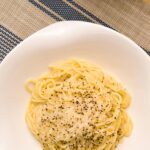
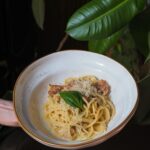
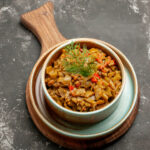
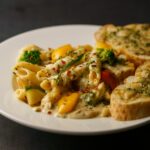
Spaghetti in a punchy, briny sauce of anchovies, olives, capers, and San Marzano tomatoes — bold, pantry-made, and completely addictive.
Pasta Puttanesca is one of the great pantry pastas — a dish that can be made entirely from ingredients that live in your cupboard indefinitely and yet produces a sauce of extraordinary depth, complexity, and boldness. The name is provocative — puttana means prostitute in Italian — and there are several colourful origin stories, the most common being that it was a sauce that could be prepared quickly between clients in the brothels of Naples. Whether true or not, the name has made the dish famous worldwide.
What makes puttanesca so special is the combination of what Italian chefs call sapori forti — strong flavours. Anchovies provide a deep savoury backbone and completely dissolve into the olive oil, leaving no fishiness but an incredible depth of umami. Capers bring a sharp, pickled brine. Kalamata olives add a rich, slightly bitter meatiness. Chilli provides warmth. And the San Marzano tomatoes bring sweetness, acidity, and body to tie everything together.
There is a debate in Italy about whether garlic belongs in puttanesca. Some say yes — it is fundamental to the flavour. Others insist the original recipe had no garlic at all and that including it marks you as a culinary tourist. This recipe includes garlic, partly because it tastes better with it and partly because life is too short for culinary dogma.
Nutrition (per serving)
Calories: 510 kcal | Protein: 16g | Carbs: 74g | Fat: 16g | Fiber: 5g
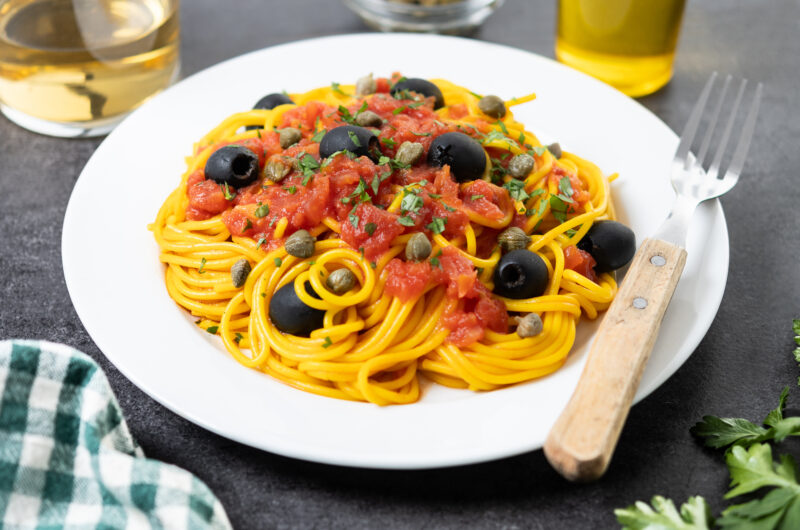
Pasta Puttanesca
2
servings10
minutes20
minutes510
kcalIngredients
•t200g spaghetti or linguine
•t400g canned San Marzano tomatoes
•t6 anchovy fillets in oil, drained
•t4 garlic cloves, thinly sliced
•t100g Kalamata olives, pitted and roughly halved
•t3 tbsp capers, rinsed and roughly chopped if large
•t1/2 tsp chilli flakes (or more to taste)
•t4 tbsp extra virgin olive oil
•tLarge handful fresh flat-leaf parsley, chopped
•tFreshly cracked black pepper
•tSalt — taste before adding, the anchovies and capers provide considerable saltiness
Directions
- Heat the olive oil in a wide pan over medium heat. Add the anchovy fillets and the sliced garlic simultaneously. Cook, stirring, for 2-3 minutes until the anchovies have completely dissolved into the oil and the garlic is golden and fragrant. There should be no visible pieces of anchovy remaining — they will have melted entirely, leaving their flavour behind.
- Add the chilli flakes and stir for 30 seconds.
- Add the canned tomatoes and crush them roughly with a wooden spoon or the back of a fork. Season with black pepper only at this stage — do not add salt yet. Simmer over medium-low heat for 10 minutes until the sauce has thickened and the raw tomato taste has cooked out.
- Add the capers and olives. Stir to combine. Continue simmering for a further 5 minutes. Taste the sauce now and decide whether it needs any additional salt — given the saltiness of the anchovies, capers, and olives, it very likely will not.
- Cook spaghetti in heavily salted boiling water until al dente. Reserve 100ml pasta water before draining.
- Add the drained spaghetti to the sauce pan. Toss over medium heat to coat thoroughly, adding pasta water as needed to loosen the sauce.
- Remove from heat. Add the fresh parsley and a final drizzle of extra virgin olive oil. Toss once more and serve immediately.
Notes
- The anchovies are the foundation of this sauce. Do not be afraid of them and do not omit them. Even confirmed anchovy-haters are usually unable to detect them once they have dissolved — they simply taste a deep, savoury richness that they cannot identify. If using salt-packed anchovies, rinse them thoroughly before use.
Do not add Parmesan to puttanesca. The traditional Italian prohibition on cheese with fish-based sauces is particularly relevant here — the cheese would clash horribly with the briny, assertive flavours of the sauce.
Use good quality Kalamata olives rather than the generic canned black olives, which have very little flavour. The quality of the olives is perceptible in the final dish.
Capers packed in salt have a superior flavour to those in brine — rinse them thoroughly before use. If you only have brined capers, reduce the quantity slightly.
This sauce improves significantly with time. Make a large batch, refrigerate it, and use it over the next several days — it gets better every day.
Puttanesca sauce is also excellent as a pizza topping, spread on bruschetta, or served alongside grilled fish.
Storage
The puttanesca sauce keeps exceptionally well in the fridge for up to 5 days in an airtight container and freezes beautifully for up to 3 months. The bold, salty, briny flavours actually develop and deepen over time making this a sauce that rewards being made ahead in large quantities. Store the sauce separately from any cooked pasta and combine when ready to eat.
Serving Tips
Serve immediately with a generous scattering of fresh parsley and a drizzle of good olive oil. No Parmesan — this is both traditional and correct in this case. Crusty bread for mopping is ideal. For wine, the punchy, assertive flavours of puttanesca call for an equally bold red — a Nero dAola from Sicily, a Primitivo from Puglia, or a southern Italian Aglianico all pair magnificently. The wine needs enough character to stand up to the sauce rather than be overwhelmed by it.