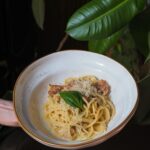
Three ingredients — pasta, Pecorino, black pepper — transformed into one of the most technically demanding and rewarding dishes in Italian cooking.
Cacio e Pepe translates from Italian as simply cheese and pepper. There is no butter. No cream. No garlic. No olive oil. Just pasta, Pecorino Romano, Parmesan, black pepper, and the starchy water from cooking the pasta. It sounds almost too simple to be interesting and yet it is one of the most technically challenging pasta dishes to execute correctly and one of the most deeply satisfying to eat when done right.
The dish originates from the shepherds of Lazio and the surrounding regions who needed portable, non-perishable food during long journeys with their flocks. Dried pasta, aged hard cheese, and dried peppercorns were all shelf-stable and light to carry. From these humble origins came one of the greatest pasta dishes in the world.
The challenge of Cacio e Pepe lies entirely in the sauce. The finely grated Pecorino must be emulsified with the pasta cooking water and the heat of the pasta into a smooth, glossy, clinging cream. Get the temperature wrong and you get a lumpy, clumped, or broken sauce. Get it right and you get something that is simultaneously simple and extraordinary — one of those dishes that makes you understand why Italian food is revered across the world.
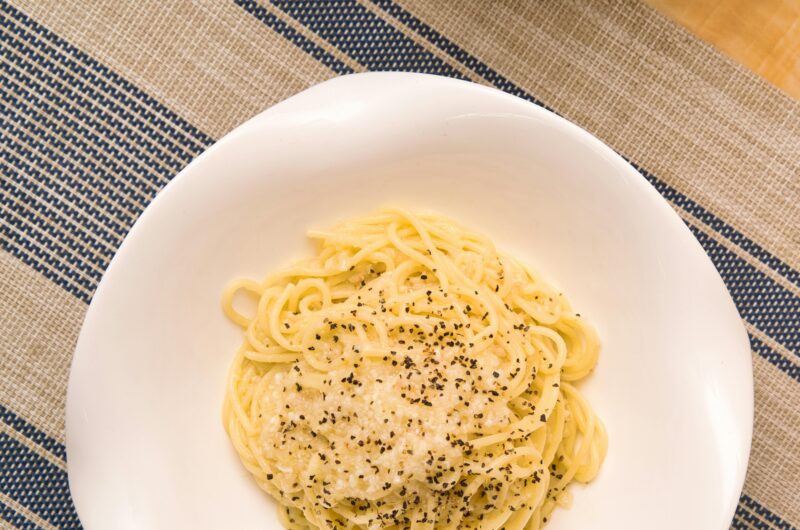
Cacio e Pepe
2
servings5
minutes15
minutes580
kcalIngredients
•t200g tonnarelli, spaghetti, or rigatoni
•t80g Pecorino Romano, grated as finely as possible — almost powder-like
•t20g Parmigiano Reggiano, grated as finely as possible
•t2 tsp whole black peppercorns, coarsely cracked in a mortar — not pre-ground
•tSalt for pasta water (use less than usual as Pecorino is very salty)
Directions
- Toast the cracked black pepper in a large, dry, wide pan over medium heat for 1-2 minutes until fragrant and slightly darkened. Remove from heat. This step deepens the flavour of the pepper significantly.
- Cook the pasta in lightly salted boiling water. Use less salt than you normally would as Pecorino Romano is extremely salty. Cook until 2 minutes before fully al dente — the pasta will finish cooking in the sauce.
- Combine the finely grated Pecorino and Parmesan in a bowl. Add 2-3 tablespoons of pasta cooking water and mix vigorously into a thick, smooth paste. This pre-mixing step is crucial — it helps the cheese emulsify smoothly rather than clumping when it hits the hot pasta.
- Reserve at least 300ml of pasta cooking water before draining. Add 100ml of this water to the toasted pepper pan and bring to a gentle simmer.
- Add the drained pasta to the pepper pan. Toss continuously over medium heat, adding more pasta water as needed, until the pasta is al dente and well coated in the peppery liquid.
- Remove the pan from heat completely. Add the cheese paste to the pasta a spoonful at a time, tossing vigorously after each addition and adding pasta water as needed. The goal is a smooth, creamy sauce that coats every strand. Work quickly and confidently.
- Taste and adjust. Serve immediately in warm bowls with an extra grating of Pecorino and a final crack of black pepper.
Nutrition (per serving)
Calories: 580 kcal | Protein: 22g | Carbs: 70g | Fat: 22g | Fiber: 3g
Notes
- The cheese must be grated as finely as humanly possible. Use a Microplane if you have one. Coarsely grated cheese will never emulsify smoothly — it will simply melt into rubbery lumps.
- Pre-mixing the cheese into a paste with warm pasta water before adding it to the hot pasta is the technique that prevents clumping. Do not skip this step.
- Use tonnarelli if you can find it — this thick, square-cut spaghetti is the traditional pasta for this dish and its rougher surface holds the sauce better.
- The pan must be off the heat when you add the cheese. Even a low residual heat can scramble the cheese if the pan is still hot.
- Black pepper is not a garnish here — it is a fundamental flavour. Be generous. Use freshly cracked whole peppercorns, not pre-ground pepper, which loses most of its aroma.
- Make only what you will eat immediately. Cacio e Pepe does not store well and cannot be successfully reheated.
Storage
Cacio e Pepe should be eaten the moment it is made. The sauce solidifies rapidly as it cools, the pasta absorbs the remaining moisture, and the whole dish loses its magic within minutes of leaving the pan. This is not a dish to make ahead or to save for later. If you have leftover pasta, it can be stored in the fridge for 1 day and reheated with a splash of water over very low heat but the result will be a pale imitation of the original.
Serving Tips
Serve immediately in warm bowls — preferably ones that have been rinsed with hot water just before plating. Top with a generous extra grating of Pecorino and a visible crack of whole black pepper. No other garnish. The wine pairing should be equally understated — a crisp, dry white like a Frascati Superiore or a Vermentino di Sardegna allows the simple perfection of the dish to speak for itself.