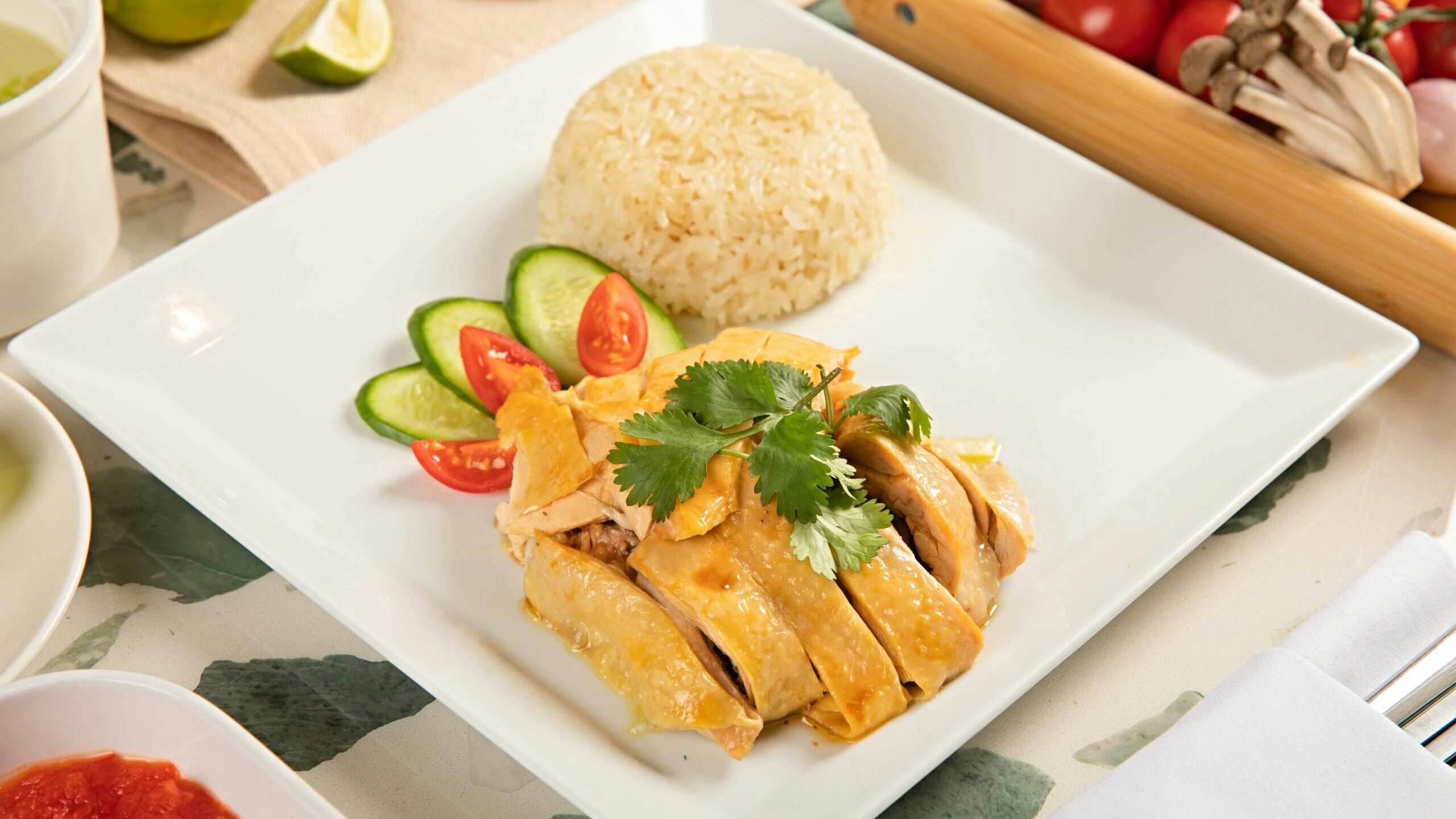
Silky poached chicken served over fragrant rice cooked in chicken broth with ginger dipping sauce and chilli, the national dish of Singapore and one of the most comforting meals in Asian cooking
Introduction
Hainanese chicken rice is the dish that Singapore claims as its national dish and that food writers consistently rank among the great simple meals of the world. The concept is disarmingly simple: poach a whole chicken gently until perfectly cooked, use the resulting broth to cook jasmine rice, and serve with a collection of dipping sauces. The result is a meal of extraordinary subtlety and satisfaction, one where the quality of each component is nakedly visible because there is nowhere for inferior ingredients to hide.
The genius of Hainanese chicken rice is in the technique of poaching the chicken. Submerging it in barely simmering water or stock, just below boiling, produces a texture that conventional cooking methods cannot replicate. The breast meat remains silky and almost translucent at the bone, the skin turns gelatinous and rich, and the meat itself has a tenderness and juiciness that oven-roasted or pan-fried chicken never achieves.
The rice cooked in the chicken broth absorbs both the fat and the flavour of the poaching liquid, becoming fragrant, slightly glossy, and richly flavoured. This is not ordinary rice. It is a different thing entirely, and it is as important to the experience of this dish as the chicken itself.
History and Background
Hainanese chicken rice originated with immigrants from Hainan island in southern China who settled in Southeast Asia, particularly Singapore and Malaysia, in the late 19th and early 20th centuries. The dish is an adaptation of Wenchang chicken, a celebrated dish from Hainan province known for its emphasis on the natural flavour of high-quality chicken.
In Singapore the dish was developed and popularised by Hainanese immigrants who worked as cooks in colonial households and subsequently opened their own food stalls in the hawker centres that became central to Singaporean food culture. The dish evolved to incorporate local ingredients and accompaniments including the distinctive chilli sauce and the pandan-scented rice.
Singapore has formally adopted Hainanese chicken rice as a national dish and it appears on the menus of hawker centres, coffee shops, and restaurants at every price point across the country. It is served as breakfast, lunch, and dinner and is considered one of the most important expressions of Singaporean culinary identity.
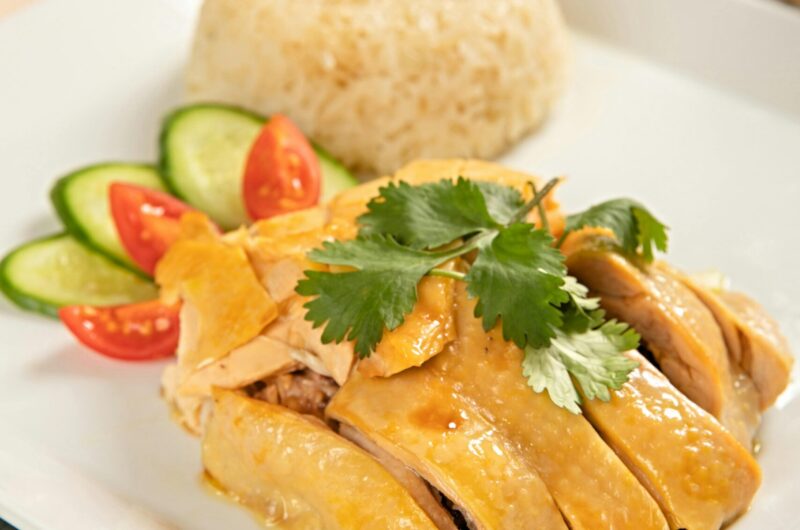
Hainanese Chicken Rice
4
servings15
minutes45
minutes2080
kcalIngredients
1 whole chicken approximately 1.5kg
3 litres water
6 spring onions
6 slices fresh ginger
1 tbsp salt
For the rice: 400g jasmine rice
For the rice: 600ml reserved poaching broth
For the rice: 2 tbsp chicken fat or butter
For the rice: 3 garlic cloves minced
For the rice: 1cm ginger grated
For the ginger sauce: 4cm fresh ginger grated
For the ginger sauce: 2 spring onions finely sliced
For the ginger sauce: 2 tbsp neutral oil heated until smoking
For the ginger sauce: pinch of salt
For the chilli sauce: 4 red chillies, 3 garlic cloves, 2cm ginger, 1 tbsp lime juice, 1 tsp sugar, blended together
To serve: sliced cucumber, fresh coriander, dark soy sauce
Directions
- Bring water to a boil with spring onions, ginger slices, and salt.
- Lower the whole chicken into the pot breast side down. Return to a gentle simmer.
- Poach at the lowest possible simmer for 35 to 40 minutes.
- Remove chicken and immediately plunge into a bowl of iced water for 10 minutes. This stops the cooking and tightens the skin.
- Reserve the poaching broth.
- For the rice, heat chicken fat or butter in a pan. Cook garlic and ginger for 1 minute.
- Add washed jasmine rice. Stir to coat in fat for 2 minutes.
- Add 600ml reserved broth. Cook covered on low heat for 15 minutes until absorbed.
- Make ginger sauce by pouring smoking hot oil over grated ginger and spring onion. Season with salt.
- Blend chilli sauce ingredients until smooth.
- Chop or slice chicken. Serve over rice with all sauces, cucumber, coriander, and dark soy.
Tips
- The poaching temperature is the most critical element. The water should barely move, with occasional bubbles but never a rolling boil. High heat produces tough, rubbery chicken.
The ice water bath immediately after poaching stops the residual heat from overcooking the chicken and produces the signature silky, tightened skin.
Use the most flavourful chicken available. This dish has nowhere to hide inferior ingredients. A free range or corn-fed chicken produces a dramatically better result.
Cook the rice in the broth, not water. Rice cooked in plain water alongside chicken rice tastes like an entirely different, inferior dish.
Skim the fat from the top of the poaching broth and use it to cook the rice. This is the most traditional approach and produces the most flavourful rice.
Serve the remaining broth as a soup alongside the main dish, seasoned with salt and garnished with spring onion.
The three sauces, ginger, chilli, and dark soy, are all essential. Each provides a different flavour dimension and the dish should be eaten with all three.
Variations
Make a roasted version by roasting a spatchcocked chicken at 200C for 40 minutes and serving over the same broth-cooked rice. Add lemongrass to the poaching liquid for a Southeast Asian aromatic note. Make individual rice portions in small bowls topped with a portion of chicken for a more formal presentation. Add pandan leaves to the rice cooking liquid for the fragrant, slightly floral note found in Singaporean versions. Serve with a fried egg on top of the rice for the version found in some Malaysian hawker stalls.
Storage and Serving
Serve at room temperature rather than hot, which is traditional. Arrange sliced chicken over a mound of rice on each plate with small dishes of all three sauces alongside. Garnish with sliced cucumber, spring onion, and fresh coriander. Drizzle dark soy sauce over the chicken. The poaching broth served in small bowls alongside is an essential part of the meal. Leftover chicken keeps in the fridge for 3 days. The rice is best eaten fresh but keeps for 2 days. Reheat rice with a splash of water in a covered pan.
FAQs
Q: How do I know when the chicken is cooked if I am not boiling it?
A: Insert a skewer into the thickest part of the thigh. The juices should run clear. The internal temperature should reach 75C. The flesh near the bone may appear slightly pink which is safe in a properly poached chicken.
Q: Can I use chicken pieces instead of a whole chicken?
A: Yes, bone-in thighs and drumsticks work well and reduce poaching time to 25 minutes. The broth from pieces is slightly less rich than from a whole chicken.
Q: What is chicken fat and where do I get it?
A: Skin the fat from the top of the poaching broth after it has cooled. It rises to the surface and can be skimmed off with a spoon.
Q: Why does the chicken skin look pale rather than golden?
A: Poached chicken is always pale. The silky texture and flavour are the goals, not golden colour. This is a completely different cooking philosophy from roasting.
Q: Can I make this with a rice cooker?
A: Yes, use the rice cooker for the broth-cooked rice. Replace the water with the same quantity of reserved chicken broth.