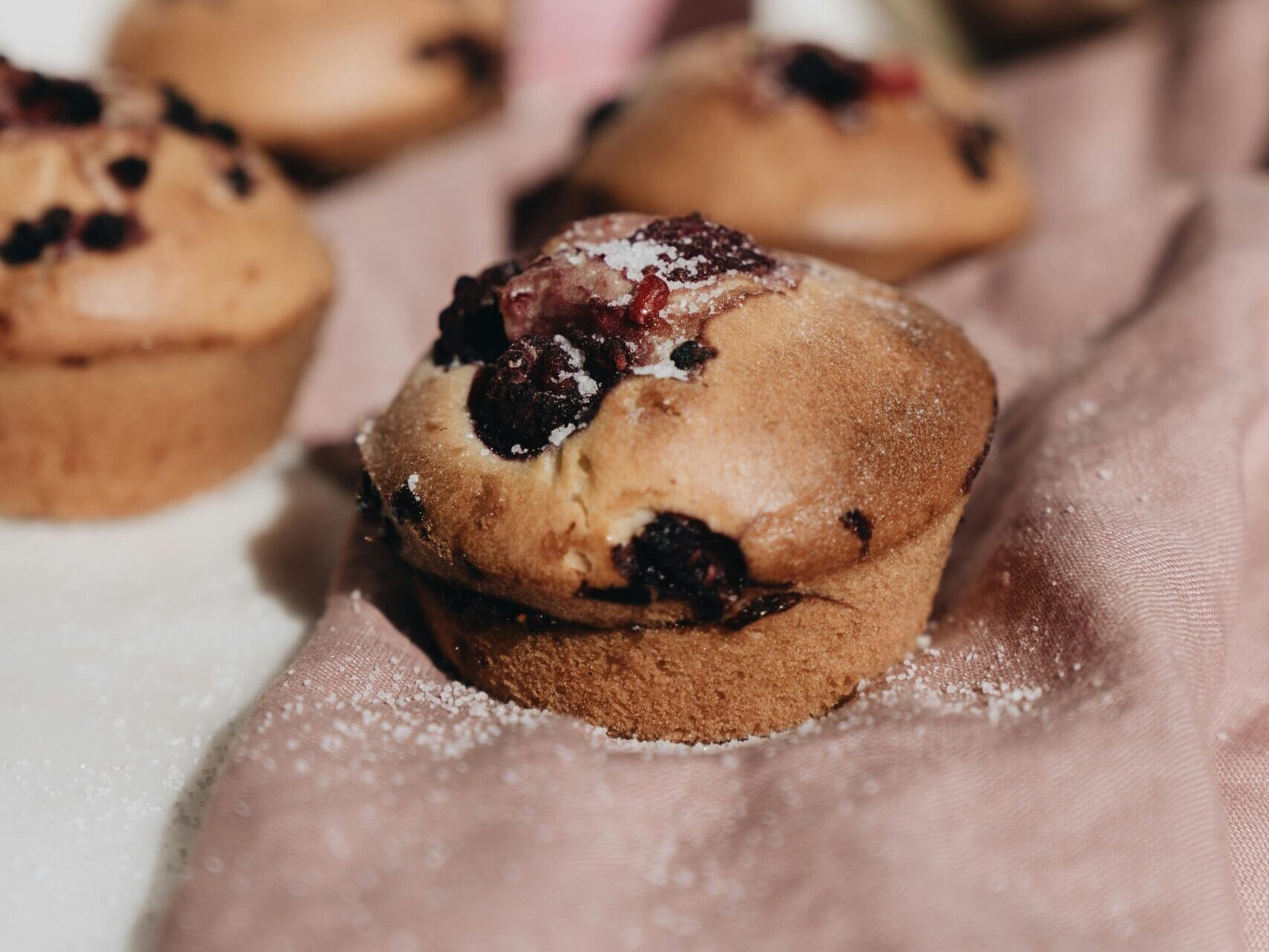
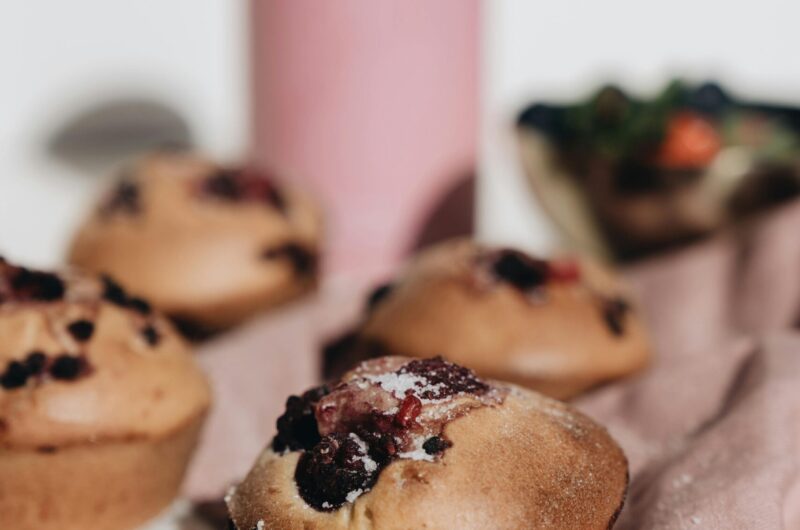
Tall, golden-domed muffins packed with fresh blueberries that burst into jammy pockets, with a crackled sugar top and a tender, buttery crumb, the most searched and most photographed muffin in the world.
About This Recipe
Blueberry muffins are the most universally recognised muffin format in existence. They appear on every bakery counter, every breakfast menu, and every food photography account that has ever covered baked goods. The image of a muffin with a tall, golden dome crowned with burst blueberries and a dusting of sugar is one of the most immediately appealing food visuals in baking, and the eating experience consistently justifies the expectation.
The tall dome is the visual element that most people associate with a professional bakery muffin and that home bakers most want to replicate. It is achieved through two specific techniques: filling the muffin cups very full, at least three quarters of the way up, and starting the oven at a high temperature of 220C for the first five minutes of baking before reducing to the standard temperature. The blast of initial heat causes rapid expansion that sets the dome before the sides have time to set around it.
Fresh blueberries tossed in a tablespoon of flour before folding into the batter keep them suspended through the crumb rather than sinking to the bottom. The flour coating adds enough weight and texture to prevent the berries from sliding through the batter during baking. Frozen blueberries added still frozen produce a more dramatic burst and colour effect in the finished muffin.
History and Origins
Blueberries are native to North America and have been cultivated commercially since the early 20th century. The blueberry muffin became popular in American bakeries in the mid-20th century and has been one of the most consistently searched baked good recipes since the internet era began. It is the official state muffin of Minnesota.
Blueberry Muffins
Course: Cupcakes12
servings20
minutes32
minutes2640
kcalIngredients
•t300g plain flour
•t200g white sugar
•t2 tsp baking powder
•t0.5 tsp bicarbonate of soda
•t0.5 tsp salt
•t2 large eggs
•t120ml neutral oil
•t180ml buttermilk or yoghurt
•t1 tsp vanilla extract
•t300g fresh or frozen blueberries tossed in 1 tbsp flour
•t2 tbsp white sugar for topping
Directions
- Preheat oven to 220C. Line a 12-hole muffin tin with paper cases.
- Whisk flour, sugar, baking powder, bicarbonate of soda and salt together.
- In a separate bowl whisk eggs, oil, buttermilk and vanilla.
- Pour wet ingredients into dry. Fold until just combined with a few streaks of flour remaining.
- Fold in blueberries with two or three strokes.
- Divide between muffin cases filling each three quarters full.
- Sprinkle sugar over the tops.
- Bake at 220C for 5 minutes then reduce to 190C for a further 15 minutes until golden and a skewer comes out clean.
- Cool in tin for 5 minutes then transfer to a rack
Notes
- Do not overmix. A lumpy batter produces a more tender muffin than a smooth one. Stop folding the moment the flour just disappears into the batter. Visible streaks of flour are fine at this stage.
Fill the cases generously at least three quarters full. A half-filled case produces a flat, sad muffin without the signature dome. A fully loaded case produces the bakery-style dome that makes these muffins look professional.
The high initial temperature then reduction is the specific technique that produces the tall dome. Do not skip the initial 220C blast even if your oven runs hot. That first five minutes is what sets the dome shape.
Toss blueberries in flour before adding to prevent them sinking to the bottom during baking. This is especially important with frozen blueberries which are heavier and sink faster than fresh.
If using frozen blueberries do not thaw them first. Adding them frozen prevents their juice from bleeding into the batter and turning everything purple before it goes in the oven.
A sprinkle of coarse sugar or turbinado sugar on top before baking produces a crunchier, more dramatic sugar crust than regular white sugar. This is the detail that most closely replicates a professional bakery result.
These muffins are best eaten on the day of baking when the sugar top is still slightly crackled and the blueberries inside are still at their juiciest. The texture changes slightly on day two but the flavour remains excellent
Make Ahead Tips
Muffins keep at room temperature in an airtight container for 3 days. Freeze for up to 3 months. Reheat frozen muffins in the microwave for 30 seconds or oven at 160C for 8 minutes.
Storage and Serving
Store in an airtight container at room temperature for up to 3 days. The blueberries keep the crumb moist longer than most muffins. Freeze individually wrapped for up to 3 months. These are best eaten on the day of baking when the sugar top is still crackled and the blueberries are jammy.
Variations and Substitutions
Replace blueberries with raspberries, blackberries, or chopped strawberries for equally delicious but visually different results. Add the zest of one lemon or two limes to the batter for a citrus blueberry version that is particularly good in summer. Replace the plain sugar topping with a streusel made from 60g cold butter, 80g flour, 80g brown sugar, and 1 tsp cinnamon rubbed together and scattered over the tops before baking for a coffee-cake style muffin. Add a cream cheese filling by pressing a teaspoon of cream cheese mixed with a teaspoon of sugar into the centre of each muffin before baking for a surprise interior. Replace buttermilk with sour cream for a richer, tangier crumb. Add a teaspoon of almond extract alongside the vanilla for a subtle nutty note that pairs beautifully with blueberries. Make a mini version using a 24-hole mini muffin tin and reduce the baking time to 10 to 12 minutes for bite-sized party portions.