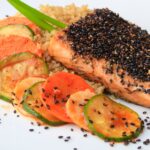
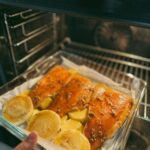
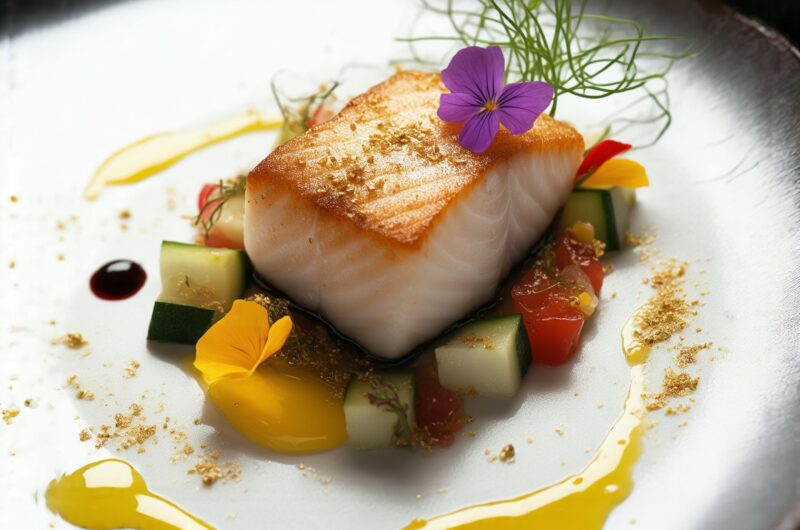
Flaky, golden oven-baked salmon fillets showered in fresh herbs and bright lemon, served alongside perfectly charred asparagus spears — clean, elegant, and one of the most effortlessly impressive healthy dinners you can make.
About This Recipe
There are few dinners that deliver as consistently as baked salmon with roasted asparagus. It is the kind of meal that looks like you have made a real effort, tastes like something from a good restaurant, and takes approximately 30 minutes from start to finish with almost no active cooking time in between. For anyone trying to eat well without spending hours in the kitchen, this combination is close to perfect.
The key to salmon that stays moist rather than turning chalky and dry is temperature and timing. The fish goes into a hot oven for a shorter time than most people expect — around 12 to 15 minutes depending on thickness — and should be pulled the moment the flesh just begins to flake at the thickest part. At that point it will still look slightly translucent in the very centre, which is exactly correct. The residual heat will finish the cooking as it rests. Overcooked salmon is one of the most common kitchen mistakes and entirely avoidable with attention to timing.
The herb and lemon coating is where the flavour is built. A mixture of fresh dill, parsley, and garlic with lemon zest and a drizzle of olive oil pressed onto the surface of the salmon creates a fragrant crust that perfumes the oven and seasons the fish all the way through. The asparagus, roasted on the same tray at the same temperature, picks up the lemon and herb flavours from the salmon’s cooking juices as it chars at the tips. The whole thing comes together on one pan with one wash-up — the kind of weeknight efficiency that makes healthy eating feel genuinely sustainable rather than burdensome.
History & Origins
Salmon has been a central food source for coastal and riverine communities across the Northern Hemisphere for thousands of years, from the Pacific Northwest peoples of North America to the Norse communities of Scandinavia. The combination of salmon with lemon and fresh herbs reflects the broader tradition of European fish cookery, where the brightness of citrus and the fragrance of fresh herbs have been used to complement oily fish since at least the medieval period. Asparagus has been cultivated and eaten as a luxury vegetable since ancient Rome, where it was considered one of the finest spring vegetables available.
Why It’s Healthy
Salmon is one of the richest dietary sources of omega-3 long-chain fatty acids, particularly EPA and DHA, with extensive research supporting their role in cardiovascular health, inflammation reduction, brain function, and mood regulation. A single serving provides a full day’s recommended omega-3 intake. Salmon also provides complete high-quality protein, vitamin D, selenium, and B vitamins including B12. Asparagus is rich in folate, vitamin K, vitamin A, and inulin, a prebiotic fibre that feeds beneficial gut bacteria. The olive oil used in this recipe provides oleocanthal with anti-inflammatory properties comparable to low-dose ibuprofen.
Baked Lemon Herb Salmon With Roasted Asparagus
Course: Healthy4
servings10
minutes20
minutes1480
kcalIngredients
•t4 salmon fillets (about 150g each), skin on
•t500g asparagus, woody ends snapped off
•t3 tbsp olive oil, divided
•tZest and juice of 1 large lemon
•t3 garlic cloves, minced
•t3 tbsp fresh dill, finely chopped
•t3 tbsp fresh flat-leaf parsley, finely chopped
•tSalt and black pepper to taste
•tLemon wedges to serve
Directions
- Preheat oven to 200°C. Line a large baking tray with baking paper.
- Toss asparagus with 1 tbsp olive oil, salt and pepper. Spread on one half of the tray.
- Mix remaining olive oil, lemon zest, garlic, dill and parsley together.
- Place salmon fillets skin-side down on the other half of the tray. Season with salt and pepper.
- Spread the herb mixture over the top of each salmon fillet.
- Bake for 12 to 15 minutes until salmon just flakes at the thickest part and asparagus tips are lightly charred.
- Squeeze lemon juice over everything. Serve immediately.
Notes
- Pull the salmon when it just begins to flake — it will still look slightly translucent in the centre, which is correct. Residual heat finishes the cooking as it rests.
Thicker fillets may need 15 to 18 minutes. Check at 12 minutes and go from there.
Fresh herbs make a significant difference here — dried herbs do not produce the same fragrant, bright result.
Skin-side down keeps the fish moist and prevents the delicate flesh from sticking to the tray.
Make Ahead Tips
The herb and garlic mixture can be made up to 24 hours in advance and refrigerated. The asparagus can be trimmed and stored in the fridge. The salmon should be seasoned and baked fresh — it takes only 30 minutes total and is always best eaten immediately. Leftover cooked salmon keeps in the fridge for 2 days and is excellent flaked cold over salad.
Storage & Serving
Cooked salmon keeps in the fridge for up to 2 days. Eat cold over salad greens with a lemon vinaigrette or gently warm in a low oven covered with foil. Asparagus loses its texture on reheating — eat any leftover asparagus cold or at room temperature. The dish does not freeze well. Serve with steamed baby potatoes or a simple green salad dressed with lemon and olive oil. A wedge of sourdough bread alongside makes it a complete and satisfying dinner with minimal effort.
Variations & Substitutions
Use trout or Arctic char in place of salmon for a milder, equally healthy result. Replace dill and parsley with basil and capers for a Mediterranean-inspired version. Add cherry tomatoes to the tray alongside the asparagus — they burst and create a light, sweet sauce that pools around the salmon as it bakes. A honey and wholegrain mustard glaze instead of the herb mixture produces a sweeter, stickier salmon that is particularly good with roasted sweet potato.