The beloved sour Filipino soup of plump prawns in a sharp, tamarind-soured broth loaded with water spinach, long beans, aubergine, and tomato — bracingly tart, deeply comforting, and unlike any other soup in the world.
About This Recipe
Sinigang is the great sour soup of the Philippines — a dish whose defining flavour principle, the deliberate and unapologetic sourness of tamarind broth, is so central to Filipino taste that it functions almost as a cultural marker. To love sinigang is to understand Filipino food. The sour note is not background or accent but the entire point: everything else in the soup — the sweetness of the tomatoes, the slight bitterness of the water spinach, the richness of the prawns — is arranged around and in service of that bright, mouth-puckering tartness.
The souring agent is traditionally tamarind — the pods boiled and pressed to extract their tart, complex pulp — though green mango, green guava, batwan fruit, and kamias (bilimbi) are regional alternatives that each produce a different flavour of sourness. Tamarind provides the most rounded, complex acidity, with a secondary sweetness and slight fruitiness that the others do not share. Fresh tamarind pods, cooked and pressed, are the ideal; tamarind paste or sinigang powder (the most widely available convenience product) are practical substitutes that capture approximately 80% of the flavour.
The vegetables are as important as the protein — water spinach (kangkong), long beans, aubergine, daikon, and tomatoes are the traditional combination, each contributing a specific flavour and texture to the soup. Water spinach, in particular, is worth seeking out at Asian grocery stores for its slightly mineral, earthy quality that is distinct from regular spinach. The prawns are added last, poached for the minimum time necessary, their shells left on to contribute flavour to the broth. The result is a soup of extraordinary clarity and brightness — sour, savoury, and alive.
History & Origins
Sinigang’s roots in the Philippines predate Spanish colonisation, with the use of souring agents in cooking documented in the earliest Philippine culinary records. The tamarind tree, introduced to the Philippines from South Asia via trade routes centuries before European contact, became the preferred souring agent for this style of soup across Luzon. Regional variations using indigenous souring fruits reflect the diverse ecology of the Philippine archipelago — each island group has its own preferred souring agent and its own version of sinigang. The dish was designated as the most outstanding soup in the world by the 2021 Taste Atlas awards, bringing it to international attention.
Why It’s Healthy
Tamarind is extraordinarily rich in tartaric acid, which acts as a natural antioxidant and has been shown to inhibit lipid peroxidation. It is also a significant source of B vitamins, iron, calcium, and magnesium — unusual for a fruit. Prawns provide selenium, iodine, and complete lean protein. Water spinach is rich in vitamin A, vitamin C, iron, and calcium, with higher nutrient density than most common vegetables. The broth-based preparation means very low caloric density relative to nutrient content. The high liquid volume of the soup promotes hydration and satiety.
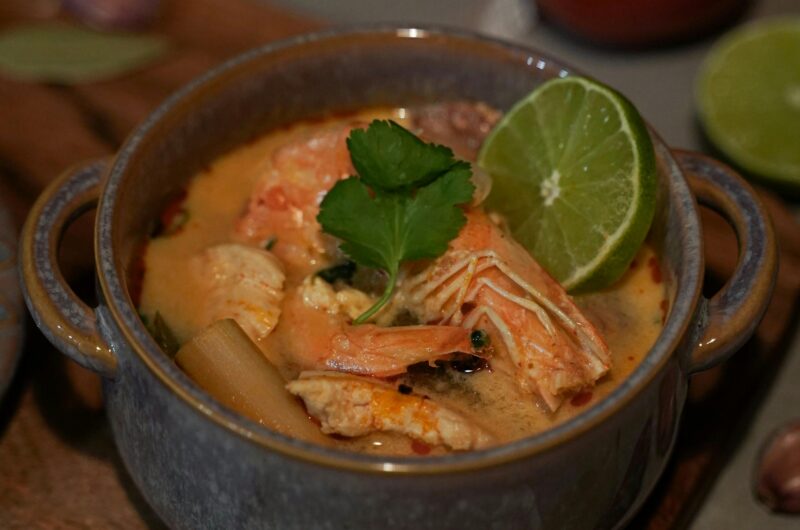
Sour Tamarind Prawn Soup
Course: Healthy, Soup4
servings25
minutes40
minutes980
kcalIngredients
•t500g large raw prawns, shell on
•t200g water spinach (kangkong) or regular spinach, roughly chopped
•t1 small aubergine, cut into chunks
•t100g long beans or green beans, cut into 5cm pieces
•t3 medium tomatoes, quartered
•t1 medium daikon (white radish), sliced
•t1 large onion, quartered
•t3 tbsp tamarind paste, or 150g fresh tamarind pods
•t1.2 litres water or light fish broth
•t2 tbsp fish sauce
•tSalt to taste
•t2 green chillies (optional)
Directions
- If using fresh tamarind: boil pods in 300ml water for 10 minutes. Mash and press through a sieve to extract pulp. Discard fibres and seeds.
- Bring broth or water to a boil. Add onion, tomatoes, and daikon. Simmer for 5 minutes.
- Add tamarind paste or prepared tamarind liquid. Taste and adjust sourness — it should be noticeably tart.
- Add long beans and aubergine. Cook for 5 minutes.
- Season with fish sauce and salt.
- Add prawns and cook for 3–4 minutes until just pink and curled. Do not overcook.
- Add water spinach and stir through — it will wilt in 30 seconds.
- Taste and adjust sourness and salt. Serve immediately.
Notes
- The broth should be noticeably, even aggressively sour — this is correct and intentional. Filipinos adjust sourness to personal preference but always err on the side of more.
Fish sauce is the seasoning agent, not soy sauce — the umami-salty quality it provides is different and authentic.
Prawns are done the moment they turn pink and their tails curl — 3–4 minutes maximum. Overcooked prawns ruin sinigang.
Sinigang powder (Knorr brand is the most widely available) is a quick and surprisingly good shortcut for the tamarind broth — simply dissolve in hot water per packet instructions.
Make Ahead Tips
The tamarind broth base can be made up to 3 days in advance and refrigerated. The vegetables (except water spinach) can be prepared the day before and stored in cold water. Add the prawns and water spinach only at serving time — both deteriorate quickly and must be freshly cooked for best results. The broth freezes well for 2 months without the vegetables or prawns.
Storage & Serving
Sinigang with prawns is best eaten the day it is made — the prawns become rubbery and the water spinach loses its colour and texture on storage. The tamarind broth itself keeps for 3 days in the fridge and can be repurposed for other dishes. If you have leftover sinigang, refrigerate the broth separately from any remaining vegetables and prawns. Reheat broth to simmering and add freshly cooked prawns and vegetables when serving. Serve in deep bowls over steamed white rice — in the Filipino tradition, the rice is placed in the bowl first and the soup ladled over or alongside it, allowing the rice to absorb the tart broth. Patis (fish sauce) with sliced chilli in a small dish on the side allows each person to add more seasoning. A simple tomato and onion salad dressed with vinegar (ensalada) provides complementary acidity. Cold San Miguel beer is the classic Filipino accompaniment.
Variations & Substitutions
Sinigang na baboy (pork sinigang) uses pork belly or ribs slow-cooked in the tamarind broth for 45–60 minutes until tender — the pork fat enriches the broth. Sinigang na isda (fish sinigang) uses firm fish fillets added in the final 5 minutes. A vegetarian sinigang uses vegetable broth and replaces the prawns with firm tofu and extra vegetables — the tamarind broth is so flavourful that the dish is completely satisfying without meat. Miso sinigang adds a tablespoon of miso paste to the broth for extra depth and a cloudy, umami-rich variation.