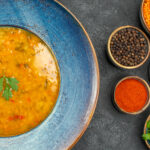
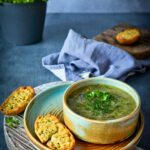
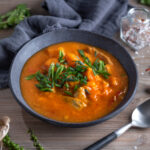
The ancient Azerbaijani slow-cooked soup of lamb, chickpeas, and chestnuts in a saffron-scented broth — traditionally cooked in individual clay pots for hours until the meat is falling-soft and the broth is liquid gold.
About This Recipe
Piti is one of the oldest dishes in Azerbaijani culinary tradition — a soup so particular in its preparation and so beloved in its home city of Sheki that it has never successfully been made anywhere else in quite the same way. The water of Sheki, it is said, makes the broth taste different; the lamb from the mountain pastures around the city has a distinctive sweetness; the clay pots are cured in a particular way. These local specifics cannot be reproduced outside of Sheki, but a piti made with care and patience anywhere in the world is still an extraordinary thing.
The essential technique is time. Piti is not a quick dish and was never intended to be — it is the product of 3–4 hours of gentle simmering in sealed clay pots, during which the lamb becomes fall-apart tender, the chickpeas absorb the saffron-gilded broth, the chestnuts melt into sweet, starchy softness, and the fat from the lamb tail (traditionally used) or lamb shoulder renders into the broth, enriching it with a silky, lip-coating quality. The broth that results from this process is one of the most flavourful things in Azerbaijani cooking — golden, fragrant with saffron and dried herbs, tasting of long patience and good ingredients.
The traditional way to eat piti in Sheki is theatrical and specific: the diner breaks a piece of flatbread (lavash) into a bowl and pours the broth over it to soften it, eats the bread and broth first, then crushes the remaining chickpeas and lamb into a rough stew with the back of a spoon and eats that separately. This two-course-from-one-pot approach speaks to the resourcefulness of the dish’s origins and the reverence in which its creators held every component.
History & Origins
Piti’s origins are traced to the medieval period in the Azerbaijani city of Sheki, which was an important stop on the Silk Road trade route between China and the Mediterranean. The individual clay pot cooking method is documented in Azerbaijani texts from the 14th century, and the dish has been a point of local pride and identity in Sheki for centuries. The specific ingredients — chestnuts from the forests above Sheki, local saffron, mountain lamb — reflect the particular ecology of the Caucasus region. UNESCO has recognised Azerbaijani cuisine, including piti, as part of the intangible cultural heritage of humanity.
Why It’s Healthy
Lamb is an excellent source of complete protein, zinc, iron (in the highly bioavailable haem form), and vitamin B12 — nutrients that are particularly important for those who eat little red meat. Chickpeas provide plant protein and resistant starch that feeds beneficial gut bacteria. Chestnuts are unique among nuts for being very low in fat and high in complex carbohydrates and vitamin C — they are more nutritionally similar to a grain than a conventional nut. Saffron contains crocin and safranal, which have documented antidepressant and anti-inflammatory properties in peer-reviewed research.
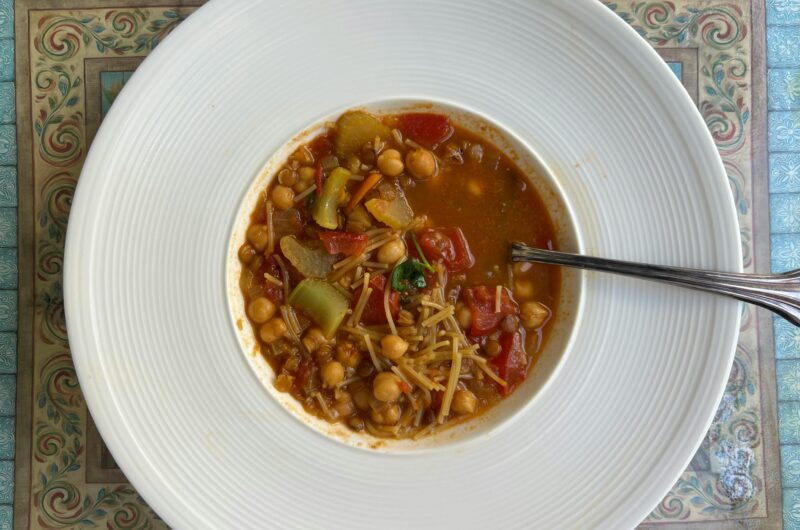
Lamb and Chickpea Soup
Course: Healthy4
servings20
minutes4
hours1800
kcalIngredients
•t600g bone-in lamb shoulder, cut into large pieces
•t250g dried chickpeas, soaked overnight and drained
•t150g cooked chestnuts (tinned or vacuum-packed)
•t2 medium onions, roughly chopped
•t2 medium tomatoes, roughly chopped
•tGood pinch saffron threads, steeped in 3 tbsp hot water
•t1 tsp turmeric
•t1 tsp dried mint
•t0.5 tsp ground cinnamon
•t0.5 tsp ground black pepper
•t1 litre water or lamb broth
•tSalt to taste
•tFresh mint and flatbread to serve
Directions
- Place soaked chickpeas in a pot, cover with fresh water, bring to a boil and simmer for 30 minutes. Drain — they will finish cooking in the soup.
- In a large ovenproof pot or individual clay pots, layer onion on the bottom.
- Add lamb pieces on top of onion. Season generously with salt.
- Add par-cooked chickpeas, tomatoes, chestnuts, turmeric, cinnamon, dried mint, and black pepper.
- Pour saffron water over everything. Add broth or water to just cover.
- Bring to a boil, skim off any foam, then cover tightly.
- Transfer to a 150°C oven and cook for 2.5–3 hours until lamb is completely tender and chickpeas are soft.
- Serve in the pot with flatbread alongside and fresh mint scattered over.
Notes
- The sealed, slow cooking is what defines piti — do not rush it or cook at higher heat, which produces tougher meat and a cloudier broth.
Pre-soaking chickpeas overnight is important — unsoaked dried chickpeas will not cook through in the allotted time. Tinned chickpeas can be used in a pinch but add them in the final 30 minutes only.
Saffron quality varies enormously — use the best you can find. Iranian or Azerbaijani saffron is considered the finest.
Lamb tail fat is the traditional enriching fat — if unavailable, a small amount of lamb bone marrow or an extra 100g of fattier lamb shoulder achieves a similar richness.
Make Ahead Tips
Piti is one of the ideal batch-cooking dishes — it actually improves significantly on the second day as the lamb and chickpeas fully absorb the saffron broth. Make the entire pot up to 2 days in advance, cool, and refrigerate. The fat will solidify on the surface overnight and can be partially skimmed if desired before reheating. Reheat covered in a 160°C oven for 25 minutes or gently on the stovetop.
Storage & Serving
Piti keeps in the fridge for up to 4 days and freezes well for up to 2 months. The broth deepens and becomes richer with each day of storage. Reheat gently on the stovetop or in a 160°C oven — avoid vigorous boiling which can toughen the lamb. Adjust seasoning after reheating as salt perception changes with temperature. The chestnuts become even softer on storage, gradually incorporating into the broth. Serve in the traditional Azerbaijani way: pour the broth into a separate bowl over torn flatbread and eat first as a soup course, then return to the pot to mash the lamb, chickpeas, and chestnuts into a rough stew and eat with more flatbread. Sumac sprinkled over the stew portion and a small dish of raw onion dressed with vinegar and dried mint on the side are traditional accompaniments. Azerbaijani black tea served in armudu (pear-shaped) glasses is the drink.
Variations & Substitutions
Replace chestnuts with dried prunes or sour plums (alça) for a version with more acidity and a darker, sweeter broth — this style is common in southern Azerbaijan. Add a handful of saffron-soaked rice in the final 30 minutes for a more substantial, complete one-pot meal. A chicken version (using bone-in chicken thighs instead of lamb) cooks in half the time and is lighter and more accessible for weeknight cooking.