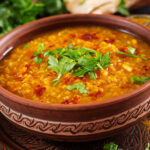
Creamy, coconut-enriched Sri Lankan red lentil curry fragrant with curry leaves, mustard seeds, and pandan — simpler than it sounds, more deeply flavoured than anything this quick has any right to be.
About This Recipe
Sri Lankan parippu is one of those dishes that manages the rare trick of being both effortlessly simple and genuinely complex in flavour — a combination that comes from the tempering technique and from ingredients that are fundamental to Sri Lankan cooking but largely unknown outside of it. The pandan leaf (rampe) — a fragrant green leaf used throughout South and Southeast Asian cooking — adds a subtle, vanilla-like floral note that is woven through the background of the dish and immediately identifiable as distinctly Sri Lankan. The curry leaves, fried in coconut oil until crispy and fragrant, provide a citrusy, herbal note that is one of the essential flavours of South Asian coastal cooking.
The distinction between Sri Lankan dhal curry and Indian dal is not simply one of spicing — it is structural. Sri Lankan parippu is finished with fresh coconut milk rather than ghee, giving it a creamier, slightly sweeter character and a lighter body that is closer to a South Indian coastal dish than a North Indian lentil preparation. The coconut milk is added in two stages: a small amount early to enrich the cooking liquid, and a larger splash at the very end to finish the curry with a fresh, creamy texture.
The tempering — the final step of frying onion, mustard seeds, dried chilli, and curry leaves in hot coconut oil until deeply fragrant and golden, then pouring over the finished dhal — is the same technique used across South Asia, but the specific combination of ingredients and the generous use of curry leaves gives it an unmistakably Sri Lankan character. Eaten with rice and a tangle of pol sambol (fresh coconut relish), this is one of the most satisfying and nutritionally complete simple meals in the world.
History & Origins
Dhal has been eaten in Sri Lanka for thousands of years, forming the nutritional foundation of the diet alongside rice and coconut across all communities — Sinhalese, Tamil, and Moor alike. The coconut palm has grown on Sri Lanka’s coast for millennia and its influence on the island’s cuisine — coconut oil, coconut milk, fresh coconut scraped into sambols — is total and defining. Sri Lanka’s position on ancient maritime spice routes brought additional spicing influences, producing a cuisine that is related to but distinctly different from the cuisines of the Indian subcontinent.
Why It’s Healthy
Red lentils are one of the most nutritionally efficient foods — high in protein, exceptionally high in fibre, and rich in iron, folate, and potassium at minimal caloric cost. Coconut milk provides medium-chain triglycerides (MCTs) with easily metabolised energy and documented antimicrobial properties. Curry leaves are rich in carbazole alkaloids with anti-inflammatory, antioxidant, and potential anti-diabetic properties — fresh curry leaves have significantly higher bioactive compound concentrations than dried. Turmeric provides curcumin. The combination of plant protein, fibre, healthy fats, and a broad spectrum of bioactive compounds makes this one of the most health-supportive simple curries available.
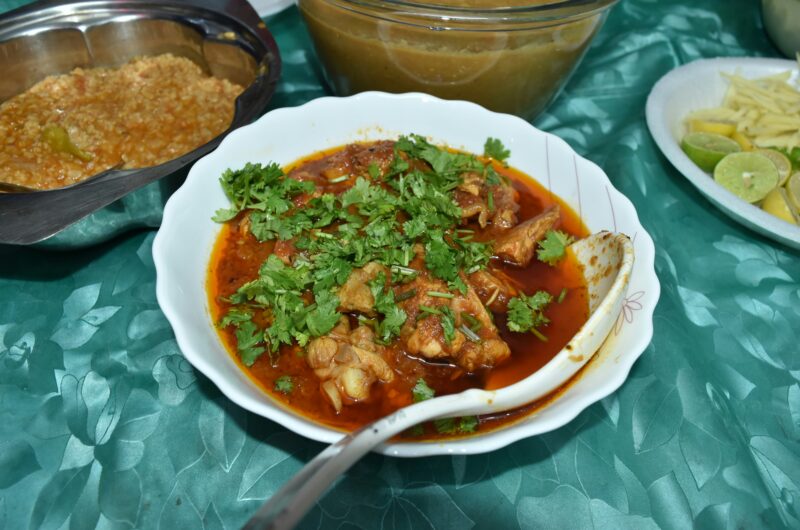
Sri Lankan Dhal Curry
Course: Healthy4
servings10
minutes30
minutes1180
kcalIngredients
•t300g red lentils, rinsed
•t400ml coconut milk
•t300ml water
•t1 medium onion, thinly sliced
•t4 garlic cloves, minced
•t2cm piece ginger, grated
•t1 pandan leaf (rampe), tied in a knot (optional but recommended)
•t1 tsp ground turmeric
•t1 tsp ground cumin
•t1 tsp Sri Lankan curry powder
•tSalt to taste
•tFor tempering: 2 tbsp coconut oil
•tFor tempering: 1 tsp mustard seeds
•tFor tempering: 2 dried red chillies
•tFor tempering: 15 fresh curry leaves
•tFor tempering: 1 small onion, thinly sliced
Directions
- Combine rinsed lentils, 200ml coconut milk, water, half the onion, garlic, ginger, pandan leaf, turmeric, cumin, curry powder, and salt in a pot.
- Bring to a boil, then simmer uncovered for 20–22 minutes, stirring occasionally, until lentils are soft and dissolved.
- Remove pandan leaf. Stir in remaining coconut milk and simmer 3 more minutes. Adjust seasoning.
- For the tempering: heat coconut oil in a small pan over medium-high heat until shimmering.
- Add mustard seeds — they will pop within seconds. Immediately add dried chillies and curry leaves (stand back, they will splutter).
- Add sliced onion and fry for 4–5 minutes until deeply golden and crispy.
- Pour the entire sizzling tempering over the dhal. Stir gently to combine.
- Serve immediately with rice.
Notes
- Fresh curry leaves are essential for the tempering — dried curry leaves have almost none of the aromatic quality of fresh. Find them at Indian or Sri Lankan grocery stores.
The tempering oil must be genuinely hot before adding the mustard seeds — if they do not pop within 3 seconds, the oil is not hot enough.
Pandan leaf (rampe) is available frozen at Asian supermarkets and adds a distinctive floral note unique to Sri Lankan cooking.
Sri Lankan curry powder differs from Indian curry powder — it is typically roasted before grinding, giving it a deeper, slightly smoky character.
Make Ahead Tips
The dhal base (without the tempering) can be made up to 4 days in advance and refrigerated or frozen for 3 months. The tempering should always be made fresh — it takes 5 minutes and the difference between fresh and pre-made tempering is significant. Reheat the dhal gently, thin with water or coconut milk to your preferred consistency, and pour the freshly made tempering over just before serving.
Storage & Serving
Sri Lankan dhal curry keeps in the fridge for up to 5 days and freezes beautifully for 3 months. It thickens considerably on standing — add coconut milk or water when reheating over medium heat. The flavour deepens over 24–48 hours as the spices continue to meld. Always make the tempering fresh when serving stored dhal — it restores the aromatic freshness that fades in the fridge. Store rice separately. Serve over steamed white rice (Sri Lankans use a short-grain red rice for everyday meals, though jasmine rice works well) with pol sambol — fresh grated coconut mixed with red chilli, lime juice, and onion — on the side. A simple green salad of sliced cucumber and tomato dressed with lime and salt, and papadum for crunch, complete the traditional Sri Lankan rice and curry spread. A small dish of lime pickle on the side adds a sharp, intense counterpoint.
Variations & Substitutions
Add a tin of drained chickpeas for extra protein and texture — the chickpeas hold their shape beautifully against the creamy lentil base. Stir in a large handful of fresh spinach in the final 2 minutes for added nutrition and colour. For a richer version, use full-fat coconut cream instead of coconut milk and finish with a drizzle of extra coconut oil. A variation popular in the Northern Province adds a tablespoon of tamarind paste for a sharper, more acidic flavour profile.