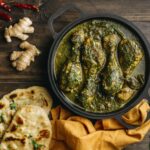
A bold, herb-drenched Georgian braised chicken stew fragrant with fresh coriander, fenugreek, and blue fenugreek, cooked in a rich tomato base with wine — the defining dish of the Caucasus, deeply flavoured and extraordinarily aromatic
About This Recipe
Chakhokhbili is the dish that introduces most people to Georgian cuisine and immediately makes them want to explore it further. Named after the Georgian word for pheasant (khokhobi) — the dish was originally made with game birds — the chicken version has become the standard, and it is extraordinary: a braised stew that achieves a depth of flavour through its unusually generous use of fresh herbs that is unlike anything in the European or Middle Eastern traditions.
The defining characteristic of chakhokhbili is the volume of fresh coriander and herb used — more than most Western cooks would consider reasonable. Where a European stew might finish with a tablespoon of parsley, chakhokhbili uses an entire large bunch of fresh coriander and significant quantities of fresh dill, flat-leaf parsley, and the dried herb that is the soul of Georgian cooking: blue fenugreek (utskho suneli). This herb — available dried at Georgian or Middle Eastern grocery stores — has a distinctive bitter, celery-like depth that cannot be adequately substituted, though regular dried fenugreek gets close.
The technique is notable for the absence of oil in the first step: the chicken pieces are dry-roasted in a heavy pan until they render their own fat and develop colour, before the aromatics and liquid are added. This produces a deeper, more complex flavour than the conventional sauté method and was the original technique when pheasant, a much leaner bird, was used. The wine — Georgian amber wine is traditional, though any dry white works — adds acidity and complexity, and the tomatoes provide the body. The final handful of fresh herbs stirred in off the heat is the defining flavour moment.
History & Origins
Georgia’s cuisine is considered by many food historians to be among the oldest and most sophisticated in the world, shaped by its position at the crossroads of the ancient Silk Road between Europe and Asia. Chakhokhbili appears in Georgian literary and culinary sources from the medieval period, originally as a pheasant dish prepared for feasts. Georgia’s unique food culture — defined by the supra (feast) tradition, the world’s oldest continuous wine culture (8,000 years of viticulture), and the extraordinary herb use — has influenced cuisines from Eastern Europe to the Middle East.
Why It’s Healthy
Chicken is an excellent lean protein source, and the skin-removed version of this dish is particularly low in saturated fat. The extraordinary quantity of fresh herbs provides significant quantities of vitamin K, folate, vitamin C, and antioxidant polyphenols. Tomatoes are rich in lycopene. Fenugreek has been shown in multiple studies to help regulate blood glucose levels and improve insulin sensitivity, making this dish of particular interest for those monitoring blood sugar. The wine provides resveratrol and other polyphenols. Garlic contains allicin with well-documented cardiovascular and antimicrobial benefits.
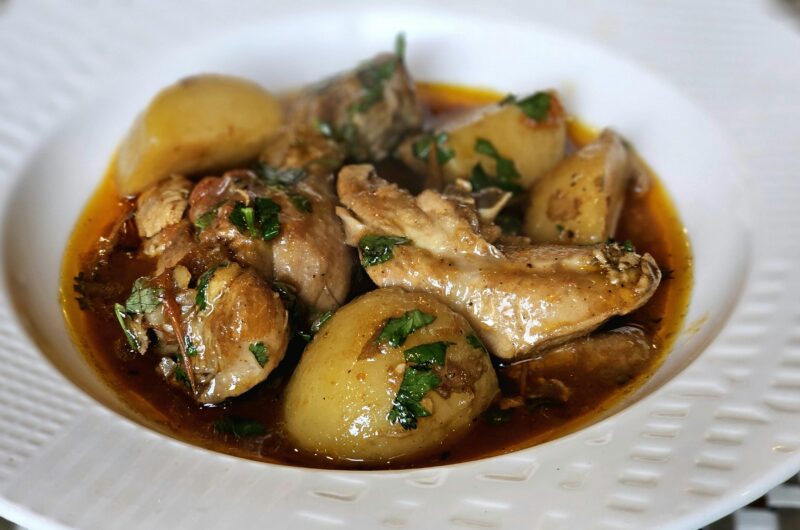
Herb-Braised Chicken
Course: Chicken, Healthy4
servings15
minutes50
minutes1430
kcalIngredients
•t1.2kg chicken pieces (thighs and drumsticks), skin on
•t400g tin whole peeled tomatoes
•t2 large onions, thinly sliced
•t5 garlic cloves, minced
•t150ml dry white wine
•tLarge bunch fresh coriander (about 60g), roughly chopped
•tSmall bunch fresh dill, roughly chopped
•tSmall bunch flat-leaf parsley, roughly chopped
•t1 tbsp dried blue fenugreek (utskho suneli) or regular dried fenugreek
•t1 tsp ground coriander
•t1 tsp paprika
•t0.5 tsp ground fenugreek
•t2 bay leaves
•tSalt, black pepper, and dried chilli flakes to taste
Directions
- Place chicken pieces skin-side down in a cold, heavy-bottomed pot. Turn heat to medium-high — no oil needed.
- Cook for 8–10 minutes until skin is deeply golden and fat has rendered. Turn and brown the other side for 5 minutes.
- Remove chicken. In the rendered fat, cook onions over medium heat for 10 minutes until golden.
- Add garlic, ground coriander, paprika, and fenugreek. Cook 2 minutes.
- Add wine and let it bubble for 2 minutes, scraping the bottom.
- Add tomatoes, crushing them. Return chicken to the pot. Add bay leaves.
- Cover and braise over low heat for 25–30 minutes until chicken is very tender.
- Remove from heat. Stir in fresh coriander, dill, parsley, and blue fenugreek.
- Season generously. Rest 5 minutes before serving — the residual heat will wilt the herbs perfectly.
Notes
- The dry-start technique is essential — do not be tempted to add oil. The chicken skin renders enough fat for the entire dish.
Blue fenugreek is the ingredient that most strongly defines Georgian flavour — it is worth ordering online if unavailable locally.
The fresh herbs are added off the heat to preserve their colour and the volatile aromatic oils that would be destroyed by prolonged cooking.
Chakhokhbili traditionally uses the whole chicken, chopped through the bone — this is more flavourful but bone-in thighs are an excellent and more practical substitute
Make Ahead Tips
Chakhokhbili improves dramatically overnight — the flavours meld and the chicken absorbs the herb-rich braising liquid more deeply on the second day. Make the entire dish up to 2 days in advance, refrigerating without the fresh herbs. Reheat gently and stir in the fresh herbs only when ready to serve. This is one of the best batch-cooking dishes in the collection.
Storage & Serving
Chakhokhbili keeps in the fridge for up to 4 days and freezes well for 2 months (without the fresh herb garnish). The flavour deepens with each day of storage, making it ideal for batch cooking. Reheat over medium-low heat, adding a splash of water if needed to loosen the sauce. Add fresh coriander and dill when reheating for a burst of fresh flavour. Freeze in portions for easy weeknight meals. Serve over mchadi (Georgian cornbread) if available, or with crusty bread for mopping up the fragrant sauce. Georgian ghomi (a thick cornmeal porridge similar to polenta) is the traditional accompaniment in western Georgia. A simple side of sliced tomatoes and red onion with walnut oil and fresh herbs, and a bowl of tkemali (Georgian sour plum sauce) for dipping, complete the table in the Georgian tradition.
Variations & Substitutions
The classic Georgian walnut sauce (satsivi) version uses a completely different sauce of ground walnuts, garlic, and spices instead of tomatoes — a completely different but equally magnificent dish. Replace chicken with lamb shoulder cut into chunks for a heartier winter variation. A vegetarian chakhokhbili using large portobello mushrooms and aubergine braised in the same herb-tomato base is surprisingly convincing and deeply flavoured.