A deeply warming and sustaining Japanese miso soup thick with root vegetables, silken tofu, shiitake mushrooms, and wakame seaweed in a rich dashi broth — everyday Japanese wellness in a bowl.
About This Recipe
In Japan, miso soup is not a side dish or a starter — it is the backbone of the meal, eaten at breakfast, lunch, and dinner, present at virtually every table in the country from the humblest home kitchen to the most formal restaurant. At its simplest it is a clear broth with a whisper of tofu and seaweed; at its most substantial, it becomes a meal in its own right, thick with vegetables and protein in the hearty style called tonjiru.
This recipe takes the tonjiru template — traditionally made with pork — and builds a deeply satisfying vegetarian version around root vegetables and silken tofu, without any compromise to the depth and warmth of the original. The key is the dashi: the Japanese stock made from kombu (dried kelp) and katsuobushi (dried bonito flakes) that underpins virtually all Japanese cooking and provides an instant, profound umami depth that no Western stock can replicate. For a fully vegetarian version, kombu dashi alone — made simply by steeping the kelp in cold water overnight — produces a clean, mineral, deeply flavoured base that is exceptional in its own right.
The miso itself deserves careful selection. White miso (shiro) is sweet and mild; red miso (aka) is deeply fermented, salty, and intense; mixed miso (awase) provides the most rounded, complex flavour and is the best general choice. Miso must never be boiled after it is added to the soup — boiling destroys the live cultures that give miso its characteristic flavour and much of its probiotic benefit. Stir the miso paste in at the very end of cooking over heat that has been reduced to the lowest possible setting.
History & Origins
Miso soup has been consumed in Japan for over 1,300 years, with records of miso production dating to the Nara period. The practice of drinking miso soup at breakfast is thought to date to the Kamakura period (1185–1333), when it became the standard breakfast of samurai warriors who favoured its warming, sustaining properties before training. The post-war school lunch programme made miso soup obligatory in Japanese schools, cementing its status as the defining daily food of Japanese life.
Why It’s Healthy
Miso is one of the most studied fermented foods for health benefits. As a probiotic, it supports gut microbiome diversity and digestive health. Research has associated regular miso consumption with reduced blood pressure, lower rates of gastric cancer, and improved bone density. Kombu provides iodine for thyroid function, alginic acid for digestive health, and a broad spectrum of trace minerals. Tofu provides complete plant protein and isoflavones. The combination of fermented food, seaweed, vegetables, and plant protein makes this soup a remarkably comprehensive health food.
About This Recipe
In Japan, miso soup is not a side dish or a starter — it is the backbone of the meal, eaten at breakfast, lunch, and dinner, present at virtually every table in the country from the humblest home kitchen to the most formal restaurant. At its simplest it is a clear broth with a whisper of tofu and seaweed; at its most substantial, it becomes a meal in its own right, thick with vegetables and protein in the hearty style called tonjiru.
This recipe takes the tonjiru template — traditionally made with pork — and builds a deeply satisfying vegetarian version around root vegetables and silken tofu, without any compromise to the depth and warmth of the original. The key is the dashi: the Japanese stock made from kombu (dried kelp) and katsuobushi (dried bonito flakes) that underpins virtually all Japanese cooking and provides an instant, profound umami depth that no Western stock can replicate. For a fully vegetarian version, kombu dashi alone — made simply by steeping the kelp in cold water overnight — produces a clean, mineral, deeply flavoured base that is exceptional in its own right.
The miso itself deserves careful selection. White miso (shiro) is sweet and mild; red miso (aka) is deeply fermented, salty, and intense; mixed miso (awase) provides the most rounded, complex flavour and is the best general choice. Miso must never be boiled after it is added to the soup — boiling destroys the live cultures that give miso its characteristic flavour and much of its probiotic benefit. Stir the miso paste in at the very end of cooking over heat that has been reduced to the lowest possible setting.
History & Origins
Miso soup has been consumed in Japan for over 1,300 years, with records of miso production dating to the Nara period. The practice of drinking miso soup at breakfast is thought to date to the Kamakura period (1185–1333), when it became the standard breakfast of samurai warriors who favoured its warming, sustaining properties before training. The post-war school lunch programme made miso soup obligatory in Japanese schools, cementing its status as the defining daily food of Japanese life.
Why It’s Healthy
Miso is one of the most studied fermented foods for health benefits. As a probiotic, it supports gut microbiome diversity and digestive health. Research has associated regular miso consumption with reduced blood pressure, lower rates of gastric cancer, and improved bone density. Kombu provides iodine for thyroid function, alginic acid for digestive health, and a broad spectrum of trace minerals. Tofu provides complete plant protein and isoflavones. The combination of fermented food, seaweed, vegetables, and plant protein makes this soup a remarkably comprehensive health food.
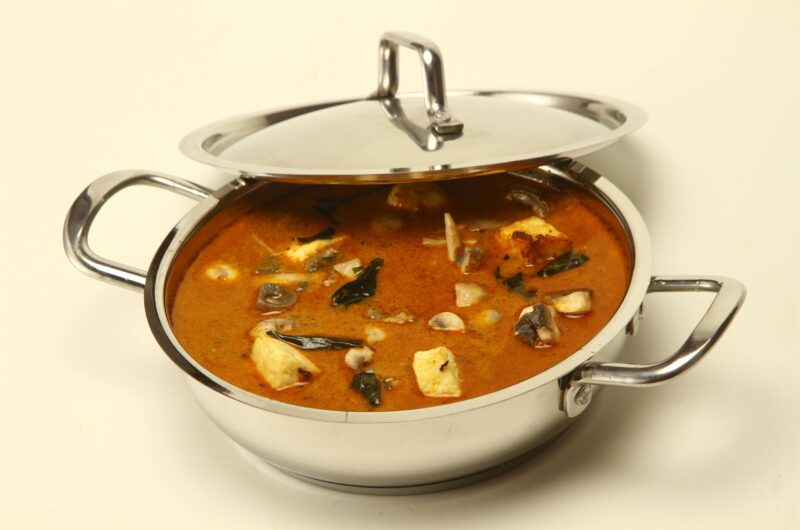
Japanese Tofu and Vegetable Miso Soup (Tonjiru-Style)
Course: Healthy2
servings15
minutes25
minutes185
kcalIngredients
•t300g silken or soft tofu, cubed
•t1 medium carrot, thinly sliced
•t1 small sweet potato, cubed
•t1 medium daikon (white radish), thinly sliced
•t100g shiitake mushrooms, sliced
•t15g dried wakame seaweed, soaked in cold water 5 mins
•t1 litre dashi stock (or vegetable stock for vegan)
•t4 tbsp mixed miso paste (awase)
•t2 spring onions, thinly sliced
•t1 tsp sesame oil
•tFor dashi: 10g kombu
•tFor dashi: 20g dried katsuobushi (skip for vegan)
•tFor dashi: 1.2 litres cold water
Directions
- Make dashi: combine kombu and cold water in a pot. Heat very slowly over low heat for 20 minutes — do not boil. Remove kombu. Bring to a gentle simmer, add katsuobushi, remove from heat, steep 5 minutes, strain. (Or soak kombu in cold water overnight for kombu-only dashi.)
- Bring dashi to a gentle simmer. Add carrot, sweet potato, and daikon. Cook for 10 minutes.
- Add shiitake mushrooms and cook for 5 minutes more.
- Carefully add tofu cubes and simmer very gently for 3 minutes.
- Reduce heat to the lowest possible setting. Place miso paste in a small strainer and lower into the broth, pressing through with a spoon until fully dissolved.
- Drain and squeeze soaked wakame, add to the soup. Add sesame oil.
- Do not boil after adding miso. Serve immediately in bowls topped with spring onions.
Notes
- Never boil miso — this is the cardinal rule. The heat destroys the live cultures and significantly diminishes the flavour.
The miso strainer technique (dissolving paste through a small sieve into the hot broth) prevents lumps and distributes the miso evenly without requiring vigorous stirring that would break up the tofu.
Good dashi makes an exceptional difference to this soup — the 25-minute investment is worthwhile. High-quality instant dashi granules (hondashi) are an acceptable shortcut.
Vary the vegetables with whatever is in season — burdock root, lotus root, kabocha squash, and green beans are all traditional additions.
Make Ahead Tips
The dashi can be made up to 3 days in advance and stored in the fridge, or frozen for 2 months. The vegetable base (without the tofu and miso) can be cooked ahead and refrigerated for 2 days. However, miso soup with tofu is always best made and consumed the same day — tofu deteriorates quickly in the broth.
Storage
Miso soup is best consumed the day it is made. If you must store it, refrigerate without the tofu (which becomes spongy and unpleasant) for up to 2 days. Reheat gently over low heat and never allow to boil — the miso will lose its probiotic properties and the flavour will flatten. Add fresh tofu and re-dissolved miso paste when reheating for a result that is much closer to freshly made. Freezing is not recommended for this soup.
Serving Tips
Serve in traditional lacquerware bowls if available, alongside a bowl of steamed Japanese rice and a small plate of pickled vegetables (tsukemono) for a complete ichiju sansai (one soup, three sides) meal. The soup is equally good at breakfast — in the Japanese tradition, it provides warming, sustaining energy at the start of the day alongside rice and a small piece of grilled fish or egg.
Variations & Substitutions
Tonjiru-style additions: finely sliced pork belly or chicken thigh added at the vegetable stage transforms this into a heartier, more traditional version. For a richer cold-weather variation, add a tablespoon of sesame paste (tahini or white sesame paste) dissolved into the miso — the result is deeply comforting and almost creamy. A poached egg slid into the bowl just before serving adds protein and turns the soup into a complete meal.