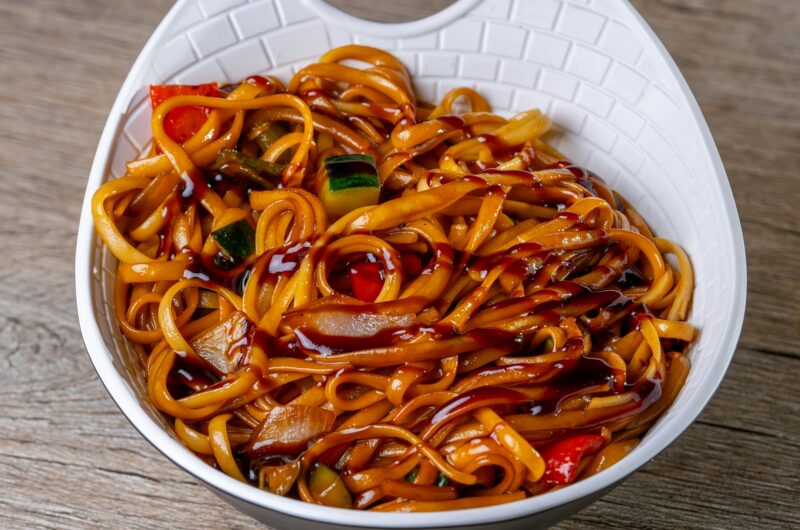
Silky glass noodles stir-fried with chicken, egg, tomato, celery, and oyster sauce — light, quick, and deeply satisfying.
Pad Woon Sen is one of the most underrated dishes in Thai cooking — a stir fry built around glass noodles (woon sen) rather than the more famous rice noodles. These transparent noodles made from mung bean starch have a silky, slightly slippery texture and a neutral flavour that absorbs the sauce and aromatics of the stir fry completely, becoming deeply flavourful while remaining light and delicate.
The dish is simpler and lighter than Pad Thai or Pad See Ew, with a more subtle flavour profile that comes from oyster sauce, light soy sauce, and fish sauce rather than from dark, caramelising sauces. Celery is a distinctive ingredient — its slight bitterness and crunch provide textural interest that is unexpected in a Thai stir fry and is one of the details that makes this dish distinctive. Tomato adds a slight acidity that brightens the whole dish.
Pad Woon Sen is particularly popular in Thai home cooking because it is fast, flexible, and forgiving. Any protein works — chicken, pork, beef, prawns, tofu — and the vegetable selection can be adapted to whatever is available. It is the kind of dish that Thai home cooks make with whatever is in the fridge and it demonstrates that great Thai cooking does not require a long shopping list or hours of preparation.
Nutrition (per serving)
Calories: 420 kcal | Protein: 28g | Carbs: 52g | Fat: 12g | Fiber: 3g
Glass Noodle Stir Fry
Course: Thai4
servings15
minutes15
minutes420
kcalIngredients
•t150g glass noodles (mung bean vermicelli), soaked in cold water for 20 minutes
•t250g chicken breast or thigh, thinly sliced
•t2 eggs
•t2 tomatoes, cut into wedges
•t2 stalks celery, thinly sliced diagonally
•t3 garlic cloves, minced
•t3 spring onions, cut into 3cm pieces
•t100g bean sprouts
•t2 tbsp vegetable oil
•tFor sauce: 2 tbsp oyster sauce
•tFor sauce: 1 tbsp light soy sauce
•tFor sauce: 1 tbsp fish sauce
•tFor sauce: 1/2 tsp sugar
•tFor sauce: pinch of white pepper
Directions
- Mix sauce ingredients together. Set aside.
- Drain soaked glass noodles. If very long, cut into shorter lengths with scissors for easier eating.
- Heat wok over high heat. Add oil. Add garlic and stir fry 30 seconds.
- Add chicken and cook for 3-4 minutes until golden and cooked through.
- Push to the side. Add eggs to the cleared space and scramble, then fold into the chicken before fully set.
- Add noodles and sauce. Toss everything together over high heat for 2 minutes. The noodles will absorb the sauce and turn lightly golden.
- Add tomatoes, celery, and spring onions. Toss for 1 minute — vegetables should remain crisp.
- Add bean sprouts and toss briefly — 30 seconds maximum.
- Serve immediately with white pepper and sliced chilli on the side.
Notes
- Soak glass noodles in cold water — not boiling — for 20 minutes. They will become clear and pliable. Do not oversoak or they become too soft.
Glass noodles absorb liquid very quickly — have everything prepped and move fast once they go into the wok.
Cut the noodles into shorter pieces with scissors before or after soaking for easier tossing and eating.
Do not overcook the vegetables — they should retain their crunch and colour to contrast with the silky noodles.
For a vegetarian version, replace chicken with firm tofu and fish sauce with extra soy sauce or tamari.
Storage
Pad Woon Sen is best eaten immediately. Glass noodles continue absorbing liquid as they sit and can become sticky and clumped. Leftovers keep for 1 day in the fridge. Reheat in a hot wok with a splash of water and a little extra oyster sauce.
Serving Tips
Serve immediately with white pepper, dried chilli flakes, fish sauce, and sugar on the side. A cold Singha lager or Thai iced tea alongside. Pad Woon Sen is also excellent at room temperature as a lighter lunch dish — the flavours are clean and do not become heavy when cold.