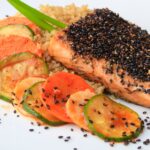
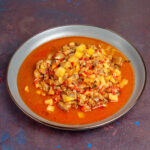
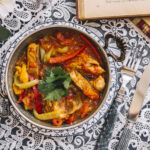
The legendary West African tomato rice — cooked low and slow in a deeply spiced, blended pepper and tomato base until each grain is stained vivid red and smoky at the edges, served with roasted plantain and vegetables.
About This Recipe
Jollof rice is more than a dish — it is a cultural battleground, a source of fierce national pride, and one of the most hotly contested culinary claims in the world. Nigerian, Ghanaian, Senegalese, and other West African nations all claim supremacy of their version, and the differences between them, while subtle to an outsider, are matters of deep significance within the diaspora. This recipe draws primarily from the Nigerian tradition — arguably the most internationally recognised — while acknowledging that the true jollof of every grandmother in every country is, to her family, the definitive version.
The technique that distinguishes great jollof from mediocre jollof is the party rice effect — the slightly smoky, almost charred bottom layer called the socorrat that develops when the rice is cooked on low heat in a tightly sealed pot after the liquid is mostly absorbed. This layer, pulled loose and mixed through the finished rice, provides the distinctive smokiness that separates a memorable jollof from a merely competent one. Gas cookers achieve this most easily; on electric hobs it requires more attention and a slightly longer cooking time on the lowest possible setting.
The pepper base — blended tomatoes, red peppers, scotch bonnet, and onion, reduced down in oil until it has lost all its water and darkened to a deeply concentrated paste — is the foundation of the dish and cannot be rushed. This step alone takes 20–30 minutes of steady stirring, and the depth of flavour in the finished rice is directly proportional to how long and how faithfully this reduction is carried out. The rice is added to this concentrated paste and cooked in it rather than in water, absorbing the intense pepper flavour through every grain.
History & Origins
Jollof rice is believed to have originated among the Wolof people of modern-day Senegal and the Gambia, where a dish called thieboudienne — rice cooked in fish and tomato broth — is considered the ancestor of jollof. The dish spread across West Africa with the movement of people along trade routes, adapting in each country to local ingredients, techniques, and tastes. The Nigerian version rose to international prominence with the growth of the Nigerian diaspora, and the so-called Jollof Wars between Nigeria and Ghana became a globally recognised cultural phenomenon in the social media era.
Why It’s Healthy
Tomatoes and red peppers, which form the base of jollof, are among the richest food sources of lycopene and vitamin C respectively. The reduction process that concentrates the pepper base actually increases lycopene bioavailability — cooking and processing tomatoes releases lycopene from cell walls, making it more accessible than in raw tomatoes. Scotch bonnet peppers are one of the most capsaicin-rich chillies in the world, with documented anti-inflammatory and metabolic benefits. Roasted plantain provides resistant starch that feeds beneficial gut bacteria. The vegetable version of this dish is a genuinely complete, nutritionally balanced meal.
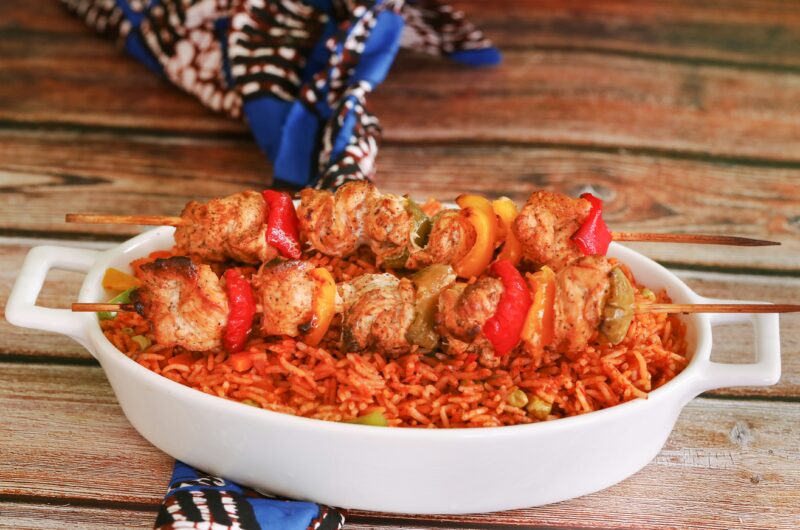
West African Jollof Rice with Roasted Vegetables
Course: Healthy, Soup4
servings20
minutes1
hour1680
kcalIngredients
•t400g long-grain parboiled rice (Uncle Ben’s style), rinsed
•t400g tin whole peeled tomatoes
•t3 red peppers, roughly chopped
•t1 scotch bonnet chilli (or habanero), whole
•t2 large onions, 1 roughly chopped, 1 finely sliced
•t4 garlic cloves
•t3 tbsp vegetable oil
•t1 tsp curry powder
•t1 tsp paprika
•t1 tsp dried thyme
•t2 bay leaves
•t600ml vegetable broth
•tSalt to taste
•tFor roasted vegetables: 2 plantains, sliced
•tFor roasted vegetables: 1 red onion, wedged
•tFor roasted vegetables: 2 tbsp vegetable oil
Directions
- Blend tinned tomatoes, red peppers, scotch bonnet, and chopped onion until completely smooth.
- Heat oil in a large heavy pot. Fry sliced onion for 5 minutes. Add garlic, curry powder, paprika, and thyme. Cook 2 minutes.
- Pour in blended pepper mixture. It will splutter vigorously — stir and cook uncovered over medium heat for 25–30 minutes, stirring every 5 minutes, until the paste has darkened, thickened significantly, and the oil has separated on the surface.
- Add rinsed rice and stir to coat every grain in the pepper paste.
- Add broth and bay leaves. Season generously. Bring to a boil.
- Reduce to the lowest possible heat, cover very tightly (use foil under the lid to seal), and cook for 30 minutes without lifting the lid.
- While rice cooks, toss plantain and onion wedges with oil and salt. Roast at 200°C for 20–25 minutes until caramelised.
- Check rice — it should be cooked through with a slightly smoky layer at the bottom. Fluff gently and mix in the bottom layer.
- Serve with roasted plantain and vegetables.
Notes
- The 25–30 minutes of reducing the pepper base is non-negotiable — undercooked paste produces a sour, raw-tasting rice.
Parboiled rice is the correct choice for jollof — it absorbs the pepper sauce without becoming mushy. Regular long-grain rice can be used but requires adjustment of liquid quantity.
Do not lift the lid during the 30-minute covered cooking — the trapped steam is what finishes the rice.
The slightly charred bottom layer (the party rice) is a prize, not a mistake — mix it through for the full flavour.
Make Ahead Tips
The concentrated pepper base can be made up to 5 days in advance and refrigerated, or frozen for 3 months. This turns jollof into a 45-minute weeknight dish rather than an hour-plus undertaking. The rice is best made fresh — leftover jollof reheats adequately but never quite recaptures the steam-set texture of the freshly made version.
Storage & Serving
Jollof rice keeps in the fridge for up to 4 days. Reheat in a pan over low heat with a splash of water and a lid to trap steam, or in the microwave covered with a damp paper towel. The rice firms on standing — it will not be as fluffy as freshly made but the flavour remains excellent. The pepper base freezes well for 3 months. Roasted plantain is best made fresh but reheats well in a hot oven for 5 minutes. Serve in a large communal bowl or on individual plates with roasted plantain alongside, fried sweet plantain (kelewele) if available, and a simple Nigerian coleslaw (thinly sliced cabbage with mayonnaise and sweetcorn). Chin chin, moi moi, or fried fish are traditional party accompaniments. Cold Malta or Fanta — the archetypal party drinks — are the authentic Nigerian accompaniments, though any cold drink works.
Variations & Substitutions
Chicken jollof — the most common celebration version — adds marinated, oven-roasted chicken thighs on top of the rice for the final 10 minutes of covered cooking, so the chicken juices baste the rice as it finishes. A Ghanaian-style version uses more tomato paste and a different spice profile with more ginger. Senegalese thieboudienne, the ancestor dish, uses fish, vegetables, and a tamarind-enriched broth for a completely different but equally magnificent result.