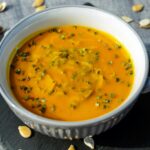
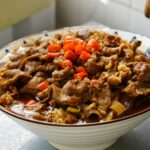
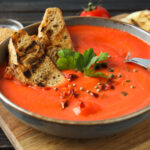
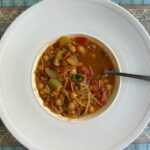
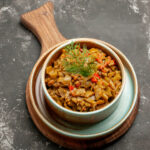
The fiery, deeply aromatic national stew of Eritrea — chunks of lamb slow-braised in berbere-spiced tomato sauce until falling apart, served over injera with a cloud of fresh herbs, vibrant and boldly spiced.
About This Recipe
Zigni is the defining meat stew of Eritrean cuisine — a dish of such intensity and bold flavour that first contact with it can feel overwhelming before becoming completely irresistible. It belongs to the broader East African tradition of berbere-based stews shared between Eritrea, Ethiopia, and the Tigray region of northern Ethiopia, but has its own distinct character: typically spicier than its Ethiopian relatives, often incorporating more tomato, and served with a specific set of accompaniments that reflect Eritrea’s particular food culture.
The berbere spice blend is the heart of zigni, and the quality and quantity used determines the character of the finished stew. Unlike the gradual spicing of European meat stews, where spices are added cautiously, zigni requires an almost fearless commitment to the berbere — enough to colour the fat vividly orange-red and to provide the complex, layered heat that defines the dish. The initial frying of the berbere in oil before any other ingredient is added is the step that most dramatically develops the spice flavour: the direct heat unlocks volatile oils and Maillard reactions in the chilli and spice mixture that are impossible to achieve by simply adding the spices to liquid.
The lamb must be bone-in for the full flavour impact — the collagen and marrow that leach from the bones during the long braise produce a sauce of extraordinary richness and body. The tomatoes, added in large quantity, provide both acidity to balance the fat and the liquid medium for the slow cook. The finished zigni should be thick, deeply coloured, and complex — simultaneously hot, sweet from the long-cooked onion, savoury from the lamb, and acidic from the tomatoes.
History & Origins
Eritrea’s culinary tradition shares deep roots with Ethiopian cuisine but has been shaped by its own distinct history — including Italian colonial occupation from 1890 to 1941, which left a visible influence on Eritrean food culture (the country has a sophisticated café culture and uses pasta more commonly than Ethiopia). Zigni’s origins predate the colonial period and reflect the ancient highland cooking traditions of the Tigrayan people. The berbere spice blend used in zigni has been produced in the Eritrean and Ethiopian highlands for centuries, with the specific formulations varying by family and region as closely guarded culinary traditions.
Why It’s Healthy
Lamb provides haem iron — the most bioavailable form of dietary iron — alongside zinc, selenium, and vitamin B12, nutrients particularly important for those eating limited red meat. The bone-in cooking method releases glycine-rich gelatine and collagen with benefits for joint health, gut lining integrity, and skin elasticity. Berbere spice blend is rich in capsaicin, curcumin, coriander, and fenugreek — compounds with collectively extensive anti-inflammatory and metabolic research support. Tomatoes provide lycopene, the bioavailability of which is maximised in this long-cooked, fat-enriched preparation.
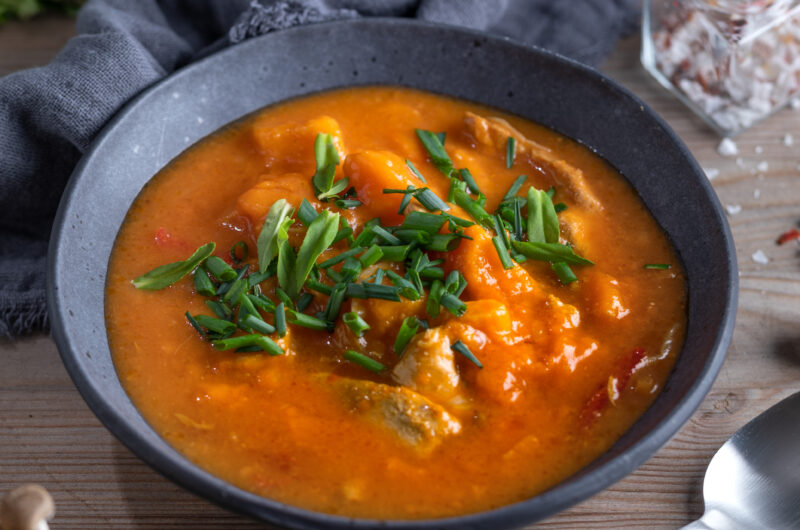
Spiced Lamb and Tomato Stew
Course: Healthy, Soup4
servings15
minutes1
hour20
minutes1720
kcalIngredients
•t700g bone-in lamb shoulder, cut into large pieces
•t400g tin crushed tomatoes
•t3 large onions, very finely diced
•t5 garlic cloves, minced
•t2cm piece ginger, grated
•t3–4 tbsp berbere spice blend (to taste)
•t3 tbsp vegetable oil or niter kibbeh
•t1 tbsp tomato paste
•t200ml water
•tSalt to taste
•tFresh coriander and spring onions to garnish
•tInjera or flatbread to serve
Directions
- Heat oil in a large heavy pot over medium heat. Add onions and cook for 20–25 minutes, stirring every few minutes, until deeply caramelised and dark brown.
- Clear a space in the pan. Add berbere spice and stir in the oil for 2 minutes until the spice darkens and smells intensely fragrant.
- Add garlic, ginger, and tomato paste. Cook 2 minutes.
- Add lamb pieces and brown on all sides, about 5 minutes.
- Add crushed tomatoes and water. Stir to combine, scraping the bottom.
- Bring to a boil, then reduce to a low simmer. Cover and cook for 50–60 minutes until lamb is falling-tender.
- Remove lid and simmer for 10 minutes to reduce the sauce. It should be thick and glossy.
- Season with salt. Garnish with coriander and spring onions. Serve over injera.
Notes
- The 20–25 minutes of onion caramelisation is the most important step — do not shorten it. Darkly caramelised onions are the flavour foundation of zigni.
Berbere heat levels vary by brand — start with 3 tablespoons and increase after tasting. Authentic Eritrean zigni is quite spicy.
Bone-in lamb provides far more flavour than boneless — the collagen and marrow enrich the sauce in a way boneless meat cannot.
Niter kibbeh (Ethiopian/Eritrean spiced clarified butter) produces a more authentic flavour than vegetable oil and is worth using if available.
Make Ahead Tips
Zigni is one of the best stews for making ahead — the flavour deepens dramatically over 24–48 hours in the fridge as the berbere spices continue to meld into the lamb and tomato. Make the full batch up to 3 days in advance, refrigerate, and reheat over medium heat with a splash of water. The fat may solidify on the surface overnight and can be partially skimmed if desired. Freezes excellently for up to 3 months.
Storage & Serving
Zigni keeps in the fridge for up to 5 days and freezes beautifully for 3 months, making it ideal for batch cooking. The stew thickens considerably on storage as the lamb releases more gelatine — add water or broth when reheating and stir over medium heat. The flavour at day two and three is noticeably superior to freshly made — the berbere loses its raw edge and the lamb absorbs the spiced tomato sauce more completely. Always garnish with fresh herbs at serving. Serve on a large piece of injera — the spongy Eritrean sourdough flatbread — in the traditional communal style, with the zigni spooned over the injera and extra rolled injera on the side for scooping. Ayib (fresh Eritrean cheese similar to cottage cheese), gomen (spiced collard greens), and lentils are the classic accompaniments for a full Eritrean spread. If injera is unavailable, any soft flatbread serves well. Eritrean spiced tea (shai) is the traditional accompaniment.
Variations & Substitutions
Zigni can be made with beef (zigni selsi) for a slightly less rich but equally flavourful result — use beef chuck cut into large pieces and increase the cooking time by 20 minutes. A chicken zigni (dorho zigni) is a lighter, faster version using bone-in chicken thighs that is traditional for special occasions and adds a hard-boiled egg to each serving. A vegetarian zigni using chickpeas and mushrooms in place of lamb is popular during Orthodox Christian fasting periods and is deeply satisfying.