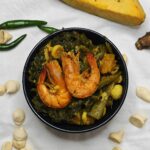
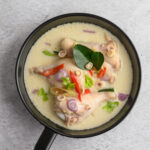
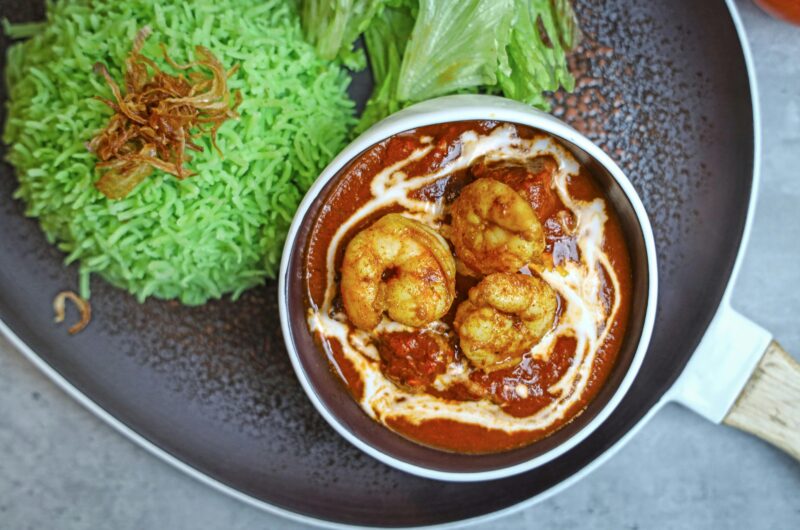
A vivid, fragrant Brazilian seafood stew from Bahia — prawns poached in golden coconut milk enriched with palm oil, tomato, coriander, and lime — coastal Brazil at its most colourful and alive.
About This Recipe
Moqueca is one of Brazil’s great culinary exports — a dish that arrived in Bahia with West African enslaved people who brought their cooking techniques, ingredients (particularly dendê palm oil), and flavour sensibilities across the Atlantic, then combined them with the coastal seafood abundance and indigenous culinary traditions of northeastern Brazil to create something entirely new and extraordinary.
Baiana moqueca is distinguished from the Capixaba version of Espírito Santo by the use of dendê oil — the intensely orange-red, rich palm oil that is the foundational fat of Bahian African-influenced cooking and that gives the stew its distinctive golden-orange colour and its round, slightly earthy richness. Dendê is non-negotiable in authentic moqueca — the flavour it contributes is so specific that no other oil can substitute without producing a different dish. It is available at Brazilian and African food stores and increasingly at well-stocked supermarkets.
The technique is deceptively simple: a base of onion, tomato, and pepper is built, the coconut milk is added, and the prawns are poached in this fragrant liquid for a very brief time — just long enough to cook through, never longer. Overcooked prawns are the most common error with this dish and the most forgivable-looking but most flavour-damaging mistake. Three minutes of gentle simmering is usually sufficient for large prawns; they should be just opaque, curved but not tightly curled, yielding to the bite with a slight spring rather than the rubbery resistance of overcooking. Fresh coriander, lime, and a final spoonful of dendê oil are added at serving, brightening and sharpening the richness of the coconut milk.
History & Origins
Moqueca’s roots are in both the indigenous Tupi cooking of coastal Brazil — where fish and shellfish were cooked with local aromatics in clay pots — and in the Yoruba and Fon culinary traditions brought by enslaved West Africans to Bahia, who introduced palm oil, coconut milk, and the spiced, aromatic cooking style that defines Bahian food. The dish has been prepared on the Bahian coast for at least 300 years and is considered the defining dish of Bahian cuisine, inseparable from its Afro-Brazilian cultural identity and heritage.
Why It’s Healthy
Prawns are one of the leanest, highest-protein seafoods available, with a remarkable micronutrient profile including exceptionally high levels of selenium (critical for thyroid function and antioxidant defence), iodine, zinc, and vitamin B12. Coconut milk provides MCTs for quick energy. Palm oil — used in small quantities — is rich in tocotrienols (a form of vitamin E) and beta-carotene (the source of its orange colour). Tomatoes and peppers provide lycopene and vitamin C. Coriander contains quercetin and other anti-inflammatory flavonoids. The overall caloric density is surprisingly modest given the richness of the flavour
Prawn Coconut Stew
Course: Healthy4
servings15
minutes25
minutes1380
kcalIngredients
•t600g large raw prawns, peeled and deveined
•t400ml full-fat coconut milk
•t3 medium tomatoes, diced
•t2 red peppers, diced
•t1 large onion, thinly sliced
•t4 garlic cloves, minced
•t2 tbsp dendê (palm) oil (or extra-virgin olive oil as substitute)
•t1 tbsp olive oil
•tLarge bunch fresh coriander, roughly chopped
•tJuice of 2 limes
•t1 scotch bonnet or malagueta chilli, finely chopped (to taste)
•tSalt to taste
•tSteamed white rice to serve
Directions
- Marinate prawns with lime juice, half the garlic, salt, and half the coriander for 15 minutes.
- Heat olive oil in a wide pan over medium heat. Sauté onion for 5 minutes until softened.
- Add remaining garlic, red peppers, and chilli. Cook 3 minutes.
- Add tomatoes and cook for 5 minutes until slightly broken down.
- Pour in coconut milk. Bring to a gentle simmer and cook for 5 minutes.
- Add prawns and their marinade. Cook for 3–4 minutes, turning once, until just opaque. Do not overcook.
- Stir in dendê oil and remaining coriander. Taste and adjust seasoning with salt and lime.
- Serve immediately with steamed white rice.
Notes
- Dendê oil is available at Brazilian, African, and some Asian grocery stores. Its flavour is unique — the olive oil substitute produces a different but still delicious dish.
The single most important rule: do not overcook the prawns. They are done the moment they turn pink and opaque throughout.
Fresh coconut milk (from a tin, not a carton) is essential — carton coconut milk is diluted and watered down.
For extra depth, char the tomatoes and peppers under a grill before adding them to the base.
Make Ahead Tips
The coconut milk base (without the prawns) can be made up to 2 days in advance and refrigerated. Reheat the base gently until simmering, then add the marinated prawns fresh and cook for 3–4 minutes. Never add prawns to the base and refrigerate — they will overcook on reheating and become rubbery. Marinate the prawns up to 4 hours in advance in the fridge.
Storage & Serving
Moqueca is best eaten the day it is made — prawns deteriorate quickly and become rubbery on reheating. The coconut base keeps for 3 days in the fridge (without prawns) and can be repurposed as a sauce for fish, chicken, or tofu. If you must store the finished dish, refrigerate for 1 day maximum and reheat very gently over the lowest possible heat, just until warmed through — do not simmer or boil. The dish does not freeze well. Serve in a large clay pot or wide bowl placed in the centre of the table, with steamed white rice, farofa (toasted cassava flour seasoned with butter and herbs) for sprinkling over, and pirão (a thick cassava porridge made by cooking the cooking liquid with manioc flour) alongside in the traditional Bahian style. Extra lime wedges and fresh coriander on the table allow each person to brighten their bowl to taste. Ice-cold caipirinha or cold Brazilian lager are the ideal accompaniments.
Variations & Substitutions
Fish moqueca (moqueca de peixe) uses thick fillets of firm white fish — traditionally salt cod (bacalhau) or snapper — cooked in the same base for 8–10 minutes. Mixed seafood moqueca with clams, squid, and prawns is a restaurant favourite. A vegan version using hearts of palm and firm tofu instead of seafood in the coconut base is popular across Brazil and works remarkably well. The Capixaba version (from Espírito Santo state) omits the dendê oil and uses only olive oil for a lighter, less intensely flavoured result.