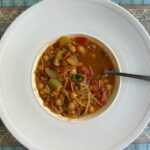
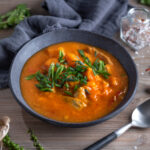
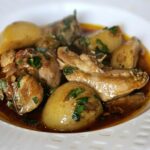
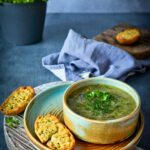
Yemen’s fiercely loved national dish — a bubbling stone pot of slow-cooked lamb stew topped with whipped fenugreek foam (hulba) and swirls of scorching zhug chilli sauce, eaten communally from the pot.
About This Recipe
Saltah is the national dish of Yemen and one of the most distinctive eating experiences in the Arab world — not just a stew but a theatrical presentation and a communal ritual. It arrives at the table in a stone pot (madar) that has been heated to the point of volcanic activity, still bubbling and spitting, topped with a thick, foamy green cloud of hulba — whipped fenugreek paste — and streaked with fiery green zhug. The correct way to eat it is to tear flatbread and use it to scoop from the communal pot, with each person navigating the hulba, the stew, and the zhug in whatever ratio suits them.
The hulba is the element that makes saltah unlike any other dish in the world. Made from dried fenugreek seeds soaked overnight until they form a thick gel, then whipped vigorously with water into a stiff, meringue-like foam, it has a intensely bitter, herbaceous flavour that is polarising on first encounter and addictive thereafter. The fenugreek foam melts slightly into the hot stew as you eat, releasing its bitter, slightly sweet flavour into the broth and adding a textural contrast that is completely unique. No other cuisine in the world uses fenugreek in this way, and no description adequately prepares you for the experience of it.
The stew base itself is deeply flavoured — lamb slow-cooked with tomato, potato, and the Yemeni spice blend hawaij (a mixture of black pepper, cumin, coriander, turmeric, and cardamom) until the meat is completely tender and the broth is rich and aromatic. The zhug — a ferociously hot Yemeni chilli sauce blended from fresh green chilli, coriander, garlic, and cardamom — provides the heat element, and each person controls how much they add to their portion.
History & Origins
Saltah’s origins in Yemen are ancient, with the dish documented in the region for centuries as a common workers’ lunch eaten at communal tables in market districts. The specific combination of hulba, zhug, and stew is unique to Yemeni cuisine and reflects the country’s position at the intersection of ancient trade routes connecting Africa, the Indian subcontinent, and the Arab world. Yemen was historically the primary conduit for spice trade between the Indian Ocean and the Mediterranean, which explains the complex, layered spicing that defines Yemeni cuisine. Today saltah is recognized as a UNESCO intangible cultural heritage.
Why It’s Healthy
Fenugreek — the defining ingredient of hulba — is one of the most pharmacologically active foods in the human diet. Multiple clinical trials have demonstrated that fenugreek supplementation significantly reduces fasting blood glucose and improves insulin sensitivity in type 2 diabetics, effects attributed to the soluble fibre 4-hydroxyisoleucine and galactomannan. Lamb provides complete protein, haem iron, zinc, and vitamin B12. The hawaij spice blend provides curcumin (turmeric), anti-inflammatory compounds (black pepper), and digestive aids (cumin, coriander). Zhug delivers capsaicin from fresh chilli with antimicrobial and metabolic benefits.
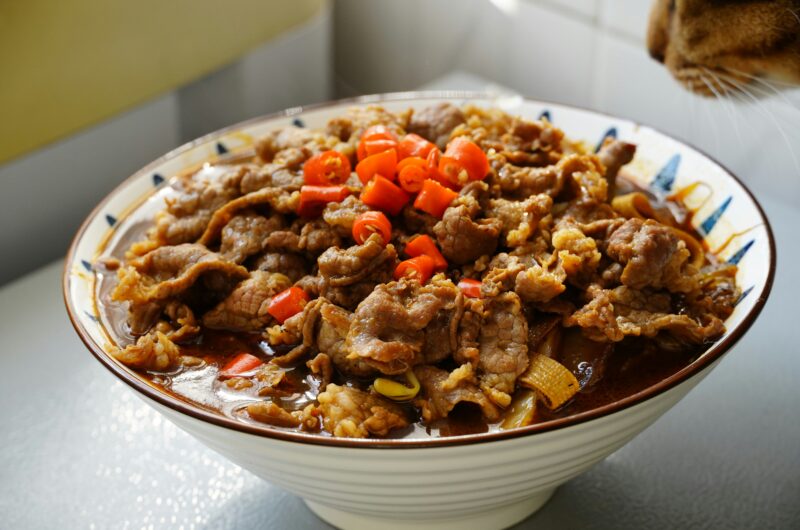
National Spiced Meat Stew
Course: Healthy4
servings20
minutes1
hour30
minutes1860
kcalIngredients
•t600g lamb shoulder, bone-in, cut into large pieces
•t2 medium potatoes, cubed
•t2 medium tomatoes, diced
•t1 large onion, diced
•t4 garlic cloves, minced
•tFor hawaij: 1 tsp ground black pepper, 1 tsp cumin, 1 tsp coriander, 0.5 tsp turmeric, 0.25 tsp cardamom
•tSalt to taste
•t800ml water or lamb broth
•tFor hulba: 3 tbsp dried fenugreek seeds, soaked overnight in cold water
•tFor hulba: salt to taste
•tFor zhug: 4 green chillies, 1 bunch coriander, 4 garlic cloves, 0.5 tsp cardamom, 3 tbsp olive oil, salt
Directions
- Brown lamb pieces in a heavy pot over high heat. Add onion and cook 5 minutes.
- Add garlic, all hawaij spices, and salt. Stir and cook 2 minutes.
- Add water or broth and tomatoes. Bring to a boil, skim foam, then cover and simmer for 1 hour.
- Add potatoes and cook for a further 20–25 minutes until tender.
- Make zhug: blend all zhug ingredients until a coarse paste forms. Adjust seasoning and chilli to taste.
- Make hulba: drain soaked fenugreek seeds. Blend with 3 tbsp fresh cold water. Transfer to a bowl and whip vigorously with a fork or hand whisk for 5 minutes until the mixture triples in volume and forms a stiff, meringue-like foam. Season with salt.
- Transfer finished stew to a heated stone pot or cast-iron dish. Place over high heat until bubbling vigorously.
- Spoon hulba generously over the top of the stew. Streak zhug over the hulba.
- Bring to the table immediately, still bubbling, with flatbread alongside.
Notes
- Hulba takes patience and vigorous whisking — whip for a full 5 minutes without stopping. The gel from the soaked fenugreek is what allows it to foam; too little soaking produces a flat result.
The stew should be at a rolling boil when the hulba is added — the heat partially sets the foam and begins to melt it into the broth, which is the desired effect.
Zhug heat level varies with chilli choice — jalapeño for mild, serrano for medium, bird’s eye or scotch bonnet for authentic Yemeni heat.
Dried fenugreek seeds need overnight soaking — plan ahead. The seeds will absorb water and form a thick, slightly mucilaginous gel.
Make Ahead Tips
The lamb stew base keeps in the fridge for up to 4 days and improves overnight — make it ahead of time. Zhug keeps in the fridge for 1 week covered in olive oil and also freezes well for 3 months. Always make the hulba fresh just before serving — it cannot be stored once whipped as the foam collapses within an hour. The soaked fenugreek seeds (before whipping) can be kept in the fridge for up to 3 days.
Storage & Serving
The lamb stew keeps for 4 days refrigerated and freezes for 2 months. Reheat vigorously until bubbling before serving — saltah is always served at a rolling boil in its stone pot. Zhug keeps for 1 week in the fridge stored under a layer of olive oil. Hulba must always be made fresh — once whipped and collapsed, the fenugreek foam loses its distinctive texture and cannot be revived. Keep soaked fenugreek seeds ready in the fridge for quick hulba preparation. Serve in the largest, most heat-retentive vessel you have — a cast-iron skillet, a clay tagine, or a flameproof ceramic dish. Bring directly to the table on a trivet while still bubbling. Place a stack of fresh flatbread (lahoh or any soft flatbread) alongside and let everyone eat communally from the pot. Extra zhug in a small bowl and a plate of fresh coriander, sliced onion, and lemon wedges on the side are the traditional accompaniments.
Variations & Substitutions
Chicken saltah uses bone-in chicken thighs instead of lamb, reducing the cooking time to 40 minutes and producing a lighter, more accessible result that is popular for everyday meals. A fully vegetarian saltah uses a base of cooked lentils, potatoes, and tomatoes with the same hawaij spicing — the hulba and zhug are naturally vegan and work just as well without meat. Some Yemeni cooks add scrambled eggs on top of the hulba for an even richer, more substantial dish. Fish saltah, popular on the Yemeni coast, uses firm white fish fillets added in the final 10 minutes.