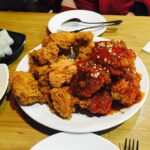
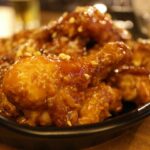
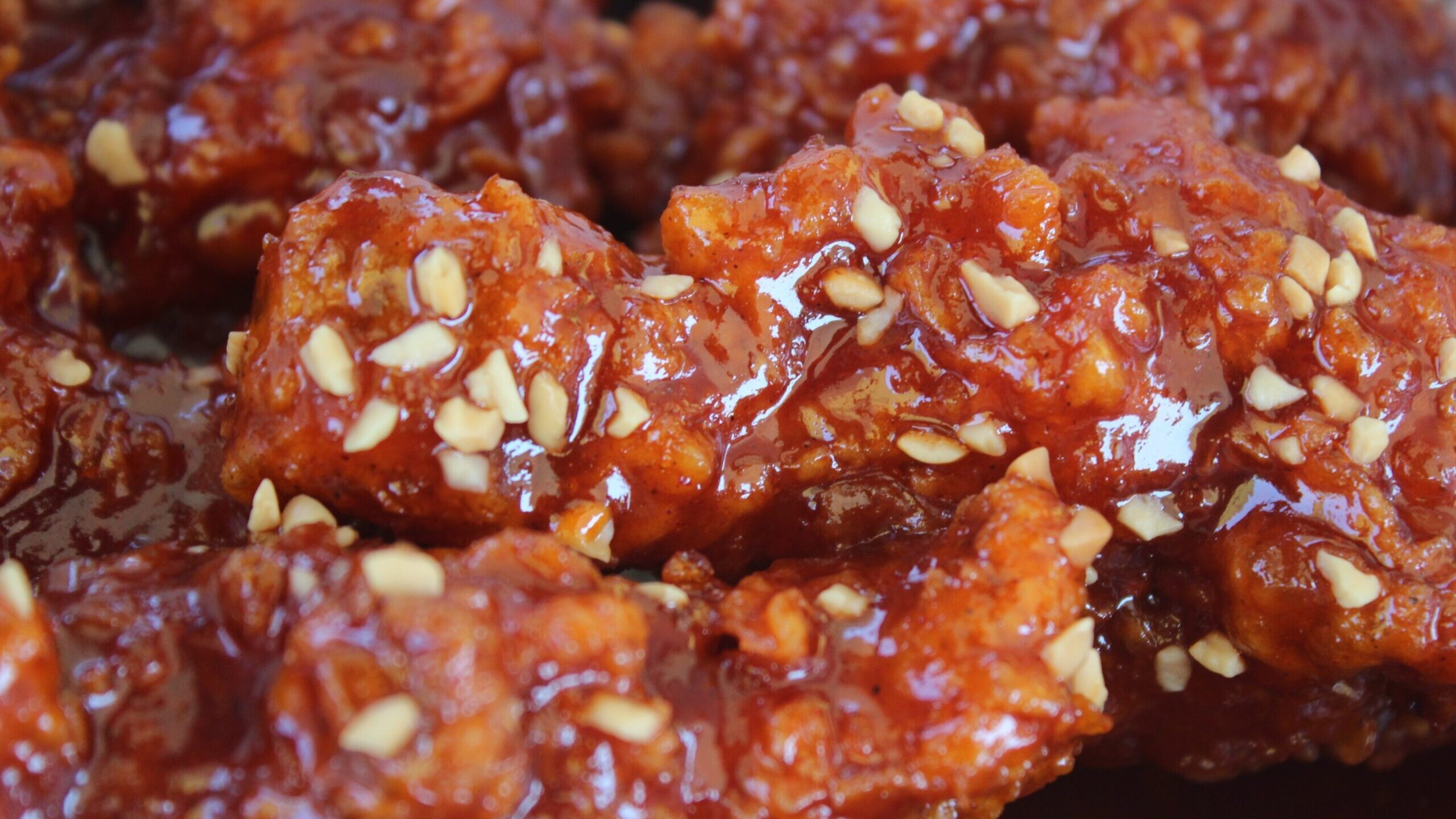
Double-fried chicken wings coated in a sticky, sweet and spicy gochujang glaze, the crunchiest, most addictive fried chicken in the world.
Introduction
Korean fried chicken has achieved global cult status for good reason. The double-frying technique, unique to Korean fried chicken, produces a thin, shatteringly crispy coating that remains crunchy even after being coated in sauce, something that standard fried chicken cannot achieve. The sticky, sweet-spicy gochujang glaze applied over the crispy skin creates a combination of textures and flavours that is genuinely unlike any other fried chicken tradition.
The double-frying method is the technical innovation that defines Korean fried chicken. Frying the chicken once at lower temperature to cook it through, then allowing it to rest before a second fry at higher temperature, drives out the remaining moisture and produces a coating with a completely different, thinner, and more delicate crunch than single-fried chicken.
Gochujang, the Korean fermented chilli paste that forms the basis of the glaze, provides a flavour that is simultaneously spicy, sweet, savoury, and slightly funky from the fermentation. It cannot be replaced without losing the essential Korean character of the dish. It is now available in most large supermarkets and Asian grocery stores and is worth keeping in the fridge for this and many other Korean-inspired recipes.
History and Background
Fried chicken arrived in South Korea through American military influence following the Korean War in the 1950s. American-style fried chicken was sold near US military bases and Korean cooks began adapting the technique to Korean tastes, eventually developing the double-frying method and the sauced versions that became distinctively Korean.
Korean fried chicken, known as chimaek when eaten with beer, the maek in maekju, the Korean word for beer, became a cultural institution in South Korea from the 1970s onwards. Dedicated Korean fried chicken chains expanded dramatically from the 1980s and the dish became one of the most popular delivery foods in the country, with thousands of fried chicken restaurants operating across Seoul alone.
The global spread of Korean fried chicken accelerated in the 2010s through the Korean Wave of cultural exports including K-pop, Korean drama, and Korean food. It is now one of the most searched fried chicken recipes internationally and has inspired dedicated Korean fried chicken restaurants in major cities worldwide.
Korean Fried Chicken
Course: Chicken4
servings15
minutes25
minutes2080
kcalIngredients
1kg chicken wings separated into drumettes and flats
1 tsp salt
1 tsp black pepper
1 tsp garlic powder
100g cornflour
Oil for frying
For the glaze: 3 tbsp gochujang
For the glaze: 2 tbsp soy sauce
For the glaze: 2 tbsp honey
For the glaze: 1 tbsp rice vinegar
For the glaze: 3 garlic cloves minced
For the glaze: 1 tsp sesame oil
For the glaze: 1 tbsp water
To finish: toasted sesame seeds, sliced spring onion
Directions
- Pat chicken wings completely dry with kitchen paper. Season with salt, pepper, and garlic powder.
- Toss wings in cornflour until evenly coated. Shake off excess.
- Heat oil to 160C in a deep pan. Fry wings in batches for 8 minutes. Remove and drain.
- Rest wings for 5 minutes while heating oil to 190C.
- Fry wings again for 4 to 5 minutes until deeply golden and shatteringly crispy. Drain.
- Combine all glaze ingredients in a small pan. Simmer for 2 minutes until slightly thickened.
- Toss hot wings in the glaze until every piece is coated.
- Transfer to a plate. Scatter sesame seeds and spring onion over.
- Serve immediately.
Tips
- Pat the chicken completely dry before coating. Any surface moisture prevents the coating from adhering properly and causes violent spitting when the chicken hits the hot oil.
Cornflour alone produces a thinner, crispier coating than a flour and cornflour mixture. This thin coating is what allows the glaze to adhere without making the chicken soggy.
The double fry is non-negotiable for authentic Korean fried chicken texture. The first fry cooks the chicken through. The second fry creates the distinctive crunch.
The resting period between the two fries is important. It allows steam to escape and the coating to dry slightly before the second high-heat fry.
Toss the wings in glaze immediately when both are hot. Hot wings absorb the glaze better than cold wings.
Do not overcrowd the pan during frying. Too many wings lowers the oil temperature and produces a pale, greasy result instead of a crispy golden one.
Adjust the gochujang quantity to your heat tolerance. Two tablespoons produces a milder result. Four tablespoons produces a very spicy version.
Variations
Make a soy garlic version by replacing the gochujang glaze with a mixture of soy sauce, honey, garlic, ginger, and butter for a milder, more umami-forward flavour. Make a plain double-fried version without any glaze for the purest expression of the crispy coating technique. Add a tablespoon of doenjang, Korean fermented soybean paste, to the glaze for deeper fermented flavour. Make boneless Korean fried chicken using chicken breast cut into strips for a more accessible format. Serve with pickled daikon radish, which is the traditional Korean fried chicken accompaniment.
Storage and Serving
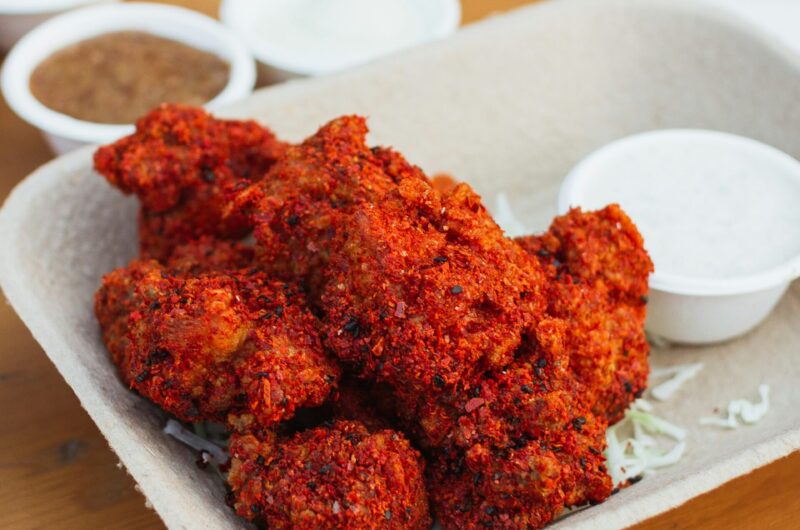
Serve immediately after glazing while the coating is still at maximum crispiness. The glaze softens the coating within 10 to 15 minutes of application. Serve with cold beer as is traditional in Korea, extra gochujang sauce on the side, pickled radish, and sliced spring onion. Korean fried chicken does not reheat well. The coating becomes soft and the glaze loses its texture. Make only what will be eaten immediately. The wings can be marinated and coated hours ahead and fried to order.
FAQs
Q: Do I need a deep fryer?
A: No, a deep heavy-based pan with enough oil to submerge the wings works perfectly. A cast iron dutch oven is ideal.
Q: What is gochujang and where do I buy it?
A: Gochujang is a Korean fermented chilli paste with a deep, complex spicy-sweet flavour. It is available in most Asian supermarkets and increasingly in mainstream supermarkets.
Q: Why is my coating not staying crispy after glazing?
A: The wings need to be at maximum crispiness when the glaze is applied, and the glaze needs to be applied as a thin coating rather than a thick one. Toss briefly rather than drowning the wings.
Q: Can I bake instead of fry?
A: Baking produces a completely different texture. Air frying at 200C for 20 minutes, turning halfway, produces a closer result to frying with significantly less oil.
Q: What is the difference between Korean and American fried chicken?
A: Korean uses cornflour for a thinner, crispier coating and double fries for extra crunch. American uses seasoned flour for a thicker coating and single fries.