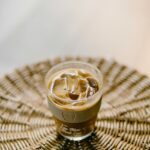
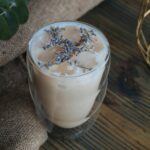
Strong espresso poured over sweetened condensed milk and cold regular milk over ice, a Spanish-inspired cold coffee that is creamier and richer than any regular iced latte.
Introduction
The Spanish latte, made with both condensed milk and regular milk alongside the espresso, is the cold coffee drink that occupies the perfect middle ground between a Vietnamese iced coffee (all condensed milk, extremely sweet and intense) and a regular iced latte (all milk, lighter and less sweet). The combination of the two milks produces a drink that is creamier and sweeter than a standard latte but less intensely sweet and thick than the Vietnamese version.
The condensed milk plays a specific flavour role in this drink beyond simple sweetness. Its caramelised, slightly cooked flavour, produced during the concentration process, adds a warm, dairy-caramel note to the drink that regular milk and sugar cannot replicate. This is the quality that makes drinks made with condensed milk taste distinctive from drinks simply sweetened with syrup or sugar.
The layered visual of this drink is particularly appealing. The condensed milk, dense and sweet, sits at the bottom. The regular milk sits in the middle. The espresso floats momentarily on top before slowly diffusing through the layers. The gradient of pale caramel at the bottom through white in the middle to dark coffee at the top is one of the most naturally beautiful coffee drink presentations.
History and Background
The Spanish latte as an internationally recognised drink format gained prominence through Singapore and Southeast Asian cafe culture in the 2010s, where it became one of the most popular specialty coffee drinks. Despite its name, the drink as it is widely known is as much a Southeast Asian cafe culture creation as a Spanish one.
In Spain, coffee with condensed milk is called cafe bombom and has been drunk in cafes particularly in the Valencia region for decades. The combination of espresso with condensed milk is a simple local tradition rather than a globally famous drink format. The international Spanish latte trend appears to draw inspiration from this tradition while developing the format through the influence of Asian cafe culture.
The Spanish latte became particularly prominent in Singapore, Malaysia, and Australia before spreading to the United States and United Kingdom through specialty coffee culture and social media, where its distinctive layered visual made it one of the most shared cold coffee images of the late 2010s.
Iced Spanish Latte
Course: Cold Coffee1
servings3
minutes240
kcalIngredients
2 shots espresso approximately 60ml
2 tbsp sweetened condensed milk
120ml cold whole milk
Lots of ice
Directions
- Add condensed milk to the bottom of a tall glass.
- Fill glass generously with ice.
- Pour cold regular milk over the ice and condensed milk.
- Pull 2 shots of espresso.
- Pour espresso slowly over the back of a spoon so it sits on top of the milk.
- Observe the layered effect.
- Stir before drinking to combine all three elements.
- Serve immediately.
Tips
- Add the condensed milk first before the ice so it settles at the very bottom of the glass, creating the most dramatic layering effect.
Pour the espresso over the back of a spoon held just above the milk surface for the most defined layers. Fast direct pouring disrupts the layers.
The layers are for visual pleasure. Stir completely before drinking for the intended flavour of all three components combined.
Two tablespoons of condensed milk is standard. Adjust to taste. The Spanish latte should be noticeably sweeter and creamier than a regular iced latte.
Use a clear glass. The layered visual is the signature of this drink and requires transparency to appreciate.
Pull fresh espresso directly into the drink. Espresso that has been sitting cools and loses its aromatic qualities.
For an extra cold version chill the milk in the freezer for 10 minutes before making the drink.
Variations
Add a cinnamon stick to the condensed milk layer for a spiced version. Replace regular milk with oat milk for a dairy-free version that still uses condensed milk for sweetness. Make a Spanish iced mocha by adding a tablespoon of chocolate sauce alongside the condensed milk. Add a drop of vanilla extract for a vanilla Spanish latte. Make a coconut Spanish latte by replacing regular milk with coconut milk for a tropical variation.
Storage and Serving
Serve immediately in a clear tall glass for maximum visual impact. Do not stir before presenting. Allow the guest to observe the layers then stir before drinking. The assembled drink does not keep. The condensed milk keeps in the fridge for weeks once opened in a sealed container.
FAQs
Q: What is the difference between a Spanish latte and a regular iced latte?
A: A Spanish latte uses condensed milk in addition to regular milk, making it creamier, sweeter, and more caramel-flavoured than a regular iced latte.
Q: Can I use low-fat condensed milk?
A: Low-fat condensed milk produces a similar result with slightly less richness. Full-fat produces the best flavour and texture.
Q: Why do my layers disappear immediately?
A: Pour the espresso more slowly and over the back of a spoon. Also ensure the milk is very cold which makes it denser and helps maintain separation.
Q: How sweet is this drink?
A: Noticeably sweeter than a regular iced latte. Less sweet than a Vietnamese iced coffee. If too sweet reduce the condensed milk to 1 tablespoon.
Q: Can I use a plant-based condensed milk?
A: Coconut condensed milk is available in many stores and works well. It adds a slight coconut flavour alongside the caramel sweetness.