Espresso with homemade lavender syrup over cold milk and ice, floral, slightly sweet, and the most beautiful purple-tinted cold coffee drink currently trending.
Introduction
Lavender latte is the cold coffee drink that has taken Pinterest, Instagram, and TikTok by storm for its extraordinary colour and its genuinely distinctive flavour. The pale purple tint that lavender syrup imparts to the milk beneath the espresso creates a visual that is simultaneously elegant and whimsical, unlike any other cold coffee drink. Combined with the gentle, floral sweetness of the lavender itself balanced against the intensity of the espresso, it produces a drink that tastes as distinctive as it looks.
The lavender syrup is the critical element and must be made correctly to avoid the two pitfalls of lavender cooking: using too much lavender and producing a drink that tastes of soap, or using too little and producing a drink that tastes of nothing. The right amount of dried culinary lavender steeped for the right amount of time in a simple sugar syrup produces a floral, subtly sweet syrup that is unmistakeably lavender without crossing into perfumery.
Culinary lavender, specified because ornamental varieties can contain compounds not suitable for consumption, is available in health food stores, specialty food shops, and online. A small quantity goes a long way and the syrup keeps for weeks, making this a practical addition to a home coffee repertoire rather than a one-time novelty.
History and Background
Lavender has been used in both cooking and perfumery for thousands of years across the Mediterranean world, particularly in Provence in southern France where it grows abundantly and is deeply embedded in the regional culinary and cultural identity. Lavender in food has a long history but its application to beverages, particularly coffee drinks, is more recent.
The lavender latte emerged in the specialty coffee scene in the 2010s, initially in Portland, Oregon and San Francisco, California, where artisan coffee shops began experimenting with botanical syrups and unconventional flavour pairings. The drink spread through social media due to its striking visual and its alignment with wellness trends that valued botanical and natural ingredients.
By the late 2010s lavender latte had become one of the most photographed specialty coffee drinks on Instagram and its visual influence has extended to other botanical lattes including rose, chamomile, and hibiscus variations that have collectively established floral coffee drinks as a mainstream specialty coffee category.
Iced Lavender Latte
Course: Cold Coffee1
servings5
minutes5
minutes160
kcalIngredients
2 shots espresso
150ml cold oat milk or whole milk
Lots of ice
For lavender syrup: 100g white sugar, 100ml water, 2 tbsp dried culinary lavender
Dried lavender flowers to garnish
Directions
- Make lavender syrup: combine sugar and water in a small pan. Bring to a simmer.
- Add dried lavender. Simmer 2 minutes. Remove from heat.
- Steep for 10 minutes. Taste. Steep up to 15 minutes for stronger flavour.
- Strain through a fine sieve. Cool and refrigerate.
- Pull 2 shots of espresso.
- Fill a tall glass with ice.
- Add 1.5 to 2 tablespoons of lavender syrup to the glass.
- Pour cold milk over the ice and syrup. Watch the slight purple tint develop.
- Pour espresso over the milk.
- Garnish with a few dried lavender flowers.
- Serve immediately.
Tips
- Use culinary lavender specifically. Ornamental lavender varieties can contain camphor and other compounds that are unpleasant in food and drink.
Do not over-steep the lavender syrup. Ten minutes is ideal. Fifteen minutes maximum. Longer produces a soapy, overpowering flavour that dominates the drink unpleasantly.
Taste the syrup before using in the drink. It should be floral and sweet but not overwhelming. If too strong dilute with a small amount of plain simple syrup.
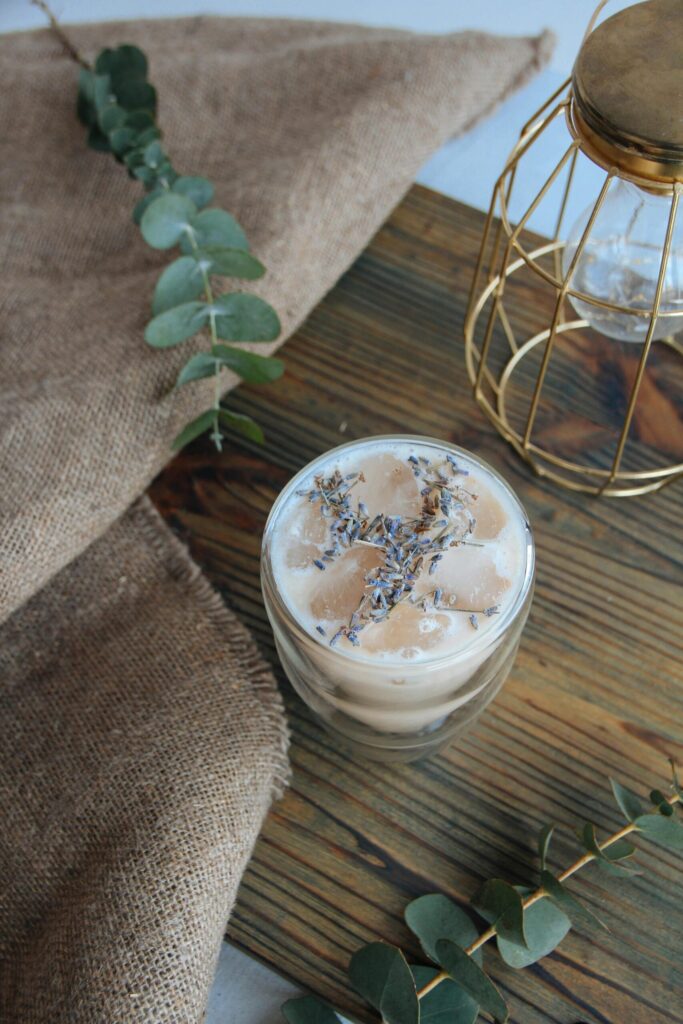
The purple colour is subtle and beautiful. It is most visible in the milk before the espresso is added. Use a clear glass to appreciate the visual.
Oat milk produces a slightly creamier, slightly sweeter result than dairy milk and is the most popular pairing for lavender lattes.
One and a half tablespoons of syrup is the recommended starting amount. Add more gradually. It is easier to add more lavender than to correct an over-lavender-flavoured drink.
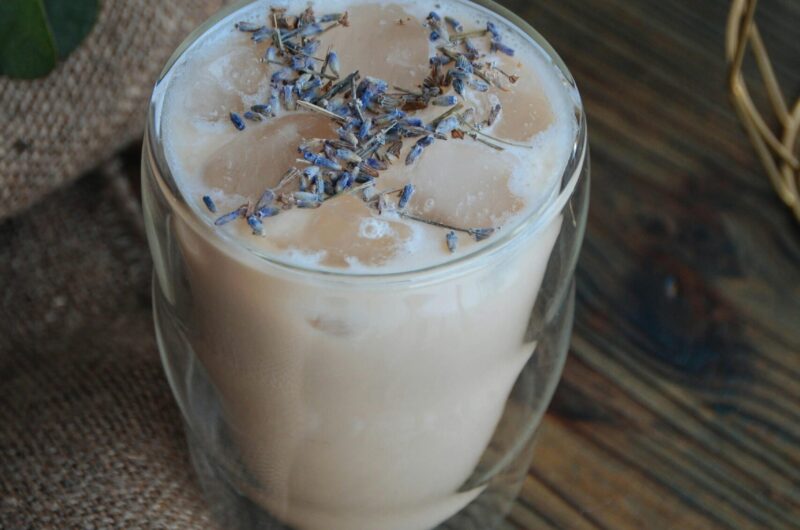
Dried lavender flowers as a garnish scattered on the foam or milk surface are the finishing visual that makes this drink look genuinely special.
Variations
Make a lavender honey latte by adding honey to the lavender syrup for a more complex sweetness. Replace espresso with matcha for a lavender matcha latte that is completely caffeine-different but equally beautiful. Add vanilla to the lavender syrup for a vanilla lavender latte. Make a lavender chamomile latte by combining chamomile tea with the lavender syrup for a caffeine-free version. Replace lavender with rose for a completely different but equally beautiful floral latte.
Storage and Serving
Serve immediately in a clear glass for maximum visual impact. Garnish with dried lavender flowers. The lavender syrup keeps refrigerated for 2 weeks. The assembled drink does not keep. The purple tint in the milk begins fading within minutes after the espresso is added.
FAQs
Q: Where do I buy culinary lavender?
A: Health food stores, specialty food shops, and online retailers including Amazon stock dried culinary lavender. Ensure it specifically states culinary grade.
Q: Why does my lavender latte taste soapy?
A: The lavender was steeped too long or too much was used. Lavender has a very narrow window between perfectly floral and overwhelmingly soapy. Use less and steep for a shorter time.
Q: Can I use lavender essential oil instead?
A: No. Essential oils are extremely concentrated and not safe to consume in this form. Use only dried culinary lavender flowers.
Q: What makes the drink purple?
A: The anthocyanin pigments in lavender create a pale purple or lilac tint in the syrup which shows as a subtle colour in the milk.
Q: Can I use fresh lavender?
A: Fresh lavender can be used but is more intensely flavoured. Use half the quantity and taste frequently during steeping.