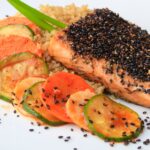
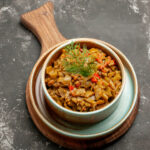
The most quietly perfect Japanese comfort food — leftover rice poured over with hot green tea or dashi, garnished with salmon, nori, sesame, and pickled plum — simple, restorative, and complete in under five minutes.
About This Recipe
Ochazuke is the Japanese art of making something extraordinary from almost nothing — a bowl of leftover rice transformed into a complete, comforting meal by the simple act of pouring hot liquid over it and adding a few carefully chosen toppings. It is simultaneously the most unpretentious dish in Japanese cooking and one of the most culturally significant: a dish associated with late-night eating, quiet solitary meals, the use of leftover rice, and the Japanese aesthetic principle of wabi — finding beauty and satisfaction in simplicity.
The liquid used to pour over the rice can be hot green tea (the most traditional version, whose name the dish takes from), dashi stock (kombu and katsuobushi), or a combination of both. Green tea brings a gentle astringency and a faint grassiness that works remarkably well with rice; dashi brings a profound umami depth. Many modern versions use a thin dashi-based broth seasoned with a small amount of soy sauce and mirin. All three are correct depending on context — green tea for its delicacy and simplicity, dashi for its depth.
The toppings are where ochazuke’s character is expressed. Flaked grilled salmon is the most popular and most satisfying combination; umeboshi (pickled plum) adds a sharp, salty-sour contrast; toasted nori (seaweed) provides crunch and ocean mineral flavour; wasabi adds heat; and toasted sesame seeds contribute nuttiness. The topping arrangement is precise — each element placed deliberately in its own quadrant of the bowl so that each spoonful can combine different elements according to the eater’s preference. The hot liquid is poured at the table just before eating, preserving the temperature differential between the cool-ish toppings and the hot broth.
History & Origins
Ochazuke has roots in the Heian period (794–1185 CE), where pouring hot water over rice was documented as a method of softening dried or leftover rice. The practice of using green tea specifically is documented in Zen Buddhist monastery records from the Kamakura period (1185–1333 CE), where it was eaten by monks as a simple, virtuous meal. It has been associated throughout Japanese history with simplicity, economy, and the avoidance of waste — values central to Japanese domestic culture. Ochazuke gained additional cultural associations during the postwar period, when it became symbolic of resourceful, honest home cooking during times of scarcity.
Why It’s Healthy
Green tea provides catechins — particularly EGCG (epigallocatechin gallate) — the most extensively studied polyphenols in any beverage, with documented antioxidant, anti-inflammatory, and potential anti-cancer properties in peer-reviewed research. Cold rice that has been cooked and cooled undergoes retrogradation, converting some of its starch to resistant starch — a prebiotic fibre that feeds beneficial gut bacteria and has a lower glycaemic impact than freshly cooked rice. Salmon provides omega-3 fatty acids and complete protein. Nori is one of the most mineral-rich foods available, providing iodine, calcium, iron, and B12. The dish is low in calories, high in nutrients, and requires almost no preparation.
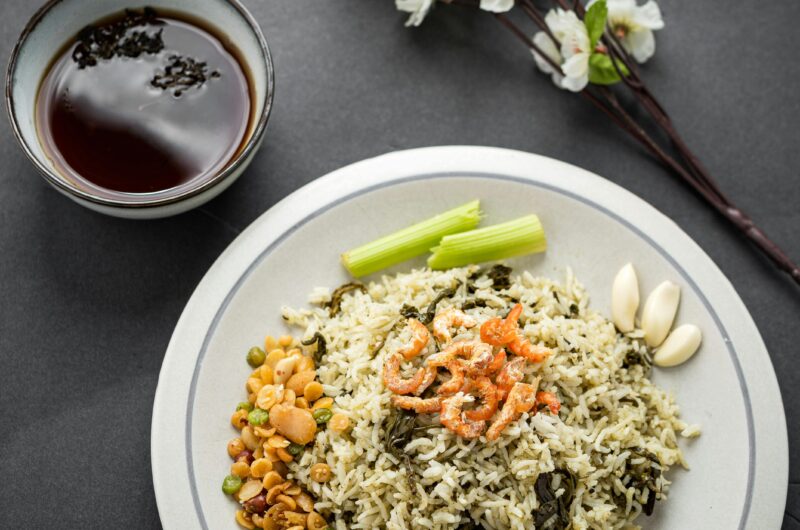
Green Tea Rice
Course: Healthy, Japanese2
servings5
minutes10
minutes570
kcalIngredients
•t2 bowls cooked rice (cold or room temperature, day-old is ideal)
•t400ml hot green tea (gyokuro or sencha) or hot dashi
•t150g cooked salmon (grilled or poached), flaked
•t2 umeboshi (pickled plum), pitted and roughly chopped
•t2 sheets toasted nori, cut into thin strips
•t1 tbsp toasted sesame seeds
•t2 tsp soy sauce (optional, to season the broth)
•tSmall amount wasabi (optional)
•t2 spring onions, thinly sliced
•tMitsuba or shiso leaves (optional, if available)
Directions
- Brew green tea at 70–80°C (not boiling — boiling water makes green tea bitter). Or prepare hot dashi.
- Place a mound of rice in each bowl — break up any clumps gently.
- Arrange toppings over the rice: flaked salmon, umeboshi, nori strips, sesame seeds, and spring onions.
- Season the hot tea or dashi with soy sauce if desired.
- At the table, pour the hot liquid over the rice and toppings — about 200ml per bowl.
- Add a small amount of wasabi on the side if using.
- Eat immediately, stirring toppings into the liquid as you go
Notes
- Day-old, cold rice is better than freshly cooked for ochazuke — the retrogradation produces a firmer, more resistant grain that maintains texture in the hot liquid.
Green tea should not be made with boiling water — brew at 70–80°C for the sweetest, least bitter flavour. Boiling water makes the tea harsh.
The liquid is poured at the table just before eating — this is not a dish that can be assembled in advance.
Umeboshi are intensely salty — use only a small amount and do not add additional salt to the bowl.
Make Ahead Tips
Ochazuke is by definition a use-for-leftovers dish — the rice should be made ahead (day-old rice is actually superior). Prepare the toppings up to 2 hours in advance and arrange in small bowls. Make the tea or dashi fresh at serving time — it takes 5 minutes and the quality of the hot liquid is central to the dish. The entire preparation from cold rice to finished bowl takes under 5 minutes.
Storage & Serving
Ochazuke does not store once assembled — the rice absorbs the liquid completely within minutes and the texture becomes porridge-like. The components store separately: cooked rice in the fridge for 3 days, cooked salmon for 2 days, and prepared toppings for 1–2 days. The dish is designed to be assembled fresh from stored components, which is exactly what makes it so valuable as a quick meal from leftovers. Dashi keeps for 3 days in the fridge. Serve immediately after pouring the hot liquid, before the rice absorbs it completely. The ideal texture is somewhere between a soup and a rice dish — the rice should be softened but not dissolved. A small dish of Japanese pickles (tsukemono) on the side adds texture and the sharp, fermented flavour that complements the gentle ochazuke perfectly. In Japan, ochazuke is often the last thing eaten at the end of a larger meal to cleanse the palate and use remaining rice.
Variations & Substitutions
Mentaiko ochazuke uses spicy marinated pollock roe instead of salmon for a sharply flavoured, intensely savoury version. Tai ochazuke uses thin slices of raw sea bream (tai) placed over the rice so the hot liquid pouring over cooks them gently — a more elegant, restaurant-style version. A fully vegetarian version with pickled vegetables, sesame, and tofu instead of fish is beautiful and nutritious. Dashi-based ochazuke seasoned with mirin and yuzu adds sweetness and citrus brightness that works particularly well with pickled accompaniments.