A smooth, silky vanilla egg custard baked in a crisp pastry case with a freshly grated nutmeg top, the most quietly perfect British tart and the one that has been made in English bakeries for over 600 years.
About This Recipe
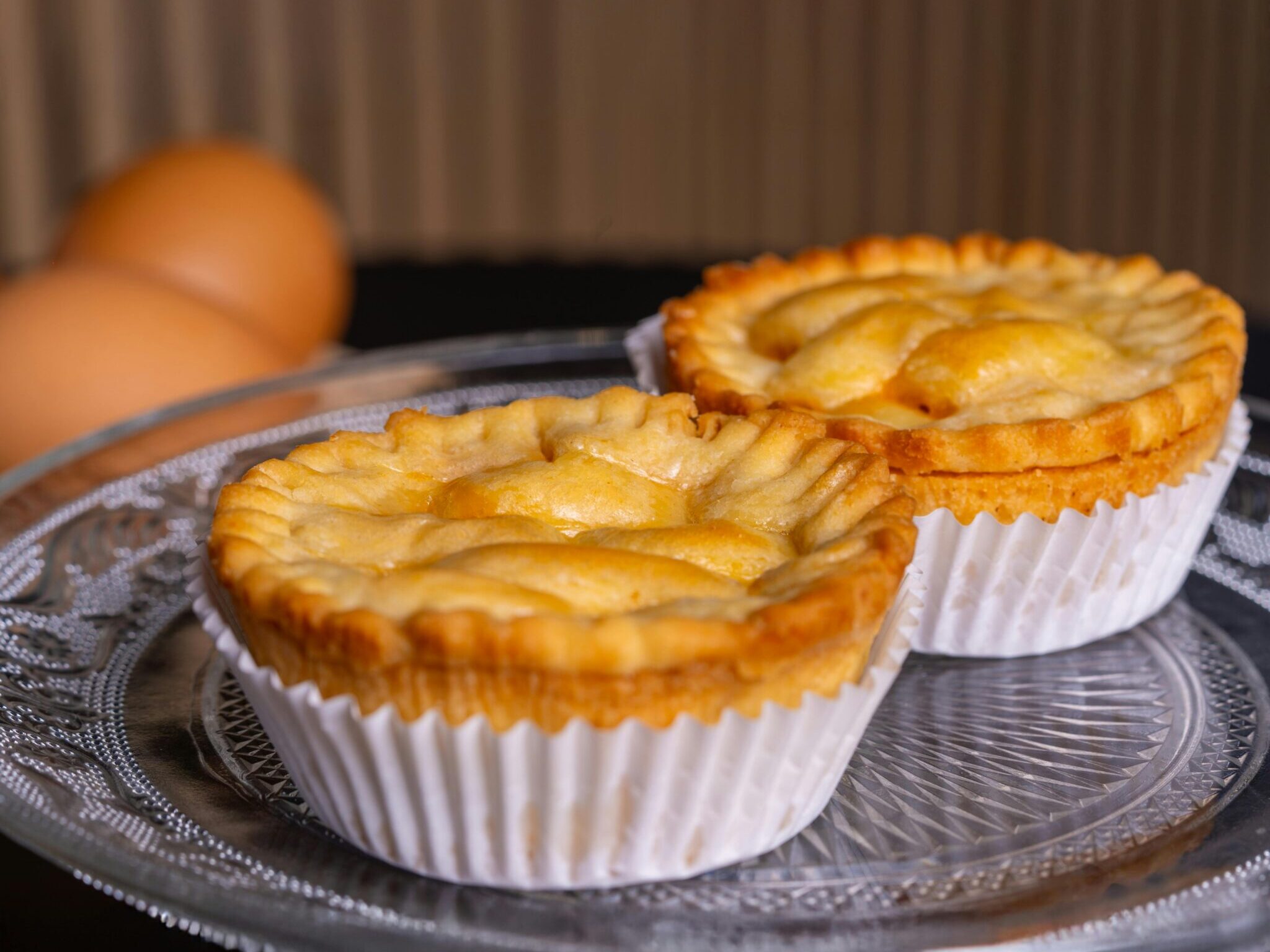
The egg custard tart is one of the oldest continuously made baked goods in England. Its recipe has barely changed in six centuries: a crisp pastry case, a smooth egg and cream custard, vanilla or nutmeg for flavouring. This simplicity is its strength. There are no competing flavours, no elaborate techniques, no modern innovations required. Done well, an egg custard tart is one of the most satisfying things that can come out of a home oven.
The pastry for a custard tart must be genuinely crisp and fully baked before the custard goes in. A pale, underbaked pastry case will absorb the liquid custard and become soggy as the tart bakes. Proper blind baking, with weights for the first stage and then uncovered for the second, produces a pastry case that is golden, crisp, and fully waterproof before a drop of custard touches it.
The custard filling requires the lightest possible touch with the oven temperature. A custard baked too hot curdles, producing a pitted, pockmarked surface with an unpleasant grainy texture beneath. The correct oven temperature for a smooth custard is low: 150 degrees Celsius, with the custard just barely trembling when the tin is moved at the end of the baking time. The nutmeg grated freshly over the surface immediately before baking produces the characteristic speckled top and the warm, aromatic fragrance that identifies this tart.
History and Origins
Egg custard tarts appear in English recipe collections from at least the 14th century, with recipes for pastry coffins filled with cream and egg custards documented in the court cookbooks of the period. The tart became a staple of English bakeries and remains so today. The English custard tart is closely related to the Portuguese pastel de nata and the French flan patissier, all sharing the same fundamental combination of pastry and egg custard.
Why It Is Good For You
Whole eggs provide complete protein with all essential amino acids, choline for brain health, and vitamins A, D, B12, and folate. Whole milk provides calcium and vitamin D. Vanilla provides vanillin with antioxidant properties. This tart is a relatively moderate dessert that provides genuine nutritional value from its egg and dairy content.
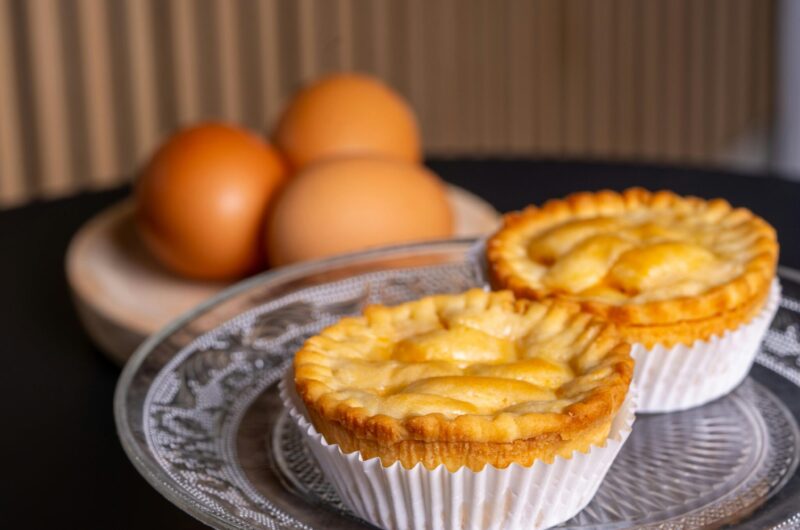
Egg Custard Tart
Course: Pie u0026amp; Tart8
servings40
minutes1
hour10
minutes2400
kcalIngredients
•tFor pastry: 200g plain flour, 100g cold butter, 30g icing sugar, 1 egg yolk, 2 tbsp ice water
•tFor custard: 4 large eggs plus 2 yolks, 80g white sugar, 1 tsp vanilla extract, 350ml whole milk, 150ml double cream
•tFreshly grated nutmeg
Directions
- Make sweet pastry, line a 23cm tart tin, blind bake at 190C for 15 minutes weighted then 10 minutes without until properly golden. Cool.
- Reduce oven to 150C.
- Whisk eggs, yolks and sugar together. Add vanilla.
- Heat milk and cream together until just below boiling. Pour slowly over egg mixture, whisking constantly.
- Strain through a fine sieve into a jug.
- Pour custard into the cooled pastry case. Grate nutmeg generously over the surface.
- Bake at 150C for 30 to 35 minutes until the edges are set and the centre has a gentle wobble.
- Cool completely before cutting.
Notes
- 150C is the correct oven temperature. Any hotter and the custard will curdle and produce a pitted surface.
Strain the custard through a fine sieve before pouring. This removes any accidentally cooked egg and produces the smooth surface that defines this tart.
The centre should wobble as one unit when the tin is gently shaken. Sloshing means more time. No movement means it is overdone.
Freshly grated nutmeg is significantly more fragrant than pre-ground. Use a microplane and grate directly over the custard.
Make Ahead Tips
The blind baked pastry case keeps at room temperature for 24 hours. The baked tart keeps refrigerated for 3 days and is excellent cold.
Storage and Serving
Refrigerate for up to 3 days. The custard firms in the fridge and slices very cleanly when cold. Allow to come to room temperature for 15 minutes before serving if preferred warm. Serve with cream or nothing at all. Does not freeze well.
Variations and Substitutions
Add lemon zest to the custard for a citrus egg custard tart. Replace vanilla with a small piece of cinnamon infused in the warm milk before straining. Make individual tarts in 10cm tartlet cases for 12 portions. Add a thin layer of jam to the pastry case before pouring in the custard for a jam and custard tart.