Slow-cooked beef and pork ragu layered with silky bechamel and fresh pasta sheets, baked until golden — the ultimate Sunday project.
A proper lasagne Bolognese is not a weeknight dinner. It is a Sunday project, a labour of love, a dish that rewards patience and effort with something truly extraordinary. The ragu alone requires at least two hours of slow, gentle simmering to develop the depth and richness that makes it exceptional. Combined with a carefully made bechamel and layered between sheets of fresh pasta it becomes one of the great dishes of Italian cuisine.
The origins of lasagne Bolognese are firmly rooted in the Emilia-Romagna region of northern Italy, specifically the city of Bologna — hence the name. The Bolognese ragu, or ragu alla Bolognese, is registered with the Italian Academy of Cuisine and has an official recipe. It calls for a mix of beef and pork mince, soffritto of onion, carrot, and celery, whole milk, white wine, and just a modest amount of tomato. It is a meat sauce first and foremost — not a tomato sauce with meat in it.
This recipe follows the traditional approach as closely as possible while remaining accessible for the home cook. Take your time with every step. The soffritto should be cooked slowly until completely soft and sweet. The meat should be browned properly, not grey and steamed. The milk should be fully absorbed before the wine goes in. These details are what separate a good lasagne from an exceptional one.
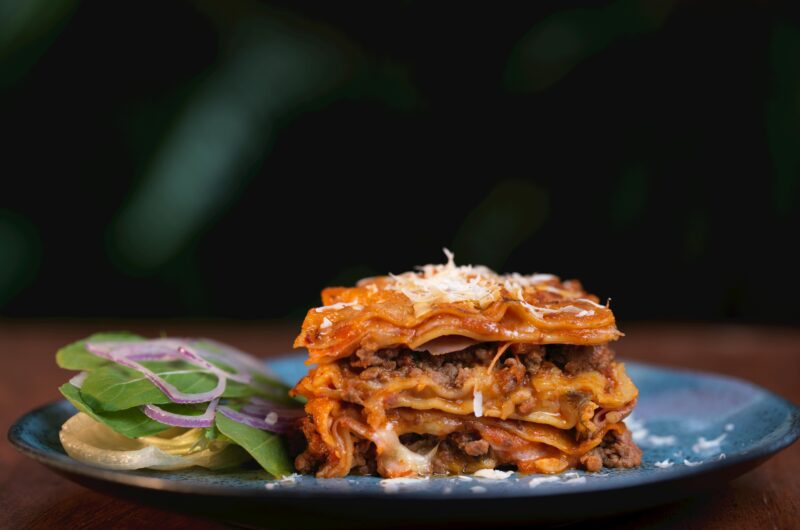
Lasagne Bolognese
8
servings20
minutes4
hours400
kcalIngredients
•t500g 80/20 beef mince
•t250g pork mince
•t1 large onion, very finely diced
•t2 medium carrots, very finely diced
•t2 celery stalks, very finely diced
•t5 garlic cloves, minced
•t150ml whole milk
•t200ml dry white wine
•t400g canned San Marzano tomatoes
•t3 tbsp double concentrated tomato paste
•t500ml beef stock
•t2 sprigs fresh rosemary
•t2 bay leaves
•tSalt and freshly cracked black pepper
•t3 tbsp olive oil
•t60g unsalted butter (for ragu)
•tFor the bechamel: 80g unsalted butter
•tFor the bechamel: 80g plain flour
•tFor the bechamel: 900ml whole milk, warmed
•tFor the bechamel: generous pinch of freshly grated nutmeg
•tFor the bechamel: salt and white pepper
•t500g fresh lasagne sheets (or dried, pre-cooked according to packet)
•t120g Parmigiano Reggiano, finely grated
Directions
- Begin with the soffritto. Heat olive oil and butter together in a large, heavy-bottomed pot over medium-low heat. Add the onion, carrot, and celery and cook very gently for 15-20 minutes, stirring regularly, until completely softened, translucent, and beginning to caramelise at the edges. Do not rush this step. Add garlic and cook for a further 2 minutes.
- Increase heat to medium-high. Add beef and pork mince and cook, breaking up with a wooden spoon, for 10-15 minutes until deeply browned. There should be no grey areas — proper browning is essential for flavour. Drain excess fat if needed.
- Reduce heat to medium. Add the whole milk and cook, stirring occasionally, until it has been completely absorbed by the meat, approximately 10 minutes. This step tenderises the meat and adds a subtle sweetness to the sauce.
- Add the white wine and cook until fully evaporated, stirring to scrape up any caramelised bits from the bottom of the pot.
- Add the tomatoes, tomato paste, stock, rosemary, and bay leaves. Season generously with salt and pepper. Bring to a gentle simmer then reduce heat to the lowest possible setting. Cook uncovered for a minimum of 2 hours, ideally 3, stirring every 20-30 minutes. The sauce is ready when it is rich, thick, and dark in colour with very little liquid remaining.
- Make the bechamel. Melt butter in a medium saucepan over medium heat. Add flour all at once and stir vigorously with a wooden spoon for 2-3 minutes until the mixture smells slightly nutty — this cooks out the raw flour taste. Begin adding the warm milk a ladleful at a time, whisking constantly after each addition and waiting until fully incorporated before adding more. Once all the milk is added continue cooking, stirring, for 5-8 minutes until the sauce is thick enough to coat the back of a spoon. Season with salt, white pepper, and nutmeg.
- Preheat oven to 180C (160C fan). Remove rosemary sprigs and bay leaves from the ragu. Taste and adjust seasoning.
- Build the lasagne in a deep 30x20cm baking dish. Start with a thin layer of bechamel on the base. Add a single layer of pasta sheets. Add a generous layer of ragu. Add bechamel. Sprinkle with Parmesan. Repeat layers until you run out of ingredients, finishing with a final layer of bechamel and a generous covering of Parmesan.
- Bake for 45-50 minutes until the top is deeply golden and the edges are bubbling vigorously. Remove from oven and rest for at least 15-20 minutes before cutting. This resting time is crucial — it allows the layers to set and the lasagne to hold its shape when served.
Notes
- The ragu can and should be made the day before. It tastes significantly better after resting overnight in the fridge as the flavours deepen and meld together.
Do not add too much tomato. Authentic Bolognese ragu is a meat sauce — the tomato is a supporting player, not the star.
Adding milk before the wine is the traditional Bolognese sequence and it makes a real difference to the final texture of the meat.
Fresh pasta sheets give the best result. If using dried pasta, pre-cook according to packet instructions or choose no-boil sheets.
Make extra ragu and freeze it. It freezes perfectly for up to 3 months and makes an extraordinary weeknight bolognese pasta on short notice.
Rest the lasagne properly. Cutting into it too soon results in a collapsed, messy serving. Patience is rewarded here.
Storage
Lasagne stores exceptionally well. Once cooled completely, cover tightly with cling film or foil and refrigerate for up to 4 days. Individual portions can be wrapped tightly and frozen for up to 3 months. To reheat from the fridge, cover with foil and bake at 180C for 20-25 minutes until piping hot throughout. From frozen, defrost overnight in the fridge before reheating. The lasagne actually improves on the second day as the layers meld together further.
Serving Tips
Cut into generous squares and serve on warmed plates. A simple dressed rocket salad with shaved Parmesan and a lemon dressing is the ideal accompaniment — its sharpness cuts through the richness of the lasagne beautifully. Crusty ciabatta or sourdough is essential for mopping up the sauce. For wine, a Chianti Classico Riserva or Barbera dAlba are classic Emilian pairings that stand up to the richness of the dish.