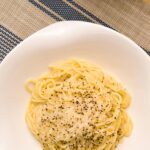
Silky egg and Pecorino sauce clinging to al dente spaghetti with crispy guanciale — no cream, just pure Roman perfection.
Carbonara is arguably the most iconic pasta dish to come out of Rome and one of the most misunderstood dishes in the world. Ask ten Italians how to make it and you will get ten passionate, slightly different answers — but they will all agree on one thing: there is absolutely no cream involved. The sauce is built entirely from eggs, aged Pecorino Romano, Parmesan, the fat rendered from guanciale, and a generous amount of freshly cracked black pepper.
The dish originated in Rome and the Lazio region and is believed to date back to the mid-twentieth century, though its exact origins remain debated. Some say it was created by Roman chefs using American rations of bacon and eggs during World War Two. Others claim it evolved from earlier egg and cheese pasta dishes that predate the war entirely. Whatever its origin, it has become one of the four sacred pasta dishes of Roman cuisine alongside Cacio e Pepe, Amatriciana, and Gricia.
The technique is what makes carbonara special and also what makes it intimidating for beginners. The goal is to create a glossy, silky emulsified sauce using nothing more than egg yolks, finely grated cheese, and the starchy pasta cooking water. The residual heat from the just-drained pasta must be hot enough to cook the eggs into a sauce but not so hot that it scrambles them. Getting that balance right takes practice but once you master it the result is extraordinary.
Nutrition (per serving)
Calories: 620 kcal | Protein: 28g | Carbs: 72g | Fat: 24g | Fiber: 3g
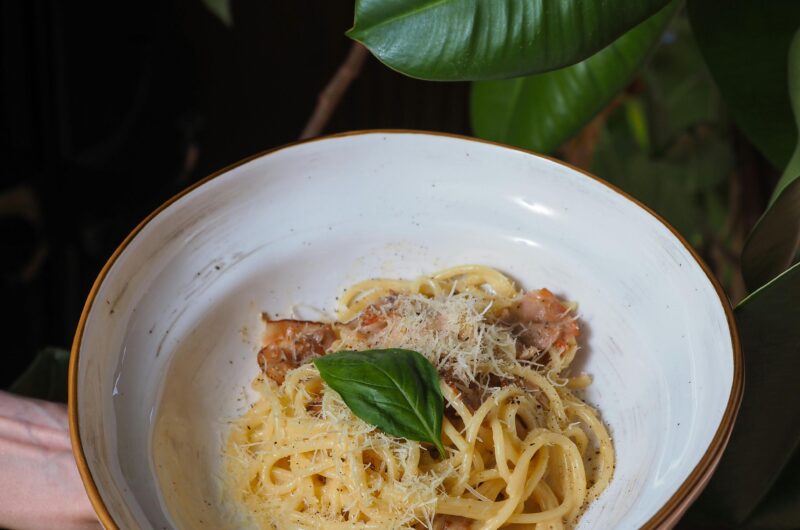
Spaghetti alla Carbonara
2
servings10
minutes20
minutes420
kcalIngredients
•t200g spaghetti or rigatoni
•t150g guanciale, cut into small cubes or strips (pancetta is an acceptable substitute but not traditional)
•t3 large egg yolks
•t1 whole large egg
•t60g Pecorino Romano, very finely grated (plus extra to serve)
•t30g Parmigiano Reggiano, very finely grated
•tGenerous amount of freshly cracked black pepper (at least 1 full teaspoon)
•tFine sea salt for the pasta water
Directions
- Bring a large pot of water to a rolling boil. Salt it generously — it should taste like the sea. This is the only opportunity to season the pasta itself.
- Place the guanciale in a cold, wide pan and set it over medium heat. Starting from cold renders the fat slowly and evenly without burning the meat. Cook for 8-10 minutes, stirring occasionally, until the guanciale is deeply golden and crispy and the fat has fully rendered. Remove from heat but do not drain the fat — it is essential to the sauce.
- While the guanciale cooks, whisk together the egg yolks, whole egg, finely grated Pecorino Romano, and Parmesan in a bowl. The mixture should be thick and pale. Season generously with freshly cracked black pepper. Set aside.
- Cook the spaghetti in the boiling salted water until it is just al dente — it should have a slight bite. This will take approximately 8-10 minutes depending on the brand. Before draining, reserve at least 200ml of the pasta cooking water in a cup. This starchy water is the key to emulsifying the sauce.
- Drain the pasta and immediately transfer it to the guanciale pan. Toss the pasta in the rendered fat over medium-low heat for 30 seconds to coat every strand.
- Remove the pan from the heat completely. This is critical — if the pan is too hot the eggs will scramble. Add the egg and cheese mixture to the pasta and begin tossing vigorously. Add pasta water a splash at a time, tossing constantly. The heat from the pasta will gently cook the eggs into a glossy, silky sauce. Add as much pasta water as needed to achieve a sauce that coats the pasta but is not watery.
- Taste and adjust seasoning. Serve immediately in warm bowls with an extra grating of Pecorino and a generous final crack of black pepper
Notes
- Never add cream. This cannot be stressed enough. Cream makes the sauce heavy and masks the delicate flavour of the eggs and cheese. Authentic Roman carbonara has no cream whatsoever.
Guanciale is cured pig cheek and has a distinctly different flavour profile to pancetta or bacon — it is fattier, silkier, and more intensely porky. If you can find it, use it. It is increasingly available at Italian delis and some supermarkets.
The cheese must be grated as finely as possible — almost to a powder. Coarsely grated cheese will not melt smoothly into the sauce and can cause lumps.
Work quickly once you add the egg mixture. Speed and a constant tossing motion are what prevent scrambling.
Warm your serving bowls before plating. Cold bowls cool the sauce rapidly and change the texture.
The ratio of egg yolks to whole eggs matters. More yolks create a richer, creamier sauce. Experiment once you are comfortable with the technique.
Storage
Carbonara is very much a dish that must be eaten the moment it is made. The sauce changes completely as it cools — the eggs set and the pasta becomes sticky and dry. Leftovers can be stored in the fridge for up to 1 day in an airtight container but should be reheated very gently in a pan with a splash of water over the lowest heat possible. The texture will not be the same as when freshly made but it will still taste good. Do not reheat in a microwave as this will scramble the eggs unevenly.
Serving Tips
Serve immediately in warmed wide bowls. Top with an extra generous grating of Pecorino Romano and a final heavy crack of fresh black pepper. No additional garnish is needed or appropriate — the beauty of this dish is its simplicity. Carbonara pairs beautifully with a crisp, dry white wine from the Lazio region such as Frascati Superiore or a chilled glass of Greco di Tufo. If you prefer red, a light Cesanese del Piglio from the hills outside Rome is a lovely match.