Slow-braised chicken with preserved lemons, olives, saffron, and warming spices in a rich, fragrant sauce, the most celebrated dish of North African cuisine.
Introduction
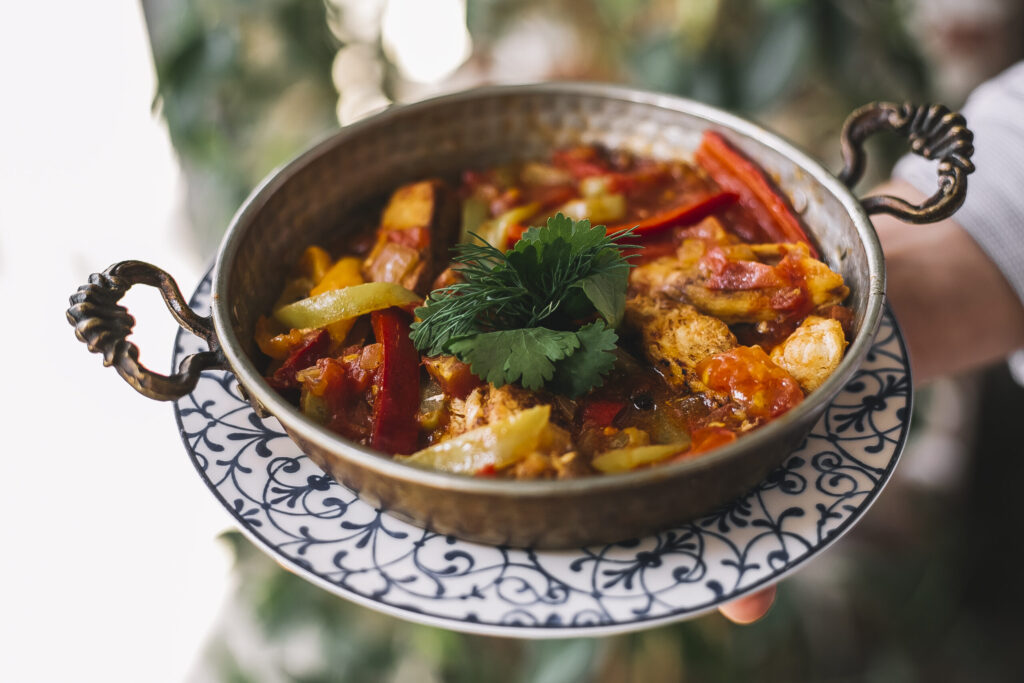
Moroccan chicken tagine is one of the most aromatic and most satisfying dishes in world cooking. The combination of saffron, ginger, cinnamon, turmeric, and preserved lemon produces a flavour profile that is simultaneously warming and bright, complex and coherent. The chicken, braised slowly in the spiced sauce, becomes fall-apart tender and absorbs the extraordinary flavours of the liquid around it until the sauce and the meat are completely unified.
The tagine is both the cooking vessel and the dish. The conical clay pot used in traditional Moroccan cooking circulates steam during cooking, returning moisture to the ingredients and producing a particularly tender, self-basted result. At home a heavy-based casserole dish or Dutch oven replicates the effect adequately, producing the same braised, tender result without the specialist equipment.
Preserved lemon is the ingredient that most defines Moroccan tagine and that cannot be omitted or adequately replaced. The salt-cured lemon rind, its flesh removed and the skin used, provides a complex, intensely lemony, slightly bitter, profoundly aromatic flavour note that fresh lemon cannot replicate. Preserved lemons are available in most supermarkets and any Middle Eastern or North African grocery store.
History and Background
The tagine cooking tradition in Morocco dates back at least a thousand years and possibly considerably further. The conical clay cooking pot that gives the dish its name was designed to function in the conditions of North African cooking, where wood for fuel was scarce and slow, efficient cooking over minimal heat was necessary. The shape of the lid circulates condensation back down to the cooking food, making the tagine one of the most moisture-efficient cooking vessels ever designed.
Moroccan cuisine developed through the influence of Berber, Arab, Andalusian, Ottoman, and French culinary traditions over many centuries of trade, conquest, and cultural exchange. The combination of sweet and savoury flavours, the use of dried fruits and nuts in meat dishes, and the elaborate spice blends that characterise Moroccan cooking reflect this complex heritage.
Moroccan food became fashionable in European and American cooking in the late 20th century through the writing of food writers including Paula Wolfert whose 1973 book Couscous and Other Good Food from Morocco introduced Moroccan cuisine to a wide international audience. Today Moroccan restaurants appear in cities worldwide and chicken tagine remains the most ordered dish.
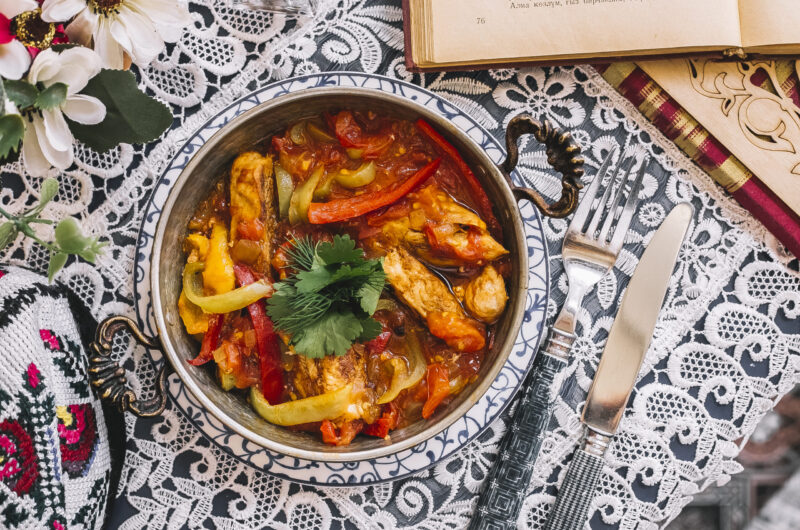
Moroccan Chicken Tagine
Course: Chicken4
servings20
minutes50
minutes1720
kcalIngredients
8 bone-in chicken thighs and drumsticks
2 tbsp olive oil
2 large onions thinly sliced
4 garlic cloves minced
2cm fresh ginger grated
1 tsp turmeric
1 tsp ground ginger
1 tsp cinnamon
0.5 tsp cumin
0.5 tsp black pepper
Good pinch of saffron threads soaked in 3 tbsp warm water
300ml chicken stock
1 preserved lemon rind only finely sliced
100g green olives
Juice of 1 lemon
Fresh coriander and flat-leaf parsley to finish
Directions
- Season chicken pieces generously with salt and pepper.
- Heat olive oil in a large heavy casserole over medium-high heat. Brown chicken on all sides for 8 minutes. Remove and set aside.
- In the same pot cook sliced onion over medium heat for 10 minutes until soft and golden.
- Add garlic and ginger. Cook 2 minutes.
- Add turmeric, ground ginger, cinnamon, cumin, and pepper. Stir 1 minute.
- Add saffron with its soaking water and chicken stock. Stir well.
- Return chicken to the pot. Add preserved lemon strips.
- Bring to a simmer. Cover and cook on low heat for 35 to 40 minutes.
- Add olives and lemon juice in the final 10 minutes of cooking.
- Check seasoning. Finish with fresh coriander and parsley. Serve with couscous.
Tips
- Brown the chicken properly before braising. The colour developed during browning adds depth to the braising liquid that cannot be achieved any other way.
Soak the saffron in warm water for at least 10 minutes before adding. This releases the colour and flavour compounds far more effectively than adding saffron threads directly to the pot.
Use only the preserved lemon rind, not the flesh which is very salty and bitter. Scoop out the flesh and slice the rind thinly.
Bone-in chicken is essential for a tagine. Boneless chicken breast becomes dry and loses its structure during the long braising time. Bone-in thighs stay moist and flavourful.
The final lemon juice is added at the end of cooking, not the beginning. Acid added at the start can toughen the meat. Added at the end it brightens all the flavours.
Taste and adjust salt very carefully. Preserved lemon and olives both contribute significant saltiness and the dish may need no added salt at all.
Ras el hanout, the Moroccan spice blend, can replace the individual spices as a convenient alternative. Use 2 tablespoons of ras el hanout.
Variations
Make a lamb tagine by replacing chicken with lamb shoulder cut into large chunks and extending the braising time to 1.5 hours. Add dried apricots and a tablespoon of honey alongside the olives for a sweet and savoury version. Make a vegetable tagine with chickpeas, sweet potato, and butternut squash replacing the chicken for a vegan version. Add a handful of raisins to the sauce for the Fes-style sweet addition to tagine. Make a faster version using a pressure cooker which reduces the braising time to 20 minutes.
Storage and Serving
Serve over couscous prepared by pouring boiling stock or water over the grains and covering for 5 minutes. Alternatively serve with flatbread or over rice. Garnish generously with fresh coriander and flat-leaf parsley. Provide lemon wedges at the table. Chicken tagine is one of the best dishes for making ahead. The flavour deepens dramatically over 24 to 48 hours and it keeps refrigerated for up to 4 days. It freezes excellently for up to 3 months. Reheat gently on the stovetop with a splash of water.
FAQs
Q: What can I use instead of preserved lemon?
A: There is no perfect substitute. Fresh lemon zest provides citrus flavour without the complexity. In an emergency use a strip of fresh lemon peel that has been blanched in boiling water for 1 minute.
Q: Do I need a tagine pot?
A: No, a heavy-based casserole dish or Dutch oven with a tight-fitting lid produces the same braised result. The traditional clay tagine adds atmosphere but is not functionally necessary.
Q: Where do I buy preserved lemons?
A: Most large supermarkets carry them in the world foods aisle alongside Moroccan ingredients. Middle Eastern and North African grocery stores carry them reliably. They are also very easy to make at home with lemons and salt.
Q: Can I use ground saffron instead of threads?
A: Ground saffron is already extracted and can be used in smaller quantities. Use a quarter of the quantity of threads specified. Quality saffron threads are preferable for a more nuanced flavour.
Q: How do I know when the chicken is done?
A: The meat should be very tender and beginning to fall off the bone. It should offer no resistance when pierced with a knife. The sauce should be thick and reduced.