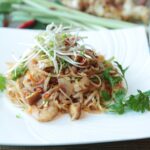
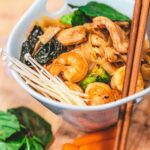
Minced chicken stir-fried with fresh Thai basil, garlic, chilli, and oyster sauce in under 15 minutes, the most popular street food dish in Thailand.
Introduction
Thai basil chicken, known in Thailand as pad kra pao gai, is the dish that Thais eat more than any other for lunch. Survey after survey of Thai eating habits identifies it as the most frequently ordered meal at street food stalls and casual restaurants, eaten on any day of the week by people from every background. Its combination of fragrant Thai basil, fiery bird’s eye chillies, savoury oyster sauce, and the slightly sweet fish sauce produces a stir-fry of incredible speed and incredible flavour.
The dish is defined by Thai holy basil, a variety with a more peppery, clove-like flavour than Italian or even Thai sweet basil. Outside Thailand, Thai sweet basil or Italian basil produce a slightly different but still excellent result. The basil is added in large quantities at the end of cooking and wilts instantly in the residual heat, releasing its fragrance in a dramatic burst that fills the kitchen.
Pad kra pao is traditionally served over rice with a fried egg on top, the yolk broken over the spiced chicken creating a sauce of egg and savoury juices that makes the combination greater than its parts. This egg on top is not optional in the Thai tradition: it is the defining element of the complete dish.
History and Background
Thai basil chicken is a dish of the modern Thai street food tradition that developed and expanded significantly in Bangkok and other Thai cities from the mid-20th century onwards as urban populations grew and demand for fast, affordable, and satisfying food created the network of street food stalls that characterises Thai city eating culture.
Kra pao refers to holy basil in Thai, and the dish name pad kra pao means stir-fried with holy basil. The combination of stir-frying technique, which came to Thailand through centuries of Chinese culinary influence, with distinctively Thai ingredients including fish sauce, oyster sauce, and holy basil, represents the blending of Chinese and Thai cooking traditions that characterises much of Thai cuisine.
The dish became internationally known through the global expansion of Thai restaurants from the 1980s onwards and through the growth of food tourism to Thailand in the 1990s and 2000s. It is now one of the most recognised and most made Thai recipes globally.
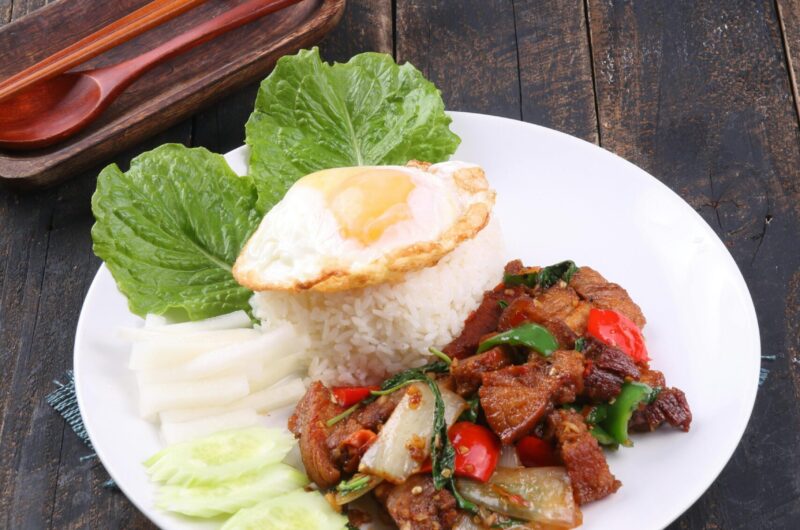
Thai Basil Chicken
2
servings8
minutes18
minutes760
kcalIngredients
400g minced chicken
3 tbsp neutral oil
6 garlic cloves minced
3 to 6 bird’s eye chillies finely sliced
1 shallot finely sliced
2 tbsp oyster sauce
1 tbsp fish sauce
1 tbsp soy sauce
1 tsp dark soy sauce
1 tsp sugar
Large handful of Thai basil or regular basil leaves
2 eggs for frying
Steamed jasmine rice to serve
Directions
- Heat a wok or large frying pan over the highest heat until smoking.
- Add oil. Add garlic and chilli. Stir for 30 seconds until fragrant.
- Add shallot. Stir 30 seconds.
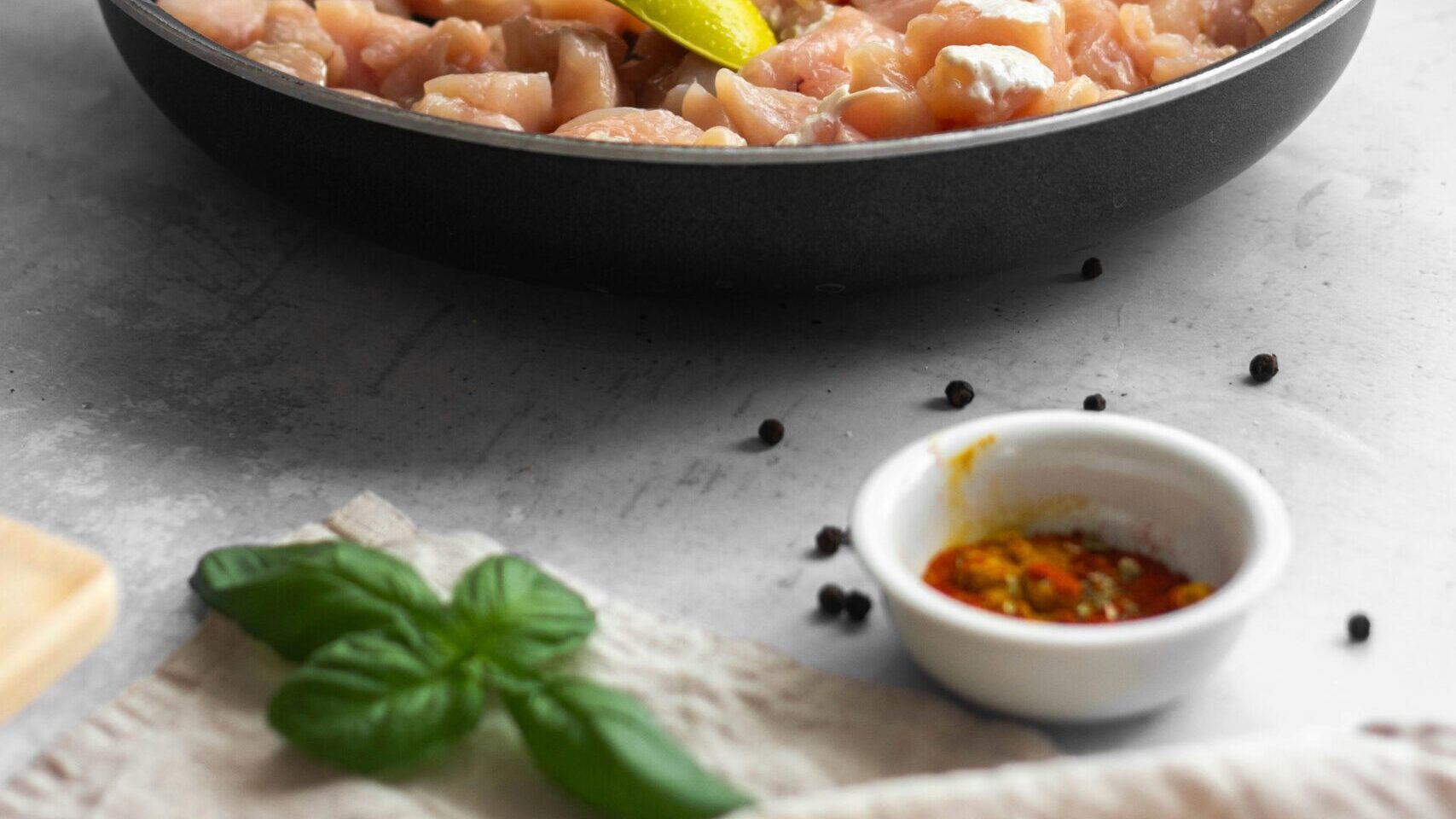
- Add minced chicken. Spread across the pan and leave for 1 minute without stirring to allow some caramelisation.
- Break up the chicken and stir-fry for 3 minutes until cooked through.
- Add oyster sauce, fish sauce, soy sauce, dark soy, and sugar. Stir well to combine.
- Remove from heat. Add basil leaves and toss through the residual heat.
- Fry eggs in a separate pan in hot oil until whites are set but yolk is still runny.
- Serve chicken over jasmine rice with a fried egg on top.
Tips
- The wok or pan must be absolutely smoking hot before any ingredients go in. This is the single most important element of successful stir-frying. Insufficient heat produces a stewed, grey result rather than a caramelised, vibrant one.
Do not stir the chicken immediately after adding it to the pan. Allow it to make sustained contact with the hot surface for 1 minute to develop caramelisation and flavour.
Bird’s eye chillies provide fierce heat. Start with three and adjust to your tolerance. The heat level in the authentic Thai version is very high.
Add basil off the heat. The residual heat wilts the basil gently. High direct heat destroys the delicate flavour compounds in the basil too quickly.
Dark soy sauce adds colour and a slight sweetness. It is different from regular soy sauce and is worth buying for this and other Asian stir-fries.
Fry the egg in very hot oil so the edges crisp and brown while the yolk stays runny. This Thai style fried egg is different from a gentle Western fried egg.
Use minced chicken thigh rather than breast for a more flavourful, less dry result. Mince your own from thigh meat or ask a butcher.
Variations
Make a pork version using minced pork which is equally traditional and arguably more flavourful. Replace minced meat with thinly sliced chicken breast for a different texture. Make a seafood version using minced prawns for a lighter, more delicate result. Add long beans or green beans to the stir-fry alongside the chicken for a more substantial vegetable element. Make a vegetarian version using firm tofu crumbled to mimic the texture of minced meat. Add a tablespoon of roasted chilli paste nam prik pao to the sauce for additional depth and complexity.
Storage and Serving
Serve immediately over steamed jasmine rice with the fried egg on top. Break the yolk over the chicken and rice as you eat. The combination of the savoury, spicy chicken, the fragrant rice, and the rich egg yolk is the complete eating experience. Sliced cucumber alongside provides refreshing contrast to the heat. Pad kra pao reheats well in a pan over high heat for 2 minutes. Keep refrigerated for up to 2 days. The flavour holds well but the basil loses its vibrancy on reheating. The dish does not freeze well due to the basil.
FAQs
Q: What is the difference between Thai basil and holy basil?
A: Holy basil has a more peppery, clove-like flavour with slightly serrated leaves. Thai sweet basil is more anise-flavoured with smooth leaves. Holy basil is the authentic choice but Thai sweet basil produces an excellent result.
Q: Can I use Italian basil?
A: Yes. Italian basil has a different but pleasant flavour profile. Add it in larger quantities than the recipe specifies as it is milder than Thai varieties.
Q: Is fish sauce essential?
A: Fish sauce is the backbone of authentic Thai flavour and cannot be adequately replaced. Soy sauce alone produces a Chinese rather than Thai result. Fish sauce is available in most large supermarkets.
Q: Why is my stir-fry watery?
A: The pan was not hot enough, producing steam rather than caramelisation. Ensure the pan is smoking before adding oil and ingredients.
Q: Can I make this without a wok?
A: Yes, a large, heavy frying pan works well. The most important factor is heat, not the vessel.