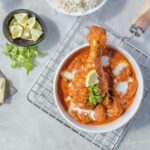
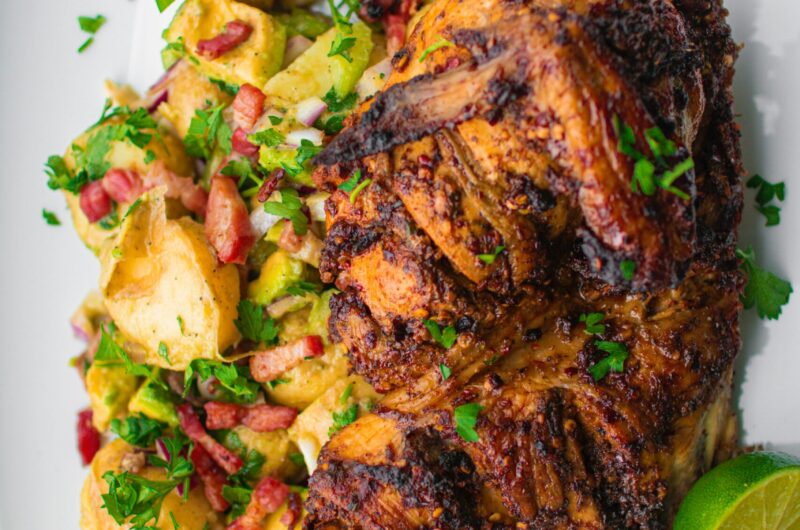
Spatchcocked chicken marinated in a bold mix of cumin, paprika, garlic, and aji amarillo, roasted until deeply golden with crispy skin, served with green herb sauce.
Introduction
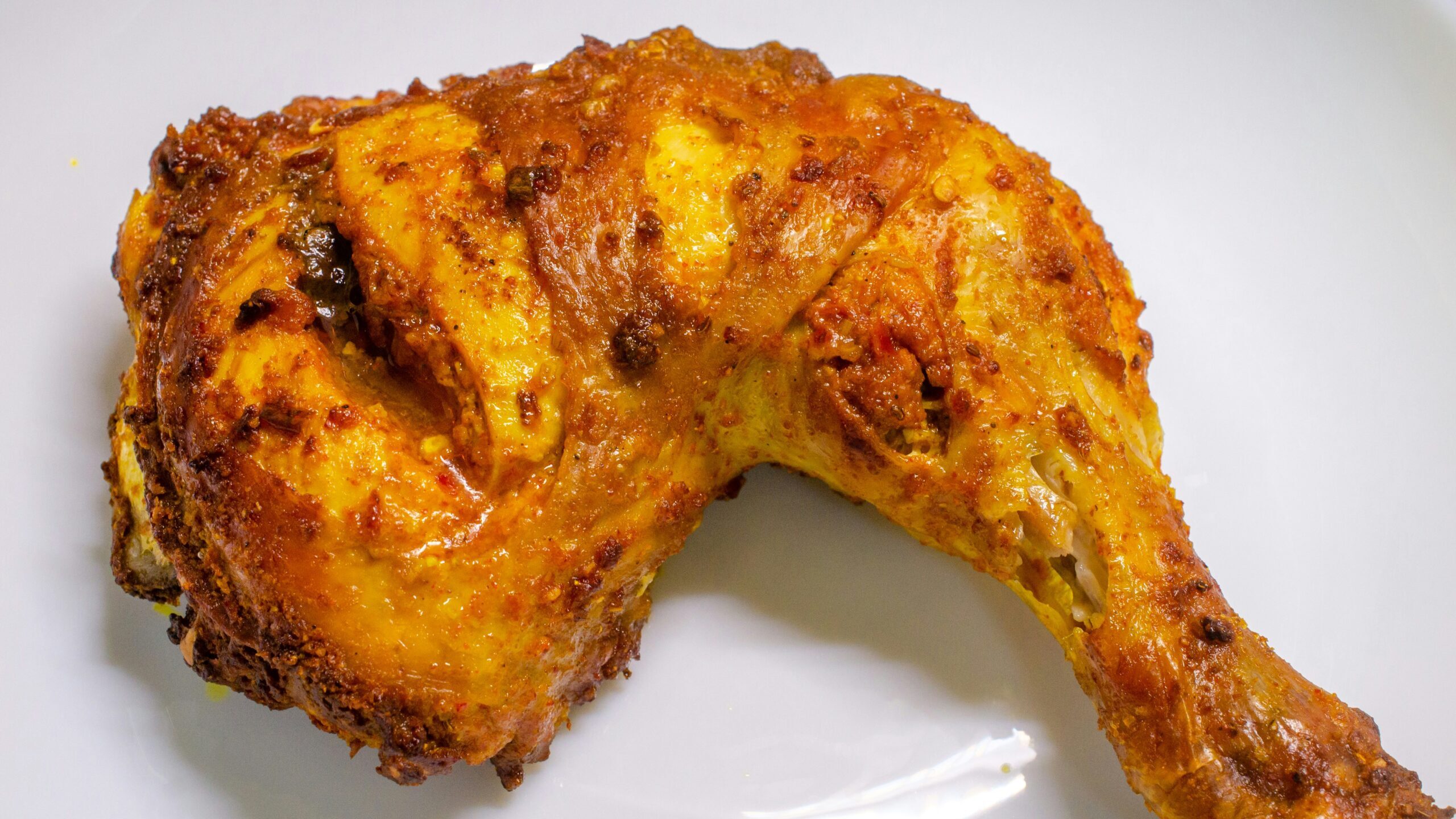
Pollo a la brasa is Peru’s most beloved national dish and one of the great roasted chickens in the world. Its marinade, a combination of cumin, paprika, garlic, soy sauce, and the distinctive Peruvian yellow chilli aji amarillo, produces a flavour profile that is simultaneously smoky, spiced, garlicky, and slightly sweet. The chicken roasts to a deeply golden, crackling-skinned exterior with extraordinarily juicy, well-seasoned meat beneath.
The dish is so beloved in Peru that it has its own national holiday. Every third Sunday of July is Dia del Pollo a la Brasa in Peru, celebrated with family gatherings and communal meals centred on the dish. The Peruvian government has recognised it as part of the country’s cultural heritage and UNESCO has included Peruvian cuisine as an Intangible Cultural Heritage of Humanity.
The sauce served alongside, aji verde or green sauce, is one of the great accompaniments in world cooking. Made from fresh coriander, aji amarillo or jalapeno, garlic, mayonnaise, and lime juice, it is simultaneously herby, creamy, spicy, and acidic. It is so addictive that Peruvian restaurants regularly have customers requesting extra containers to take home.
History and Background
Pollo a la brasa was created in Lima, Peru in 1950 by Roger Schuler, a Swiss immigrant, and his Peruvian business partner Franz Ulrich. They developed a marinade based on local Peruvian spices and cooking traditions and a rotisserie cooking method that produced an unusually flavourful and juicy result. The dish was initially served at the restaurant La Granja Azul in the La Molina district of Lima.
The dish spread rapidly through Peruvian food culture in the 1950s and 1960s as dedicated pollo a la brasa restaurants, pollerias, opened across Lima and subsequently throughout the country. It became the most popular restaurant meal in Peru and remains so today, with tens of thousands of pollerias operating across the country.
Peruvian immigration throughout Latin America, North America, and Europe spread the dish internationally and Peruvian rotisserie chicken restaurants have become established in cities across the world, particularly in the United States where the dish has a substantial following in cities with large Peruvian communities.
Peruvian Pollo a la Brasa
Course: Chicken4
servings30
minutes1
hour1920
kcalIngredients
1 whole chicken approximately 1.5kg spatchcocked
For the marinade: 4 garlic cloves minced
For the marinade: 2 tbsp soy sauce
For the marinade: 2 tbsp olive oil
For the marinade: 1 tbsp white vinegar
For the marinade: 2 tsp cumin
For the marinade: 2 tsp smoked paprika
For the marinade: 1 tsp turmeric
For the marinade: 1 tsp dried oregano
For the marinade: 0.5 tsp black pepper
For the marinade: salt
For the green sauce: 1 bunch fresh coriander, 1 jalapeno or aji amarillo, 2 garlic cloves, 4 tbsp mayonnaise, 2 tbsp Greek yoghurt, juice of 1 lime, salt
Directions
- Spatchcock the chicken by cutting along both sides of the backbone with scissors and removing it. Press flat.
- Combine all marinade ingredients and rub thoroughly all over and under the skin of the chicken. Marinate for at least 2 hours or overnight.
- Preheat oven to 220C.
- Place chicken skin side up on a roasting rack over a tray.
- Roast for 45 to 50 minutes until skin is deeply golden and juices run clear.
- Rest for 10 minutes before carving.
- For the green sauce blend all ingredients until smooth. Taste and adjust salt and lime.
- Carve chicken and serve with green sauce, rice, and salad.
Tips
- Spatchcocking flattens the chicken which produces more even cooking, crispier skin all over, and a 15-minute reduction in roasting time compared to a whole unspatchcocked bird.
Rub the marinade under the skin as well as over it. Marinade under the skin seasons the meat directly and produces a more intensely flavoured result.
Marinate overnight for the best result. The combination of soy sauce, vinegar, and spices needs time to penetrate deeply into the meat.
The high roasting temperature of 220C is what produces the deeply golden, crackling skin. Lower temperatures produce soft, pale skin.
Rest the chicken for the full 10 minutes after roasting. Carving immediately releases all the juices onto the board.
The green sauce should be blended until very smooth. A chunky sauce is less appealing and less versatile as a dipping sauce.
Soy sauce in a Peruvian chicken marinade is not a mistake. It adds umami and helps produce the deep, mahogany colour on the skin.
Variations
Make a stovetop version using spatchcocked chicken halves in a large frying pan covered with a lid at medium heat for 20 minutes skin side down then 15 minutes skin side up. Replace aji amarillo with habanero for a more widely available but equally fiery alternative. Make individual portions using bone-in chicken thighs with the same marinade at 220C for 30 minutes. Add a tablespoon of huacatay, Peruvian black mint paste, to the green sauce for the most authentic flavour. Serve with traditional accompaniments of fried yuca and Peruvian potato salad.
Storage and Serving
Serve carved chicken with generous spoonfuls of green sauce, white rice, and a simple salad of lettuce, tomato, and red onion dressed with olive oil and vinegar. The green sauce is the essential accompaniment and should be served in a generous bowl for dipping. Leftover chicken keeps in the fridge for 3 days and is excellent cold or reheated. The green sauce keeps for 5 days in the fridge and also works as a dressing, dip, or sandwich spread. The marinade can be made up to 3 days ahead.
FAQs
Q: What is aji amarillo and can I replace it?
A: Aji amarillo is a Peruvian yellow chilli with a fruity, moderately hot flavour. Substitute with jalapeno for availability or habanero for more heat. Aji amarillo paste is available in Latin American grocery stores and online.
Q: What does spatchcocking mean and how do I do it?
A: Spatchcocking means removing the backbone to flatten the chicken. Cut along both sides of the spine with strong kitchen scissors or a sharp knife and remove it. Press the chicken flat on the board.
Q: Can I make this on a barbecue?
A: Yes, pollo a la brasa is traditionally cooked over charcoal which produces even better results. Cook over indirect heat with the lid on for 45 minutes then directly over the coals for 5 minutes to char the skin.
Q: Why is soy sauce in a Peruvian recipe?
A: Peruvian cuisine was heavily influenced by Chinese immigration in the 19th century, giving rise to a fusion tradition called chifa. Soy sauce became an ingredient in Peruvian cooking through this influence.
Q: Can I use chicken pieces instead of a whole chicken?
A: Yes, bone-in thighs with skin work best. Reduce roasting time to 30 minutes at 220C and check that juices run clear.