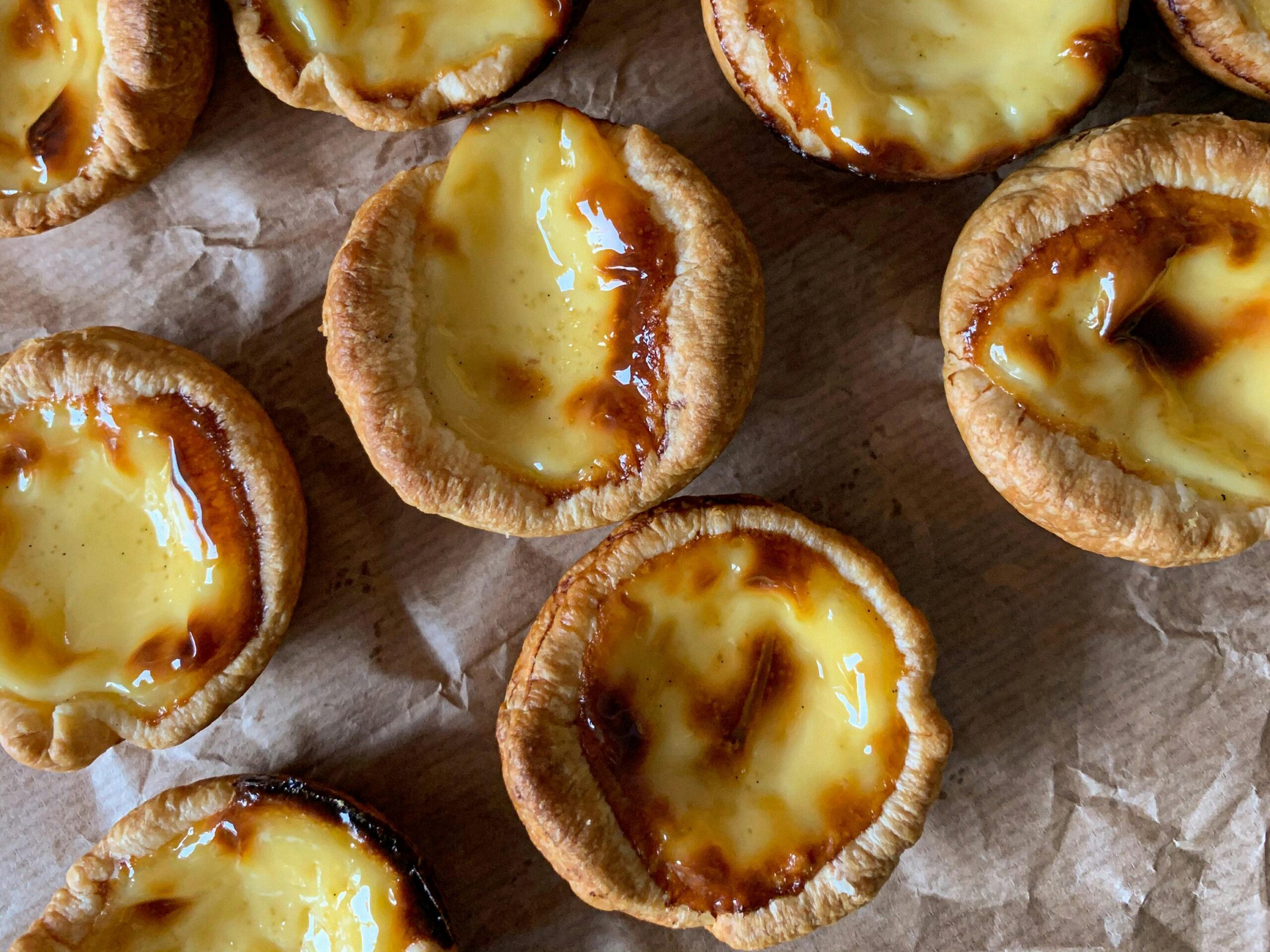
Burnished, flaky puff pastry cups filled with warm, vanilla-scented egg custard with caramelised patches on the surface, the most addictive small tart in the world and the national treasure of Lisbon.
About This Recipe
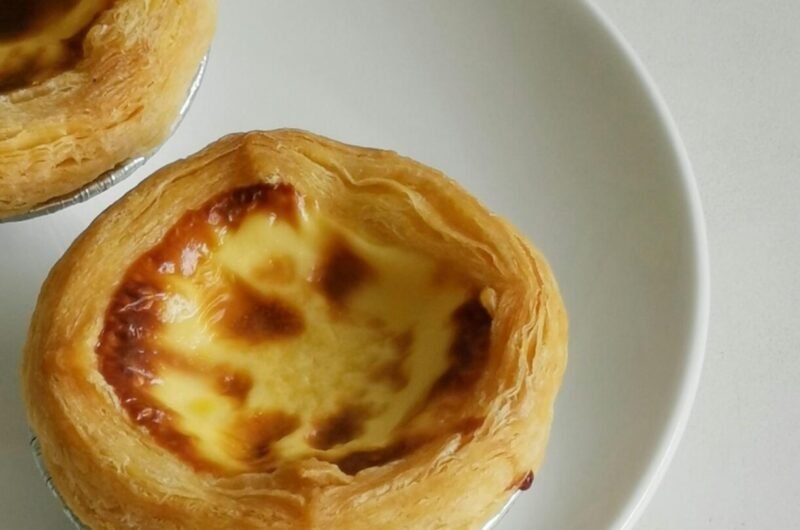
Pasteis de nata, the Portuguese custard tart, is one of the most beloved small cakes in the world. The original, made at the Pasteis de Belem bakery in Lisbon since 1837, produces crisp, laminated pastry cups filled with a smooth, slightly caramelised egg custard that is warm and fragrant and finished with a dusting of cinnamon and powdered sugar. The home version, made with ready-made puff pastry, replicates the essential experience in a fraction of the time.
The pastry component is where most home bakers take a shortcut that produces excellent results. Ready-made puff pastry, rolled tightly into a log and sliced into discs, then pressed into muffin tins to form a fluted cup shape, produces a layered, flaky pastry case that is genuinely very close to the laminated pastry of the original. The rolling and pressing technique creates visible layers in the pastry cup that puff and crisp during baking to produce a case with real structural interest.
The custard filling is made from egg yolks, cream, milk, sugar, and a small amount of cornflour cooked briefly to partially thicken before being poured into the pastry cases. The very high oven temperature, around 250 degrees Celsius, is what produces the characteristic caramelised patches on the surface of the custard. These dark patches are not burning. They are the caramelisation of the surface sugars at high heat that is the defining visual and flavour characteristic of a properly made pastel de nata.
History and Origins
Pasteis de nata were created by Catholic monks at the Jeronimos Monastery in Lisbon in the 18th century, who used the egg whites to starch their habits and needed a use for the surplus yolks. When the monastery closed in 1834 the recipe was sold to a sugar refinery owner who opened the Pasteis de Belem bakery in 1837. The bakery, still operating today, produces approximately 20,000 pasteis de nata daily. The recipe spread globally through Portuguese emigration and is now among the most searched pastry recipes in the world.
Why It Is Good For You
Egg yolks provide choline, essential for brain development and function, as well as vitamin D and lutein. The cream provides fat-soluble vitamins A, D, E, and K. These small tarts provide genuine nutritional value alongside their extraordinary flavour.
Portuguese Custard Tarts
Course: Pie u0026amp; Tart12
servings20
minutes40
minutes2280
kcalIngredients
•t375g ready-made puff pastry
•t5 large egg yolks
•t150g white sugar
•t2 tbsp cornflour
•t250ml whole milk
•t150ml double cream
•t1 tsp vanilla extract
•tCinnamon and icing sugar to serve
Directions
- Preheat oven to 250C or as hot as your oven goes. Grease a 12-hole muffin tin generously.
- Roll puff pastry into a tight log. Slice into 12 equal discs.
- Press each disc into a muffin hole with wet fingers, pushing up the sides to form a cup.
- Whisk egg yolks, sugar and cornflour together in a pan.
- Add milk and cream. Cook over medium heat, stirring constantly, until slightly thickened.
- Remove from heat, stir in vanilla. Cool for 5 minutes.
- Fill pastry cups three quarters full with custard.
- Bake for 15 to 18 minutes until pastry is golden and custard has dark caramelised patches.
- Cool for 5 minutes. Dust with cinnamon and icing sugar. Serve warm.
Notes
- The oven must be as hot as possible. The caramelised patches are the result of very high heat and cannot be achieved at moderate temperatures.
Wet fingers help press the pastry into the tin without it springing back.
The custard should be slightly runnier than you expect before baking. It thickens further in the oven.
These are best eaten warm within 20 minutes of baking. They become softer as they cool and are less spectacular cold.
Make Ahead Tips
The custard can be made up to 24 hours ahead and refrigerated. Fill pastry cases and bake fresh. Baked tarts are best eaten within 2 hours. They do not freeze or store well.
Storage and Serving
Best eaten warm on the day of baking. Store at room temperature for up to 24 hours but quality diminishes significantly. Reheat in a 200C oven for 5 minutes to partially restore the pastry crispness. These do not freeze well.
Variations and Substitutions
Add lemon zest to the custard for a citrus note. Replace double cream with coconut cream for a coconut custard tart. Add a teaspoon of ground cinnamon to the custard alongside the vanilla. Use a sweet shortcrust pastry instead of puff pastry for a denser, more traditional-style case.