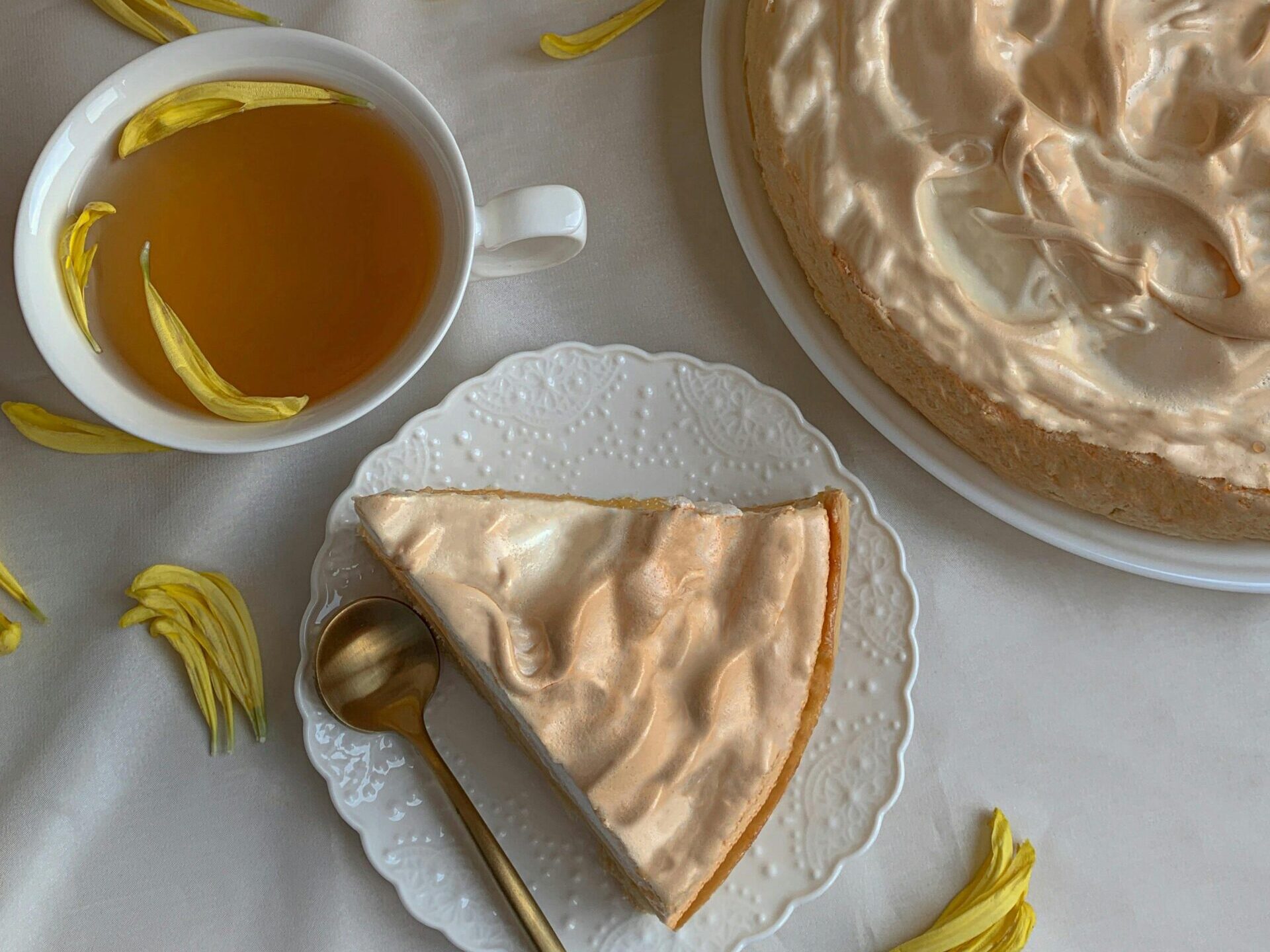
A perfectly tart lemon curd filling in a crisp pastry case topped with billowing, toasted Swiss meringue, the most visually dramatic and flavourfully perfect pie in the classic British and American repertoire.
About This Recipe
Lemon meringue pie is three distinct components each requiring its own technique, and when all three come together perfectly the result is one of the most extraordinary desserts in baking. The crisp, buttery pastry case provides structure. The sharp, intensely lemon curd filling provides flavour and the bright tartness that makes the whole pie sing. The soft, billowing meringue provides sweetness, drama, and the textural contrast that the filling needs to feel complete.
The lemon curd filling is the most critical component. Made from fresh lemon juice and zest, eggs, sugar, and cornflour cooked together until thick and glossy, it must be sharp enough to stand up against the sweetness of the meringue and the richness of the pastry. A timid lemon curd produces a pie that tastes merely sweet. A properly sharp lemon curd produces a pie where each component makes the others taste better.
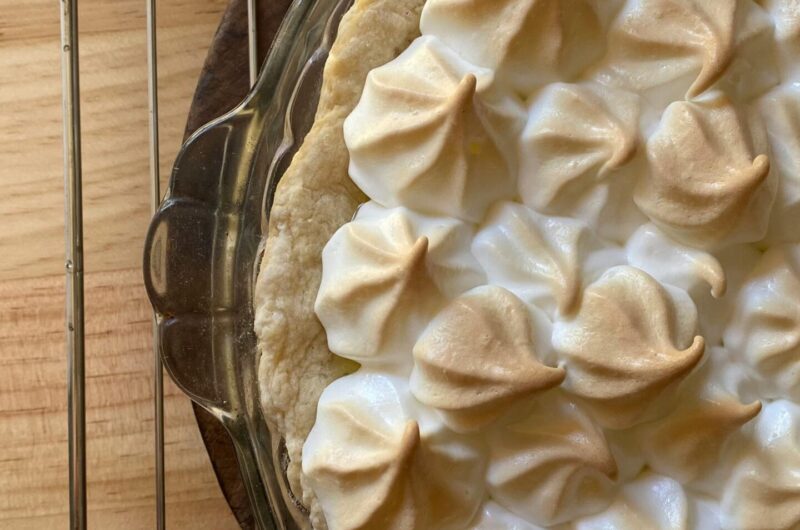
Swiss meringue, made by heating the egg whites and sugar together over a water bath before whipping, is more stable than a standard French meringue and is significantly less likely to weep or collapse. It pipes or spreads into peaks that hold their shape and toast under the grill to the caramelised golden tips that define the ideal lemon meringue pie appearance. The toasted peaks against the yellow filling is one of the most recognisable and most desired visual presentations in baking.
History and Origins
Lemon meringue pie in its current form was developed in America in the 19th century, with the earliest documented recipe appearing in 1847. The combination of lemon curd filling with meringue topping was likely inspired by earlier European preparations of lemon curd tarts and baked meringue puddings. The pie became a staple of American home baking and diner menus throughout the 20th century and remains one of the most searched and most made American pies.
Why It Is Good For You
Lemons are one of the richest sources of vitamin C and citric acid, which supports iron absorption and immune function. The egg yolks in the curd provide choline and fat-soluble vitamins. Served in moderate portions, this pie provides meaningful nutritional value alongside its substantial pleasure.
Lemon Meringue Pie
8
servings30
minutes45
minutes3200
kcalIngredients
•tFor pastry: 200g plain flour, 100g cold unsalted butter, 1 tbsp icing sugar, pinch of salt, 2 to 3 tbsp ice water
•tFor lemon curd: 4 large egg yolks, 150g white sugar, 3 tbsp cornflour, 250ml water, zest and juice of 3 lemons, 60g unsalted butter
•tFor meringue: 4 large egg whites, 200g white sugar, pinch of cream of tartar
Directions
- Make pastry, line a 23cm tart tin, blind bake at 190C for 15 minutes with weights then 5 minutes without. Cool.
- Whisk egg yolks, sugar and cornflour in a pan. Add water, lemon zest and juice. Cook over medium heat stirring until thick and boiling.
- Remove from heat. Stir in butter until melted. Pour into cooled pastry case.
- For Swiss meringue: combine egg whites and sugar in a bowl over simmering water. Stir until sugar dissolves and mixture is warm.
- Remove from heat. Whisk to stiff glossy peaks. Add cream of tartar.
- Spread meringue over lemon filling ensuring it touches the pastry edge all the way around.
- Toast with a kitchen blowtorch or under a very hot grill until golden. Serve at room temperature.
Notes
- The meringue must touch the pastry edge all the way around. Any gap allows the meringue to shrink away from the pastry during cooling.
Swiss meringue is more stable than French meringue and is the recommended choice for a pie that must sit before serving.
Cool the lemon curd slightly before pouring into the pastry case. Very hot curd can make the pastry soggy.
This pie is best served on the day it is made. The meringue absorbs moisture from the filling overnight.
Make Ahead Tips
The pastry case can be blind baked up to 24 hours ahead. The lemon curd can be made 48 hours ahead and refrigerated. Assemble and add meringue on the day of serving.
Storage and Serving
Best eaten on the day of making. Store at room temperature for up to 24 hours. Refrigerating causes the meringue to weep and the pastry to soften. If refrigeration is necessary, store uncovered as cling film traps condensation.
Variations and Substitutions
Replace lemon with lime for a key lime meringue pie. Use a crushed digestive biscuit base instead of pastry for a no-bake version. Add a tablespoon of limoncello to the curd for an adult version. Make individual tarts in 10cm tartlet cases for elegant individual servings at a dinner party.