The bright, crunchy Levantine bread salad — crispy toasted flatbread tossed with tomatoes, cucumber, radish, fresh mint, and sumac in a tangy pomegranate molasses dressing that makes it impossible to stop eating.
Fattoush is Lebanon’s great everyday salad — a riot of colour, texture, and flavour that puts almost every Western salad to shame. The name comes from the Arabic word for ‘crumbled bread’, and the crispy toasted flatbread pieces that give the salad its characteristic crunch are the defining element, without which the dish would be something else entirely.
Unlike the Italian panzanella, which soaks bread in tomato juices until it becomes pillowy and absorbent, fattoush uses bread that is toasted or fried until deeply crispy, then added to the salad at the last moment so that it retains its crunch while beginning to absorb the tart dressing at its edges — a fleeting textural moment that makes timing critical. The salad is at its peak in the five minutes after the bread is added: eat it immediately.
The dressing is the other defining characteristic: a combination of olive oil, lemon juice, and pomegranate molasses — a thick, dark, intensely tart syrup made from reduced pomegranate juice that is a staple of the Levantine larder. The sumac, rubbed onto the bread before toasting as well as mixed into the dressing, provides a fruity, astringent tartness that is unmistakably Middle Eastern and entirely without a satisfying substitute in Western pantries. Both pomegranate molasses and ground sumac are worth finding at a Middle Eastern supermarket; the salad is completely transformed by their presence.
History & Origins
Fattoush is the ultimate expression of the Levantine principle of mouneh — the art of preserving and using every ingredient wisely, wasting nothing. The use of stale flatbread in salads is documented in Lebanese cooking manuscripts dating to the Ottoman period, though the dish in its modern form with pomegranate molasses likely dates to the 20th century. Today it appears on every Lebanese restaurant menu worldwide and is one of the most copied and adapted dishes of Middle Eastern cuisine.
Why It’s Healthy
Fattoush is a nutritional powerhouse disguised as a refreshing salad. The variety of fresh vegetables provides a broad spectrum of antioxidants, vitamins C and K, and beta-carotene. Sumac is one of the highest antioxidant spices by weight, with studies showing anti-inflammatory and blood sugar-regulating properties. Pomegranate molasses retains the polyphenols of the fruit. Fresh mint aids digestion and provides additional anti-inflammatory compounds. Olive oil provides monounsaturated fats and polyphenols. The wholegrain flatbread version adds significant fibre.
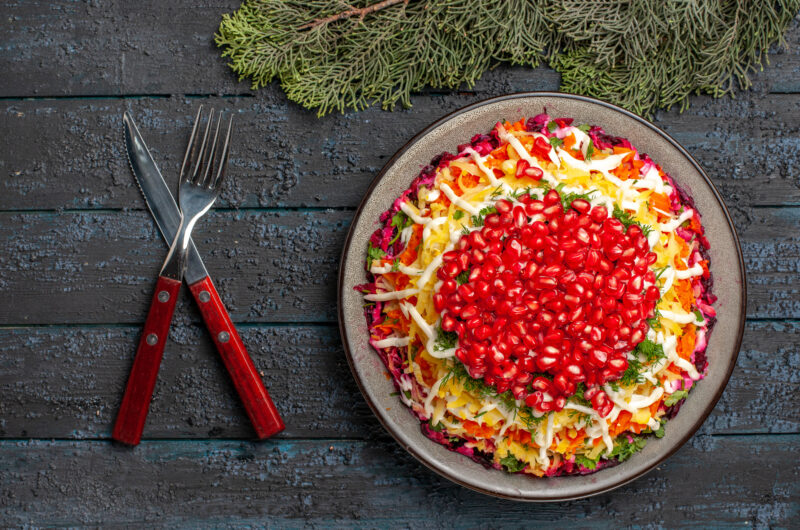
Lebanese Fattoush Salad with Pomegranate Dressing
Course: Healthy4
servings30
minutes40
minutes300
kcalIngredients
•t2 wholegrain pitta breads, torn into 3cm pieces
•t3 medium tomatoes, diced
•t1 large cucumber, halved and sliced
•t6 radishes, thinly sliced
•t4 spring onions, sliced
•tLarge handful flat-leaf parsley, roughly chopped
•tLarge handful fresh mint leaves
•t1 romaine lettuce heart, roughly torn
•t3 tbsp olive oil
•t1.5 tsp ground sumac, divided
•tFor dressing: 3 tbsp extra-virgin olive oil
•tFor dressing: 2 tbsp lemon juice
•tFor dressing: 1 tbsp pomegranate molasses
•tFor dressing: 1 tsp ground sumac
•tFor dressing: 0.5 tsp dried mint
•tFor dressing: Salt and black pepper
Directions
- Toss torn pitta pieces with 3 tbsp olive oil, 0.5 tsp sumac, and a generous pinch of salt.
- Spread on a baking tray and toast at 200°C for 8–10 minutes until deeply golden and crispy. Watch carefully — they burn quickly.
- Whisk all dressing ingredients together until combined. Taste and adjust seasoning.
- Combine tomatoes, cucumber, radishes, spring onions, lettuce, parsley, and mint in a large bowl.
- Toss vegetables with three-quarters of the dressing.
- Add crispy bread pieces and toss gently, using the remaining dressing.
- Sprinkle remaining sumac over the top and serve immediately.
Notes
- Fattoush must be eaten immediately after adding the bread — even 10 minutes of sitting will begin to soften the crunch that defines the dish.
Pomegranate molasses is available at Middle Eastern supermarkets and increasingly at regular grocery stores. A good substitute is 2 tsp balsamic glaze mixed with 1 tsp extra lemon juice, though the flavour is quite different.
Sumac is non-negotiable — it is the flavour identity of the dish. Do not substitute lemon zest, which is commonly suggested but produces a very different result.
For an even crispier bread component, shallow-fry the pitta pieces in olive oil rather than baking them
Make Ahead Tips
Prepare all vegetables up to 4 hours in advance and refrigerate, covered. Make the dressing and store at room temperature — never refrigerate olive oil-based dressings as the oil will congeal. Toast the bread up to 2 hours ahead and store at room temperature in an open bowl to maintain crunch. Combine everything only at the moment of serving.
Storage
Fattoush does not store well once assembled — the bread softens completely within an hour and the salad becomes watery as the vegetables release moisture into the dressing. Store components separately: vegetables undressed in the fridge for up to 2 days, dressing at room temperature for 3 days, and toasted bread in an open bowl at room temperature. Assemble fresh each time. There are no good leftover fattoush options — eat it all.
Serving Tips
Fattoush is the natural companion to grilled meats and fish in Lebanese cuisine — serve alongside chicken shawarma, grilled lamb kofta, or baked fish with tahini. As part of a mezze spread, it sits alongside hummus, baba ganoush, tabbouleh, and warm flatbread. The salad works equally well as a light standalone lunch with a generous scoop of hummus on the side and extra flatbread for scooping.
Variations & Substitutions
Add 200g of halloumi, sliced and grilled until golden, for a more substantial salad with extra protein. Diced roasted beetroot stirred through the salad adds earthiness and stunning colour. A handful of pomegranate seeds scattered over the finished salad amplifies the pomegranate molasses in the dressing and adds jewel-like visual appeal. For a more filling version, add a drained tin of chickpeas tossed with a little sumac and cumin.