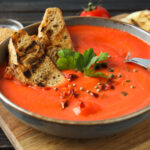
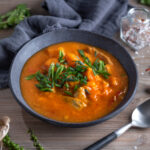
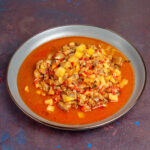
The great chilled soup of Andalusia — a silky, vibrant blend of ripe tomatoes, cucumber, peppers, and olive oil that captures summer in a bowl, served ice-cold with crispy sourdough croutons.
Gazpacho is one of the few dishes where the ambient temperature of the finished product is as important as any ingredient or technique — it must be eaten ice-cold to be fully itself. Served at room temperature, it is a reasonable tomato soup. Served at just above freezing, as tradition dictates, it is extraordinary: vivid, refreshing, and possessed of an intensity that comes from the tomatoes being handled raw, their flavours untransformed by heat.
The quality of the tomatoes is the decisive factor in this recipe. Gazpacho made from tasteless out-of-season tomatoes is a dispiriting experience. Gazpacho made in high summer with deeply ripe, sun-sweetened tomatoes — ideally a mix of varieties — is one of the great dishes of the Mediterranean. If the tomatoes are not excellent, it is better to wait until they are.
The technique is more important than it might appear. The vegetables are blended in a specific order — tomatoes first, then cucumber, then pepper and garlic — and the olive oil is emulsified into the blended vegetable mixture in a steady stream while the blender runs, in the same manner as making a mayonnaise. This emulsification creates the characteristic velvety texture and carries the fat-soluble flavour compounds of the olive oil through every sip. A generous quantity of bread, soaked briefly in water, is blended in to add body and to smooth the texture further. The sherry vinegar provides the necessary acidity; use good-quality aged sherry vinegar if you can find it.
Calories: 220 kcal | Protein: 4g | Carbs: 22g | Fat: 13g | Fiber: 4g
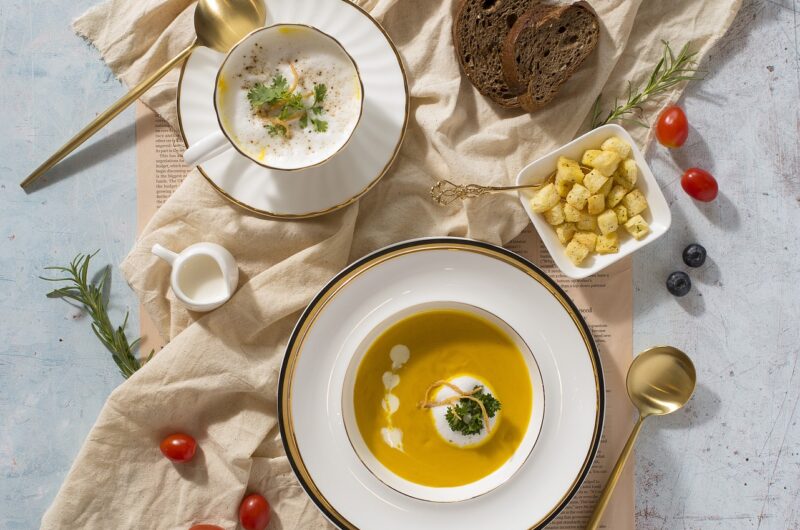
Spanish Gazpacho with Sourdough Croutons
Course: Soup4
servings20
minutes20
minutes220
kcalIngredients
•t1kg very ripe tomatoes, roughly chopped
•t1 medium cucumber, peeled and roughly chopped
•t1 red pepper, deseeded and roughly chopped
•t2 garlic cloves
•t80ml good extra-virgin olive oil, plus more to serve
•t2 thick slices stale sourdough bread, crusts removed
•t3 tbsp sherry vinegar
•tSalt to taste
•tIce cubes for serving
•tFor croutons: 2 thick slices sourdough bread, cubed
•tFor croutons: 2 tbsp olive oil
•tFor croutons: Flaky sea salt
Directions
- Tear sourdough for the soup into pieces, place in a bowl, and cover with 100ml cold water. Soak for 5 minutes, then squeeze out excess water.
- Blend tomatoes until very smooth. Add cucumber and blend again. Add red pepper, garlic, and soaked bread and blend until completely smooth.
- With the blender running on medium speed, pour olive oil in a slow, steady stream through the feed tube. Blend for a further minute until emulsified and silky.
- Add sherry vinegar and season generously with salt. Blend briefly to combine.
- Pass through a fine mesh sieve for the smoothest texture, pressing on solids. Taste and adjust seasoning and vinegar.
- Chill in the fridge for at least 2 hours, or overnight for best flavour.
- For croutons, toss bread cubes with olive oil and flaky salt. Bake at 200°C for 10–12 minutes until golden.
- Serve gazpacho ice-cold in chilled bowls with croutons, a drizzle of olive oil, and a few ice cubes if desired.
Notes
- The soup must be eaten very cold. Chill your serving bowls in the freezer for 15 minutes before serving.
Taste and season after chilling — cold dulls salt perception significantly, and the soup will need more seasoning than you expect.
For a smoother texture, pass through a sieve twice — the second pass catches fibres the first pass misses.
Watermelon gazpacho is a beautiful summer variation: replace 400g of tomatoes with equal weight of seedless watermelon flesh.
Storage
Gazpacho keeps in the fridge for up to 3 days, and the flavour genuinely improves after 24 hours as the vegetables meld together. Store in a sealed jar or airtight container and give it a vigorous shake or stir before serving as the emulsion may separate slightly on standing. The soup does not freeze well — the texture becomes watery and grainy on thawing. Make croutons fresh each time.
Serving Tips
Serve in ice-cold bowls or glasses as a starter on warm summer evenings, or as a light lunch with the croutons alongside. Traditional garnishes include finely diced cucumber, red pepper, red onion, and hard-boiled egg arranged in small bowls at the table so guests can customise their bowl. A drizzle of peppery olive oil and a final splash of sherry vinegar over the top just before eating are the finishing touches that make the dish sing.