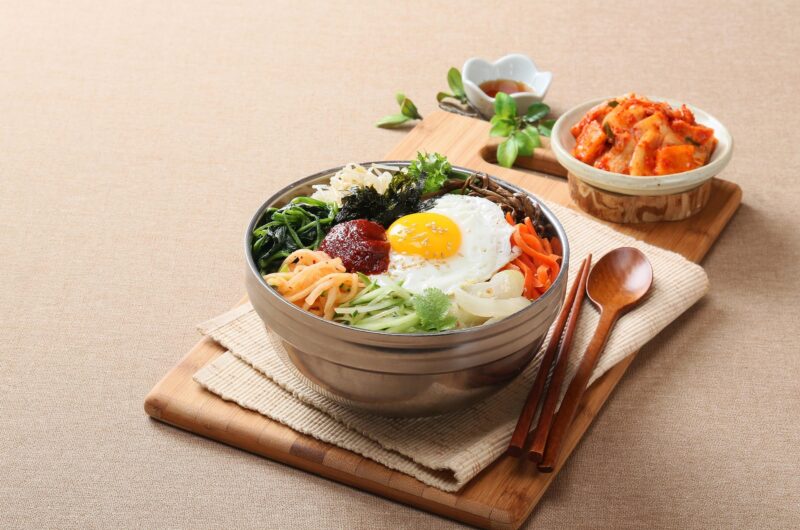
The iconic Korean rice bowl — a vibrant assembly of seasoned vegetables, gochujang sauce, and a crispy-edged fried egg over warm rice, mixed together at the table into a deeply savoury, spicy harmony
Bibimbap — which translates literally as ‘mixed rice’ — is the great Korean one-bowl meal: a dish whose genius lies in the combination of individually prepared components that are brought together at the table, mixed vigorously with a spoonful of gochujang, and eaten in a state of unified, complex deliciousness that no single component could achieve alone.
The preparation follows a specific logic: each vegetable is cooked separately and seasoned individually, preserving its distinct flavour and texture. This methodical approach is not fussiness for its own sake — eating bibimbap where all the vegetables have been cooked together produces a muddy, homogeneous result that fails to capture why the dish is so celebrated. The spinach is wilted and dressed with sesame. The carrot is julienned and lightly stir-fried. The courgette is salted, squeezed, and sautéed. The mushrooms are cooked until deeply flavourful. Each component contributes its specific character to the final mix.
The egg is a point of debate among bibimbap devotees. The traditional version is raw yolk, placed whole on top so that it breaks and coats everything when mixed. The version offered here — fried in a little sesame oil until the whites are set and lacy-edged while the yolk remains runny — is more approachable and no less delicious. The gochujang sauce is non-negotiable: the fermented chilli paste provides the sweet, spicy, savoury backbone that makes bibimbap what it is.
Calories: 520 kcal | Protein: 20g | Carbs: 72g | Fat: 16g | Fiber: 7g
Korean Bibimbap with Crispy Egg
2
servings25
minutes20
minutes520
kcalIngredients
•t300g cooked short-grain rice (1 cup uncooked)
•t2 eggs
•t100g fresh spinach
•t1 medium carrot, julienned
•t1 medium courgette, julienned
•t150g shiitake mushrooms, sliced
•t2 tsp sesame oil
•t2 tsp sesame seeds
•t2 tsp vegetable oil
•tSoy sauce to season
•tFor gochujang sauce: 2 tbsp gochujang paste
•tFor gochujang sauce: 1 tbsp sesame oil
•tFor gochujang sauce: 1 tbsp rice vinegar
•tFor gochujang sauce: 1 tsp honey
•tFor gochujang sauce: 1 garlic clove, grated
Directions
- Mix all gochujang sauce ingredients together and set aside.
- Blanch spinach for 30 seconds in boiling water. Drain, squeeze dry, and toss with 0.5 tsp sesame oil, a pinch of salt, and sesame seeds.
- Salt julienned courgette for 5 minutes, then squeeze out excess moisture. Stir-fry in 0.5 tsp oil for 2 minutes. Season with a drop of sesame oil.
- Stir-fry carrot in 0.5 tsp oil for 2 minutes until just tender. Season lightly with soy sauce.
- Cook mushrooms in 1 tsp oil for 3–4 minutes until golden and tender. Season with soy sauce.
- Fry eggs in sesame oil until whites are set and edges are crispy but yolks are still runny.
- Divide warm rice between two bowls. Arrange vegetables in sections around the rice.
- Place fried egg in the centre. Serve with gochujang sauce on the side. Mix everything together at the table before eating.
Notes
- The mixing is essential — do not eat bibimbap without fully combining all components. The whole point of the dish is the unified flavour that results from the mix.
Gochujang is available in most supermarkets and Asian grocery stores. The paste keeps in the fridge for months.
For the traditional dolsot (stone pot) version, place the assembled bowl in a very hot cast iron pan and allow the rice on the bottom to crisp before serving.
Any combination of vegetables works — bean sprouts, cucumber, roasted sweet potato, and corn are all common.
Storage
Store the vegetable components separately from the rice in airtight containers in the fridge for up to 3 days. The gochujang sauce keeps in the fridge for 2 weeks. Fry eggs fresh each time — they do not reheat well. Bibimbap is best assembled fresh, but the individual components make excellent quick weeknight bowls throughout the week. Reheat rice with a sprinkle of water in the microwave for the best texture.
Serving Tips
Serve each bowl with a small dish of extra gochujang sauce for those who want more heat, and a bowl of clear doenjang jjigae (soybean paste soup) on the side if you want to extend the meal in the Korean tradition. Kimchi is the natural accompaniment — its sharp, fermented tang balances the richness of the egg and sesame perfectly.